 Kidy
KidyBehavior & emotions
Tantrums, big feelings, and testing limits are how young children learn. These guides help you read what's behind the behavior and respond in a way that actually helps.

Behavior is where parenting stops being about schedules and starts being about a small person with big feelings and very little impulse control. Tantrums, defiance, hitting, and meltdowns are not signs that something has gone wrong. They are how young children learn to handle emotion before their brains are wired to do it smoothly.
This topic brings together our guides on what is behind the behavior and how to respond in ways that actually help. You will find articles on:
- tantrums and big emotions, and how to ride them out
- defiance, limits, and saying no without a battle
- hitting, biting, and other physical reactions
- the gap between what toddlers feel and what they can say
- staying calm when your own patience runs out
It helps to know what is happening inside that little head. The part of the brain that manages impulses and calms strong feelings is one of the last to mature, and it is years from finished in a toddler. So when a two-year-old melts down over the wrong cup, they are not being manipulative or spoiled; they are having a genuinely big feeling with almost none of the brakes an adult takes for granted. Expecting calm reasoning in that moment asks for something their brain cannot yet do.
A few ideas underpin most of it. Behavior is communication. A meltdown almost always means a need underneath it, often tiredness, hunger, overwhelm, or a feeling too big to name. When you respond to the need rather than only the behavior, the storm passes faster. This is also why the same child can be delightful at home and impossible at the end of a long, overstimulating day; the behavior is a signal, not a character flaw.
Connection works better than punishment for children this young. Calmly naming the feeling, holding a clear limit, and staying close teaches more than any consequence. Worrying that comfort will reward a tantrum gets it backwards: a child who feels understood settles sooner and learns, over hundreds of repetitions, that big feelings are survivable. Limits still matter, but they land best when paired with warmth rather than anger.
Your own regulation is part of the equation too. A child borrows calm from the adult in the room, so looking after your own patience is not a luxury. No parent stays composed every time, and that is fine. What children learn most from is repair, the simple act of reconnecting after a hard moment, which teaches them that relationships survive conflict.
Pick the guide that matches what you are facing right now, whether it is daily supermarket meltdowns or a sudden phase of hitting. Each one is practical and written for real, imperfect days.
 Start hereHow to Track Your Baby's Patterns (Without Guessing What's Wrong)Track sleep, feeding, and behavior over 5–7 days instead of guessing from one bad night. Pillar guide with sleep, behavior, and feeding tracks inside.7 min read
All articles
 Toddler Behavior: What's Normal, What's Not, and What to DoToddler tantrums, hitting, and not listening are exhausting. Learn what is normal, what helps, and when to get support: practical, calm guidance for parents.14 min read
 Toddler Refuses the Car Seat Every Time? Why, and What HelpsToddler arches and screams the second you reach the car seat? Why the fight peaks at this age, what actually helps, and the one rule that never bends.9 min read
 Toddler Tests Boundaries Constantly? What Actually WorksWhy your toddler pushes every limit, what to say in the moment, how many rules a small child can actually hold, and the signs it is no longer typical.10 min read
 Toddler Crying All Day: Is It Normal, and What HelpsYour toddler cries on and off all day and you don't know why? Here's what usually causes it, red flags worth watching for, and what actually helps this week.8 min read
 Toddler Laughs When Disciplined: Why It Happens, What HelpsYour toddler smirks or laughs when you're trying to correct them? Here's why that happens, what it doesn't mean, and how to hold the boundary anyway today.9 min read
 Toddler Aggressive When Tired: Why It Happens, What HelpsToddler hitting, biting, or throwing right before nap or bedtime? Here's why tiredness triggers aggression, what helps in the moment, and when to worry.9 min read
 Toddler Refuses Every Diaper Change: How to End the FightToddler squirms, kicks and screams the second you lay them down? Why the fight peaks around age two, what actually helps, and when it means potty time.11 min read
 Toddler Gets Upset With Routine Changes: Why and What HelpsWhy does your toddler melt down when the routine changes? It is normal need for predictability. How to prepare them, ease transitions, and when to worry.8 min read
 Toddler Bites at Daycare but Not Home? Here's WhyToddler bites at daycare but never at home? It's usually a context trigger, not a discipline failure. What's different there and how to coordinate a fix.9 min read
 Positive Discipline: What It Is and How It Actually WorksWhat is positive discipline? A clear, no-jargon guide to the core principles, real-life examples, and how it differs from punishment and permissiveness.8 min read
 Toddler Throws Toys When Angry: Why It Happens and What HelpsToddler throws toys when angry or frustrated? Learn why throwing happens at this age, what actually stops it, and when to seek help. A calm, practical guide.7 min read
 Toddler Runs Away in Public: Why It Happens and How to Stop ItToddler bolts in parking lots, stores, and crowds? Learn why it happens, how to keep them safe, and the calm steps that actually stop the running for good.8 min read
 Toddler Refuses to Get Dressed: How to End the BattleToddler refuses to get dressed every morning and the fight is wrecking your day? Here is why it happens, what actually helps fast, and when to be worried.8 min read
 Toddler Screams or Cries When Told No? Why and What HelpsYour toddler screams, cries or drops to the floor every time you say no? Why it happens, what is normal from 1 to 3, and what to do in the moment and after.8 min read
 Toddler Won't Share Toys: Why It's Normal and What HelpsToddler won't share toys, grabs them back, and shouts "mine"? Here's why sharing is hard before age 3-4, why forcing it backfires, and what actually helps.10 min read
 Toddler Hits Other Kids? What to Do (Calm, Non‑Shaming)Toddler hits other children at the playground or daycare? Why it happens, what to say in the moment, what not to do, and prevention. A calm, non‑shaming plan.11 min read
 Toddler Throws Food Every Meal: Why It Happens and What HelpsToddler throwing food off the highchair every meal? Here is why it happens, what actually stops it, and the feeding red flags worth a pediatrician call.9 min read
 Toddler Hits Only Mom, Not Dad? Why It Happens (and What Helps)Does your toddler hit, scream, and fall apart with you but stay sweet for dad? It's not failure. It's attachment. Here's the real reason and what to do.9 min read
 Toddler Meltdowns Over Small Things: Why It HappensWrong cup, broken banana, can't open the door alone? Why toddlers melt down over tiny things, the meltdown vs tantrum difference, and what truly calms it.10 min read
 Parental Burnout When Parenting Is Genuinely HarderExhausted from raising a child who needs more? This is parental burnout, not failure. Signs, staying regulated through meltdowns, and where real help is.9 min read
 18-Month-Old Tantrums: What to Do (and What to Skip)Why do 18-month-old tantrums hit so hard, and what actually calms them? A calm, science-backed guide to triggers, response steps, and when to seek help.9 min read
 Calm Parent, Safe Child: A Parenting Philosophy That HoldsA calm parent isn't a perfect one. Learn the co-regulation philosophy that builds emotional safety, why it works, and how to stay steady on hard days.9 min read
 Toddler Ignores Everything I Say? Why, and How to Get Real CooperationYour toddler ignores everything you say? Here is why young children tune out, when to check their hearing, and the calm steps that get genuine cooperation.9 min read
 Toddler Screaming for No Reason: How to Decode ItIs your toddler screaming for no reason? It almost always has a hidden cause. Learn to read the triggers, calm the moment fast, and know when to worry.7 min read
 Stranger Anxiety in Babies: When It Starts and What HelpsStranger anxiety in babies usually shows by 9 months and can last until about 3. Why it is a healthy sign, how it differs from separation anxiety, what helps.9 min read
 Why Does My Toddler Act Worse With Mom? (It's Not What You Think)Your toddler is an angel at daycare and falls apart with you? Why kids act worse with the safe parent, what it really means, and how to make reunions easier.8 min read
 Yelling at a Toddler: What It Teaches (and What to Do)Yelling at a toddler teaches less than you fear and works less than you hope. What it actually communicates, why it backfires, and the repair that matters most.9 min read
 Outdoor Play Ideas for Babies (0–2 Years) That Actually WorkOutdoor play ideas for babies 0–2 years that fit real days. Safe, simple activities by age that build motor skills, sleep, and mood, plus what to skip.6 min read
 Quality Time With Baby: Realistic Ideas (0–12 Months)Quality time with your baby doesn't need toys or a free hour. Realistic ideas that fit feeds, diapers, and a full day, plus what actually builds the bond.6 min read
 Separation Anxiety in Babies: When It Starts, Why It Happens, and What HelpsSeparation anxiety in babies is a normal sign of attachment, usually starting near 8 months and peaking between 10 and 18 months. What helps and when to ask.9 min read
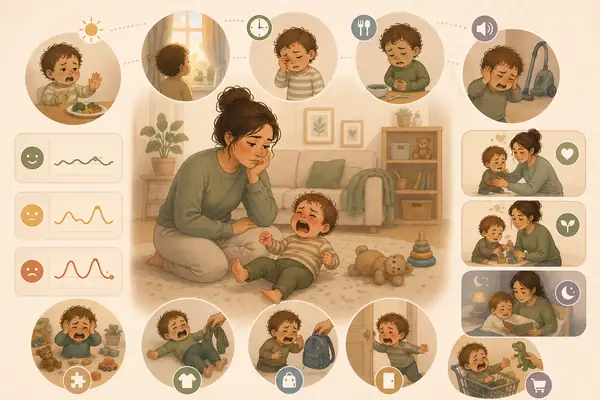 Toddler Tantrums: How to Spot Patterns and What Actually HelpsTantrums look random in the moment but repeat across the week. How to log trigger, intensity, and recovery to find the actual pattern in 5–7 days clearly.7 min read
 Data-Driven Parenting: What It Actually Means (and How AI Memory Helps)What "data-driven parenting" actually means: 3-5 logs over 5-7 days, a weekly review, one experiment. How KidyGrow turns the loop into guidance for your child.6 min read
 The Evidence Loop: Why Tracking Beats Guessing for Tired ParentsTracking 3–5 fields for 5–7 days beats guessing under sleep debt — recall bias is loud at 3am. The boring evidence loop most tired parents actually need.7 min read
 Family Pulse vs Child Insights: Which Screen Helps With WhatFamily Pulse shows what's happening today; Child Insights explains why over weeks. Two KidyGrow surfaces, two distinct jobs — and when to use each one.7 min read
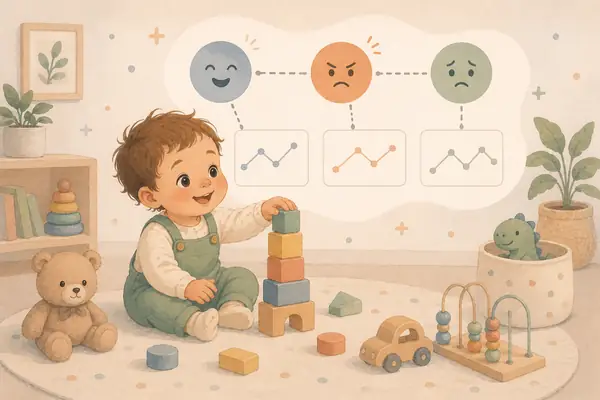 How to Track Toddler Behavior Patterns (Tantrums, Triggers, Changes)Track trigger, intensity, and recovery across 5–7 days to see what actually drives toddler meltdowns. The method that beats reactive parenting under stress.7 min read
 Behind KidyGrow: How the AI Learns Your Baby's PatternsHow does KidyGrow's AI work? A plain-language look at how it turns scattered baby logs into cross-day sleep, feeding and behavior patterns you can use.8 min read
 How to Stop Toddler Hitting (Without Punishment) – What Actually WorksToddler hitting you or others? What works in the moment, why it happens, what backfires, the trigger pattern that explains most episodes, when to ask for help.9 min read
 Toddler Biting? Fix This First (Home + Daycare Plan)Toddler biting you, a sibling, or a daycare classmate? It is usually communication, not bad behavior. A calm 3-step plan plus pediatrician red flags now.9 min read
 Toddler Hitting? What to Do First (A Calm 3‑Step Plan That Works)Toddler hitting is common ages 1–4. Use a calm 3‑step plan, prevent repeats with trigger tracking, and learn red flags + pediatric sources. No yelling.9 min read
 Toddler tantrums: find the trigger pattern, not the scriptTantrums feel random? KidyGrow tracks behavior alongside sleep and meals so you can see which trigger actually drives the meltdowns, then prevent them.9 min read
 Toddler behavior guide: tantrums, anger, and emotional regulationWhy do toddlers melt down? An honest, practical guide to tantrums, anger, and emotional regulation: what helps, what backfires, and when to seek help.9 min read
 Toddler tantrums before bedtime: why they happen and how to respondWhy toddlers melt down right before bed, why a typical tantrum is shorter than it feels, and the timing changes that calm most evenings within a few nights.8 min read
 Daycare transition: read the adjustment, not just the tearsDaycare drop-off in tears? Learn to read whether the adjustment is progressing or stuck by watching pickup and evenings, not just the morning, and act earlier.10 min read
 Child angry all the time? What to do without yellingWhy does my toddler seem angry all the time? Learn calm, practical scripts, hidden patterns to spot, and how to hold limits without yelling—at any age.8 min read
Frequently asked questions
Why does my toddler have so many tantrums?
Tantrums peak between one and three because toddlers feel intense emotions but cannot yet manage or explain them. They are a normal part of development, not bad behavior or a sign of poor parenting.
How should I respond to a tantrum?
Stay calm, keep your child safe, and name the feeling rather than reasoning or punishing mid-meltdown. Most tantrums need to run their course; connection and a steady limit afterward teach far more than a consequence.
Is hitting and biting normal?
Yes, especially under three, when children lack the words and impulse control to handle frustration. Respond calmly and consistently, name the feeling, and offer what they can do instead. It usually fades as language grows.
Should I punish difficult behavior?
For young children, calm limits and connection work better than punishment. Consequences they cannot understand mostly create fear, not learning. Focus on teaching the behavior you want and keeping limits predictable.
When should I worry about my child's behavior?
Occasional big feelings are normal. Talk to your pediatrician if behavior is extreme for the age, persistent across settings, causes harm, or comes with delays in speech or social skills.
Read along with this topic
Gentle stories where your child is the hero and Grow the friend.

Grow and the Cloud Full of Feelings
Read together →

Grow and the New Star
Read together →
Grow and the Tall Slide
Read together →

Grow and the Big Volcano
Read together →

Grow Stays Close
Read together →

Grow and the Snip Snip Chair
Read together →
Grow and the Bowing Pawn
Read together →

Grow and the Dog at the Gate
Read together →

Grow and the What-If Cloud
Read together →
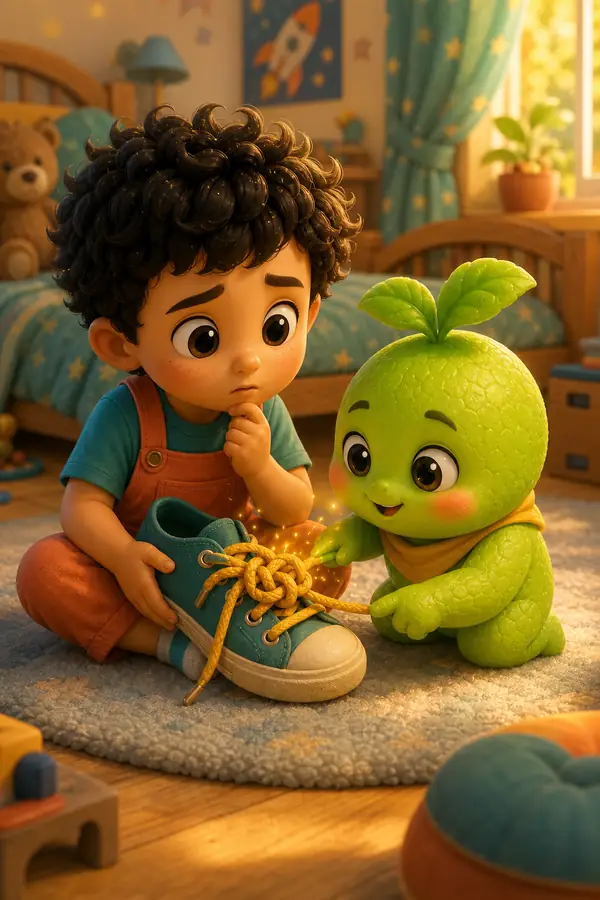
Grow and the Tricky Knot
Read together →
Instead of generic tips, get personalized sleep and development guidance.
Download the app ->