 Kidy
KidyFeeding & nutrition
From milk to first solids to picky toddlers, feeding rarely goes in a straight line. These guides cover amounts by age, starting solids, and the everyday worries in between.

Feeding is one of the parts of early parenting that changes the most, and fastest. In the first year alone your baby moves from milk only, to those first messy spoonfuls, to a small person with very firm opinions about broccoli. Every stage brings its own questions, and most of them are completely normal.
This topic pulls together our guides on what and how much to feed at each age, how to start solids safely, and what to do when mealtimes get hard. You will find practical articles on:
- how much milk or formula your baby needs by age
- starting solids and building a simple introduction plan
- handling a baby or toddler who suddenly refuses food
- picky eating and why it is so common between one and three
- building a loose meal and snack rhythm that fits your day
It helps to see feeding as an arc rather than a set of boxes to tick. For the first six months or so, milk is the whole meal, and the early weeks are mostly about learning your baby's hunger cues. Around the middle of the first year, solids begin as tastes and textures alongside milk, not a replacement for it. By the second year your child is eating more like the rest of the family, with all the independence, opinions, and unpredictability that brings.
A few things are worth keeping in mind as you read. Appetite is rarely steady. Babies and toddlers eat in waves, more on some days and far less on others, and a single skipped meal almost never means something is wrong. Growth, energy, and a steady number of wet nappies tell you far more than any one plate. The old advice to clear the plate works against this, because pushing a child to finish can quietly teach them to ignore their own fullness.
Feeding is also a two-way relationship. Your job is what is offered, and when. Your child's job is whether, and how much. When that line stays clear, mealtimes get calmer for everyone, even through the picky stretches. Pressure, bribes, and the dreaded dinnertime negotiation tend to make refusal worse, not better, while a relaxed table and the same food offered again, without comment, slowly widens what a child will accept.
If you are introducing solids, go slowly and watch how your child responds rather than racing through a checklist. New textures take time, and a food refused ten times can still become a favourite later. Offer a little of what the family is eating, let your baby get messy, and treat early meals as practice rather than performance. The aim in these months is a happy, curious eater, not a clean bowl.
Pick the article that matches where you are right now, whether that is a four-month-old eyeing your dinner or a toddler who lived on plain pasta all week. Each guide is written to be read in a few minutes and used the same day.
 Start hereBaby and toddler feeding guide: what is normal from 0 to 3From first milk to picky eating: the full 0 to 3 feeding guide, what is normal at each age, what actually helps at the table, and when to call the doctor.17 min read
All articles
 Baby Gags on Solid Foods? What's Normal and What HelpsBaby gags on solid food at almost every meal? Why gagging happens, how long it lasts, how to tell it from choking, and the signs worth a call to the doctor.13 min read
 Baby Food Portions by Age: How Much Milk and FoodHow much milk and solid food a baby needs at each age, from first-week bottles to three meals at twelve months, plus what a real portion actually looks like.10 min read
 Signs Your Baby Is Ready for Solids and When to Actually StartThe three readiness signs that count, the three everyone quotes that are not signs, why around 6 months, what week one looks like, and where allergens fit.12 min read
 Baby Suddenly Refuses the Bottle: Causes and What HelpsYesterday she drank fine, today she turns her head away. How to tell pain from context, the order of checks that makes sense, and when refusal turns urgent.12 min read
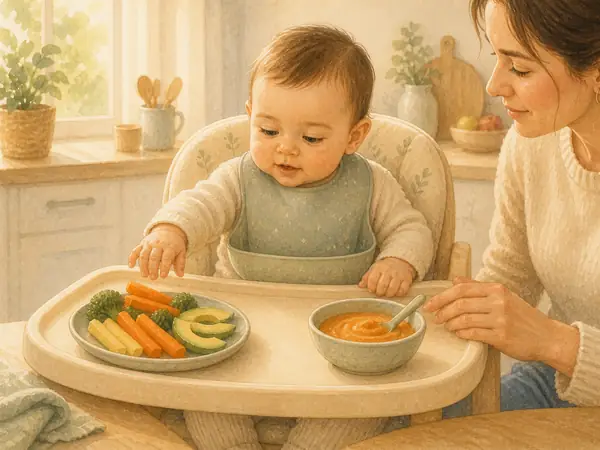 Baby-Led Weaning vs Purées: Which Method Is Right?Baby-led weaning or purées? An honest, non-dogmatic look at readiness signs, gagging vs choking, iron-rich first foods, and why both reach the same place.8 min read
 Toddler Throws Food Every Meal: Why It Happens and What HelpsToddler throwing food off the highchair every meal? Here is why it happens, what actually stops it, and the feeding red flags worth a pediatrician call.9 min read
 Toddler Eats Only Snacks, Not Meals? Why It Happens and How to Fix the RhythmYour toddler only wants snacks, not meals? Grazing is usually the cause. How to rebuild a calm meal-and-snack rhythm, what to drink between, and when to worry.8 min read
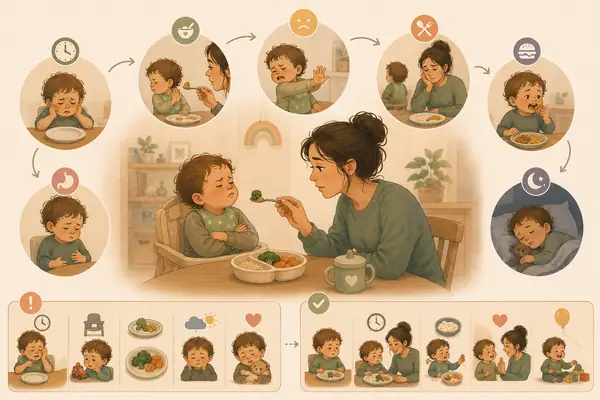 Toddler Refuses Food? What Patterns Usually Cause ItIf your toddler says no to dinner but snacks all afternoon, the story is fullness and timing — not "picky." How to read the actual pattern in a week clearly.7 min read
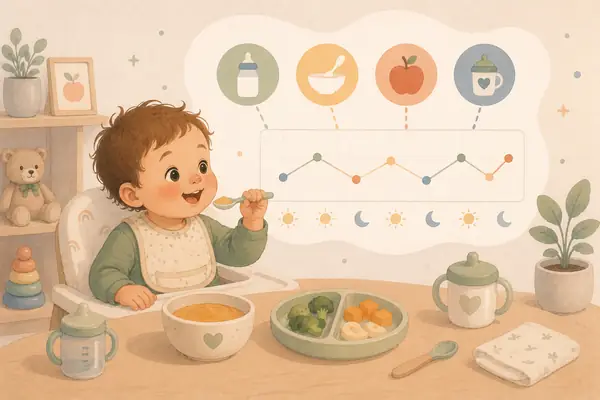 How to Track Feeding Patterns (and Spot What's Actually Causing Issues)Track meal timing, appetite, and context over 5–7 days to see what really drives feeding refusals — fullness timing, pressure, or illness rebound effect.7 min read
 Baby Weight Percentile: What It Really Means (And When to Worry)What a baby weight percentile really means, why crossing lines is common in the first months, and which changes are worth a call to your pediatrician.11 min read
 Baby not eating much? Read the 3-day pattern, not today's lunchBaby suddenly eating less? Log intake, wet diapers, sleep and mood for 3 days and you can usually tell illness from teething from a normal appetite dip.10 min read
 How Much Should a Toddler Eat? Portions, Milk and What's NormalHow much should a toddler eat? Why single meals swing so much, how much milk is enough, what a toddler portion looks like, and when to call the pediatrician.9 min read
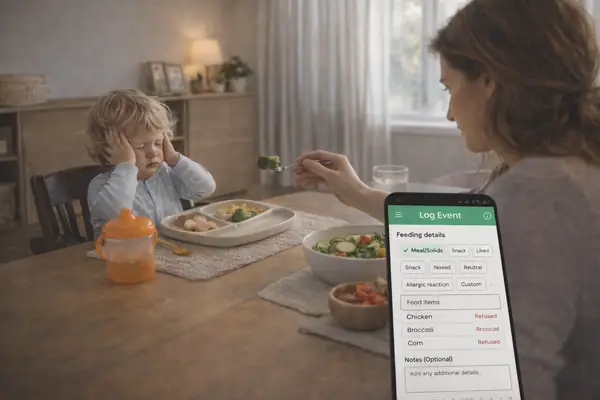 Reduce mealtime battles: fix the timing, not the foodDinner refusal feels personal? KidyGrow connects meals with sleep, naps, and behavior so you can see the upstream trigger and fix the actual cause behind it.10 min read
 Toddler refuses food: calm steps that actually workToddler refusing food, throwing it, eating only 3 things? KidyGrow tracks the 7-day pattern so you stop reacting and use the one move that actually helps.10 min read
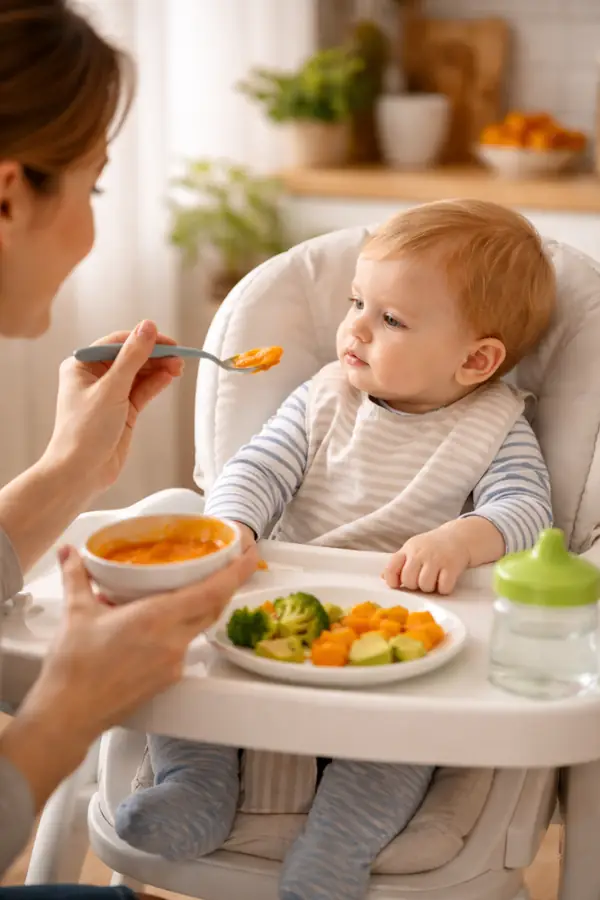 Baby Refusing Solids at 8 Months? What's Normal and What HelpsIf your 8-month-old is refusing solids, learn what is normal at this age, the most common causes behind it, and clear signs of when to talk to a pediatrician.10 min read
 Picky eating in toddlers: how to help without pressure or battlesToddler refusing food? Why picky eating between 1–3 is normal, the division of responsibility, what helps, what backfires, and when to call the pediatrician.9 min read
Frequently asked questions
When do babies start eating solid food?
Most babies are ready around 6 months, once they can sit with support, hold their head steady, and show real interest in food. Watch for those signs rather than going by age alone, and check with your pediatrician if you are unsure.
How many meals should my child have?
By around one year most toddlers settle into roughly three meals and two small snacks a day, but appetite varies a lot from day to day. Offer food at regular times and let your child decide how much to eat.
Is it normal for my child to refuse food?
Yes, very. Food refusal and picky eating are extremely common between one and three, as toddlers test their independence. Keep offering without pressure, and most children outgrow the fussiest phase.
How much milk does my baby need?
It depends on age and whether your baby is on breastmilk, formula, or already eating solids. Our feeding amount guide breaks it down by age, but follow your baby's hunger cues rather than forcing a fixed number.
Should I worry if my toddler eats very little at a meal?
Usually not. Toddlers regulate their intake over several days, not a single meal. As long as energy, growth, and wet nappies stay steady, an occasional small meal is normal.
Read along with this topic
Gentle stories where your child is the hero and Grow the friend.


Instead of generic tips, get personalized sleep and development guidance.
Download the app ->