 Kidy
KidySpeech & language
Every child finds words on their own timeline. These guides explain typical milestones, simple ways to encourage talking, and the signs worth raising with a professional.

Speech is one of the areas parents watch most closely, and compare most anxiously. Every child finds words on their own timeline, and the normal range is far wider than it feels when the toddler next door is chatting in sentences and yours is not. Most late talkers catch up just fine.
This topic collects our guides on how language develops, how to encourage it, and when a delay is worth a closer look. You will find articles on:
- typical speech and language milestones by age
- simple everyday ways to encourage talking
- babbling, first words, and putting words together
- late talking and what is and is not a red flag
- when to ask for a professional assessment
It helps to separate two sides of language. Understanding, what your child takes in, almost always runs ahead of talking, what comes out. Long before children say much, they absorb an enormous amount, so a child who follows instructions, points, and brings you things is usually developing language well even if few words have arrived yet. Strong understanding plus lots of communication through gesture and sound is reassuring, even when the spoken vocabulary is small.
The most powerful thing you can do is ordinary and free: talk, narrate, read, and give your child time to respond. Following their interest and pausing for a reply does more than any app or flashcard. Naming what they look at, expanding their attempts into slightly longer phrases, and keeping it playful all feed language in the natural way it is built. Screens, by contrast, do little for talking at this age, because language grows through back-and-forth with a real person.
A word on the common reassurances. Some children, including many who are bilingual or who simply talk later, are absolutely fine and bloom on their own schedule. Being raised with two languages does not cause delay; it is a gift, even if first words come a little later. At the same time, wait-and-see is not always the right call, and old ideas that you should not worry until much later can cost valuable time.
Trust your instincts alongside the milestones. If your child loses words they had, does not respond to their name, makes little eye contact, or is well behind for their age, an early assessment with your pediatrician or a speech therapist is sensible and never a waste. Early support is easy to access and tends to help most when it starts sooner rather than later.
Pick the guide that matches your question, whether you are tracking first words or weighing whether to call a speech therapist. Each is clear, current, and grounded in how language actually unfolds.
 Start hereToddler speech development: a parent's guide from first sounds to full sentencesFrom cooing at three months to full sentences by three years — what to expect, when to wait, and when to talk to your pediatrician about toddler speech.10 min read
All articles
 Do twins talk later? What the numbers actually showTwins are told they talk late, and the data agrees: 38% show late language at two against 20% of singletons. What that changes, and what it does not change.8 min read
 Speech Sounds by Age: Which Sounds Come When (Chart)Which speech sounds should a child say at 2, 3, 4 and 5? A research-based chart of sound acquisition by age, plus the errors worth a professional look.12 min read
 Pacifier and Speech Development: What the Evidence ShowsDoes a pacifier delay speech? What the research really supports, what it does not, and a practical timeline for cutting back and weaning without drama.11 min read
 What Happens at Speech Therapy: The First Visit ExplainedReferral, assessment, goals and homework: what actually happens at a child's first speech therapy visit, what the therapist looks for, and what comes next.11 min read
 Toddler Uses Gestures Instead of Words: Is It Normal?Your toddler points, reaches, and pulls you by the hand but barely talks? Here is why gestures come before words, what is normal by age, and when to get help.10 min read
 Why Does My Toddler Stutter When Excited?Your toddler stutters when excited or tired? Usually it is normal developmental disfluency. The signs that it is typical, what helps, and when to get help.9 min read
 Does Being Bilingual Delay Speech? (The Research Says No)Does raising a bilingual child delay speech? What the research actually shows, the milestones that count both languages together, and when a delay is real.10 min read
 When Does the R Sound Develop? A Realistic TimelineWondering when your child should say the R sound, or worried they can't? Here is the real age range, when to see a speech therapist, and how R is taught.9 min read
 Why Your Toddler Stopped Talking: Causes and SolutionsToddler stopped talking suddenly? Common causes (stress, illness, hearing, autism), what's expected vs concerning, what to do at home, and when to seek help.9 min read
 Early Signs of Communication Delay in Children Aged 0–3What are the early signs of communication delay (0–3)? Age-by-age milestones, what to watch for, common myths, and when to ask for an evaluation today.10 min read
 Toddler not following simple instructions? Why it happens + what helpsYour 2-3 year old ignores "put your shoes on" or "come here"? Here's why their brain isn't ready, what to try this week, and the red flags worth a hearing test.9 min read
 When to Seek Help for Speech Delay: Key Signs to WatchWorried about your child's speech delay? Clear age-based red flags, when to call the pediatrician or SLP, and what helps at home, without guilt or panic.9 min read
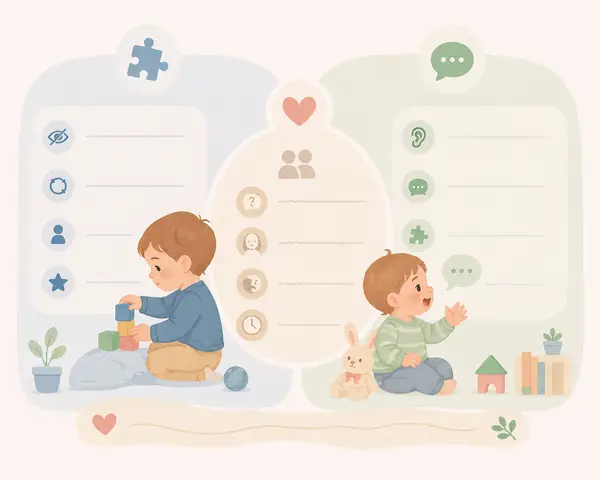 Signs of Autism vs Speech Delay: Key Differences for ParentsAutism vs speech delay, the practical side-by-side differences parents actually need: social red flags, language patterns, what overlaps, and when to ask.11 min read
 Speech Regression in Toddlers: What It Means and When to ActToddler stopped talking or losing words? What speech regression means, when it's a quiet phase vs. a red flag, what causes it, and when to seek help fast.10 min read
 How to Encourage Your Toddler to Talk (Without Pressure): A 7-Day PlanHow to encourage your toddler to talk without pressure: real strategies, 7-day plan, what to skip, and when to seek help if progress stalls. Ages 1–3.9 min read
 Toddler Only Says a Few Words at 2: What's Normal and What to DoToddler only says a few words at 2? What's typical, what counts as a "word," when it's a late-talker pattern, when to seek help, and home strategies that work.10 min read
 When Should Baby Start Talking? Real Milestones (0–3 Years)When should baby start talking? Real milestones, first words at 10–12 months, phrases at 18–24 months, red flags by age, and how to help at home today.11 min read
 Toddler Understands but Doesn't Talk: What's Normal (1–3 Years)Your toddler understands but doesn't talk? What's normal at 1, 2 and 3 years, red flags, when to seek help, and a 7-day plan to support speech at home.15 min read
 How Many Words Should a 2-Year-Old Say? (Real Ranges + What's Normal)How many words should a 2-year-old say? Most say 50 to 100+, but how they use words matters more than the count. Real ranges, red flags, and what helps.10 min read
 Baby not babbling at 9 months: what parents should knowWorried your 9-month-old is not babbling? Typical milestones, red flags, what to track, when to check hearing, and how to encourage early speech at home.9 min read
 No words at 15 months, what to look at instead of just word count15-month-old not talking yet? What the CDC checklist actually expects at 15 months, the four signs that matter more than word count, and when to call.9 min read
 18-Month-Old Not Talking Yet? Signs + What to Do18-month-old not talking yet? What can be normal at 18 months, what to try at home this week, and when to seek help, with clear signs and simple scripts.10 min read
 Speech Delay Signs in Toddlers: Red Flags by AgeSpeech delay signs in toddlers: age-by-age red flags, what to track this week, what to say without pressure, and when to seek help fast, with a clear plan.9 min read
 2-year-old not talking: what's normal, what's not, what to tryWorried your 2-year-old is not talking yet? Learn what can be typical at 2, what to try at home, and when to seek help — practical steps without panic.11 min read
 Late Talker vs Speech Delay: How to Tell Early (18–30m)Late talker vs speech delay — KidyGrow tracks gestures, understanding, and progress so you can tell which pattern your toddler fits, and act at the right time.8 min read
 Toddler Not Responding to Their Name? Causes, Red Flags, and What to DoToddler not responding to their name? Common causes, a simple decision tree, hearing checks, red flags, and a 3-day plan to improve response this week.11 min read
 Does Screen Time Cause Speech Delay? What the Evidence Says (2–5)Does screen time cause speech delay in toddlers 2–5? Real mechanism, safe limits, decision tree, red flags, and a 3-day plan based on pediatric guidance.9 min read
Frequently asked questions
When should my baby say their first word?
Many babies say a first real word around 12 months, but anywhere from about 10 to 14 months is common. Before that, babbling, pointing, and responding to their name are all important signs that language is developing.
How many words should a 2-year-old have?
A rough guide is around 50 words and starting to combine two words by age two, but there is wide variation. Understanding, gestures, and steady progress matter as much as the exact count.
What is a late talker?
A toddler whose speech is behind expectations but who understands well and develops normally otherwise. Many late talkers catch up on their own, but a check with your pediatrician or a speech therapist is worthwhile if you are concerned.
How can I encourage my child to talk?
Talk through your day, name what you both see, read together, and pause to give your child a chance to respond. Following their interest and keeping it playful works better than drilling words.
When should I worry about a speech delay?
Talk to a professional if your child loses words they had, does not respond to their name, makes little eye contact, or is well behind milestones. Early support is easy to access and helps most when started sooner.
Instead of generic tips, get personalized sleep and development guidance.
Download the app ->