 Kidy
Kidy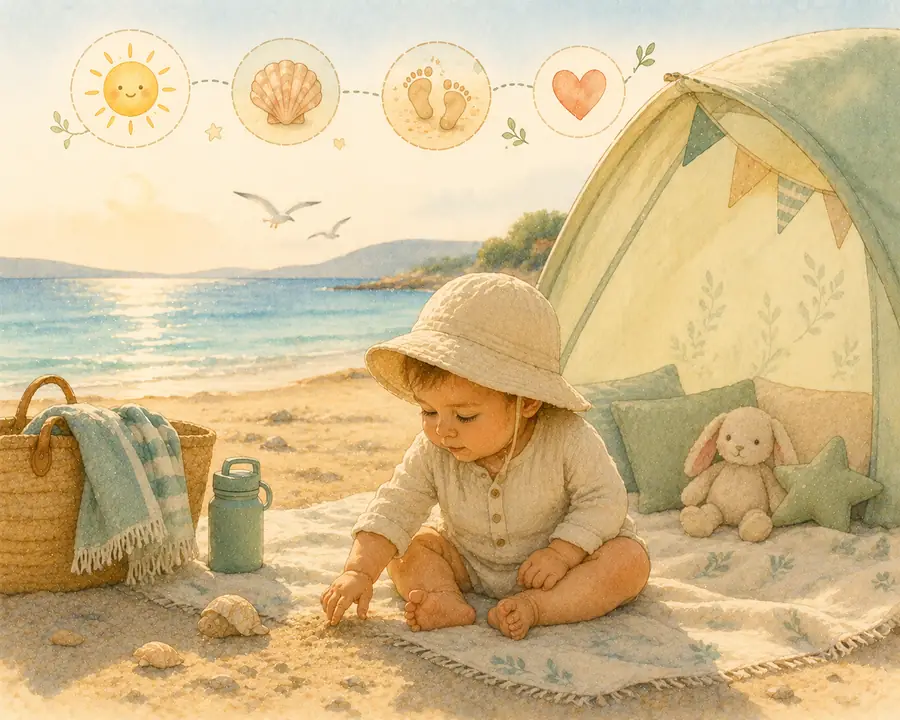
When you have your first baby, you look forward to all the firsts. The first beach day was one of mine, and in my head it was the photo: soft light, tiny feet in the sand. Live, it was something else. Here is the calm, practical version first:
- No strict minimum age, but for the first months keep visits short, shaded, and away from midday sun.
- Under 6 months: shade and clothing, not sunscreen, and never direct midday sun.
- Keep it brief at first. Thirty to sixty minutes in the cooler hours beats a long, hot afternoon.
- Heat is the real risk, more than the water. Babies overheat fast and can't tell you.
I packed five suitcases. Travel cot, nappies, three kinds of cream, sun hats, a change of clothes for every imaginable disaster. And I still forgot the one thing that mattered most that week: the fever medicine. So before the gear talk, know this. You will forget something, and the trip will still work out.
Quick reference
| Age | Best timing | Watch most |
|---|---|---|
| Under 6 months | Early morning or after 17:00, 30–45 min | Overheating, direct sun |
| 6–12 months | Cooler hours, 1 hour max at first | Sun, hydration, sand in everything |
| Toddler | Morning + late afternoon, nap in between | Sunburn, water access, tiredness |
Is there a minimum age for the beach?
No official rule says a baby must be a certain age before seeing the sea. The practical limits are about sun and heat, not the sand. The American Academy of Pediatrics advises keeping babies under 6 months out of direct sunlight, which in practice means a young baby's beach time is shade time. A parasol, a tree, a beach tent, the cool edges of the day. That is the whole constraint.
Newborns also regulate temperature poorly, so a hot beach at noon is genuinely risky for them in a way it isn't for an adult. There is no need to rush the first trip. The sea will still be there next month.
What the first trip actually looked like
If I thought I was unprepared as a first-time mother, the first real beach holiday corrected me fast. By then I had three children under two. The twins came when my firstborn was twenty months old, so the beach was a toddler and two babies, all at once.
The twin stroller that glided across the mall floor stopped dead on the first gravel path. On actual sand it was a sledge. I phoned ahead to the apartment to ask, with a straight face, whether they could fit three travel cots into one room. And the part no photo shows: the first night, a baby started crying in a strange room with walls like paper, and I stood there at 11pm with no idea how to settle a child who had never slept anywhere but home.
Here is the thing. We survived. So will you. The hard parts shrink into the funny story you tell later, and the beautiful parts are the ones that actually stay.
How to plan the first beach day
- Pick the cool edges of the day. Before 10:00 or after 17:00. The midday block is for shade, lunch, and a nap, ideally indoors.
- Bring more shade than you think. A beach tent or large parasol. Babies need full shade, not the dappled kind.
- Dress for the sun, not the heat panic. Lightweight long sleeves and a wide-brimmed hat protect better than bare skin plus cream.
- Hydration. Breastfed babies may want to feed more often in heat; older babies need offered water. Don't wait for thirst.
- Keep the first one short. End it while it's still going well. Forty happy minutes beat two hours that end in tears.
The CDC recommends shade, protective clothing, and SPF 30+, and at the beach the light bouncing off water and sand makes all of that matter more, not less. Keeping the day's routine roughly intact saved more beach evenings for me than any single piece of gear.
Salt water, sand, and the small stuff
A bit of sea water in the mouth won't harm a healthy baby, though a big gulp can cause a stomach upset, so it's worth discouraging. Rinse salt and sand off skin afterward, especially in folds and the nappy area, where the two together can irritate. The gentle rinse-and-dry approach in my first-bath guide works on a sandy baby too.
And let me say the quiet part: the first beach day is gloriously inefficient. You haul a car's worth of gear for forty minutes of a baby staring, suspicious, at the sand. That is normal. The first trip is not the swim. It's the rehearsal.
Common first-beach mistakes
- Going at noon. The single biggest one. Heat and UV peak together.
- Relying on sunscreen instead of shade for a young baby. Shade comes first, always.
- Staying too long. Overstimulation plus heat plus a missed nap is the classic recipe for a ruined evening.
- Forgetting the rinse. Salt and sand left in skin folds cause more grief than the sea ever did.
When to call the doctor
Most first beach days end in nothing worse than a tired, sandy baby. Call your pediatrician or seek care if you notice:
- Signs of overheating: flushed or pale clammy skin, rapid breathing, unusual fussiness or lethargy, fewer wet nappies. Move to cool, offer fluids, and call if it doesn't settle quickly.
- Any sunburn in a baby under 1 year.
- Persistent vomiting after swallowing sea water, or signs of dehydration.
If a sunburn or overheating scare does turn into an actual pediatrician visit, walking in with your child's recent naps, feeds, and symptoms already organized helps the appointment move faster; here's how to prepare for a pediatric visit using your child's data.
If you're unsure whether a symptom needs a same-day call, my guide on when to monitor and when to call the doctor walks the same logic. And plan shaded outdoor play for the hot hours so the day doesn't tip into a meltdown right when you're furthest from home.
Frequently asked questions
How old should a baby be for their first beach trip?
There's no fixed minimum, but the practical limits are sun and heat. Keep babies under 6 months in full shade and out of midday sun, and make early visits short. Many families wait until a baby is a few months old simply because the logistics are easier.
How long should a baby stay at the beach?
Start with 30 to 60 minutes in the cooler hours and build up. End while the baby is still content. Heat, sun, and overstimulation add up quickly, so a short, happy first trip beats a long one.
Can my baby go in the sea?
A short, supervised dip in warm, calm shallows is fine for many babies once they're a few months old, kept brief to avoid chilling. Always stay within arm's reach, and rinse off salt water afterward. Never leave a baby unattended near any water.
Is sea water bad if my baby swallows some?
A small amount is usually harmless, but a large gulp of salty water can upset the stomach or cause vomiting. Discourage drinking it, offer normal feeds or water, and watch for persistent vomiting or dehydration.
Do babies need sunscreen at the beach?
Under 6 months, rely on shade and clothing, with sunscreen only on small uncovered areas if shade isn't possible. From 6 months, use broad-spectrum SPF 30+ generously and reapply every 2 hours and after the water.
How KidyGrow helps you
I built KidyGrow partly because of weeks exactly like that first beach trip, when I could not hold the thread of three small children in my own head anymore. It won't pack your bag or carry the parasol. But it keeps the rest of the day from quietly falling apart around the outing.
A beach morning bends nap timing, feeds, and bedtime all at once. By the second or third outing, the morning Daily Brief might surface what you were too busy hauling gear to notice: that the evenings that go sideways keep following a trip that ran past the usual nap window. It remembers the pattern across the week when you can barely hold yesterday, and it learns your baby's actual limits rather than a generic line about babies this age. Some trips it finds nothing but sand and good moods, and that's honest too. But when it spots the loop, you can cut the next outing twenty minutes shorter and keep the evening.
Here is what I learned only after the third child: you will forget the fever medicine, the stroller will sink in the sand, and the photo will lie about how calm it was. The trip is still worth taking. The hard parts become the story, and the good parts are the ones that stay.
— Marija, KidyGrow
Related reading
- Water safety for babies and toddlers
- Sun protection for babies and toddlers
- Jellyfish and sea urchin stings: first aid
- Swimmer's ear in children
- Sea and eczema in children
- Heat rash in babies
- Insect bites and stings in children
- Heat and dehydration in babies
Sources
- American Academy of Pediatrics (HealthyChildren.org). Sun Safety. https://www.healthychildren.org/English/safety-prevention/at-play/Pages/Sun-Safety.aspx
- American Academy of Pediatrics (HealthyChildren.org). Beach Safety for Families. https://www.healthychildren.org/English/safety-prevention/at-play/Pages/beach-safety-for-families-safe-fun-in-the-sun-sand-and-sea.aspx
- Centers for Disease Control and Prevention (CDC). Sun Safety. https://www.cdc.gov/skin-cancer/sun-safety/index.html