 Kidy
Kidy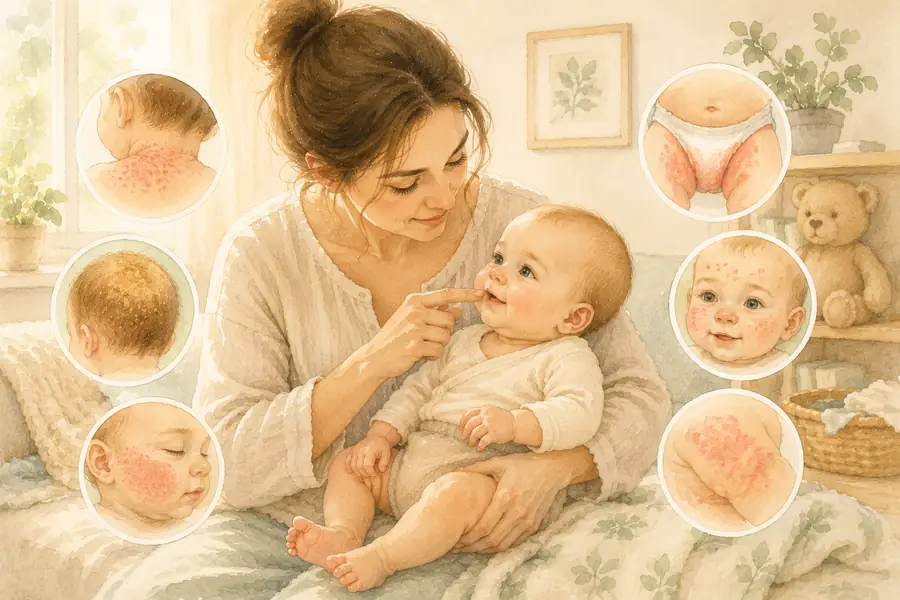
Most baby rashes look scarier than they are. Babies have new, sensitive skin, and it reacts to heat, drool, friction, and viruses constantly. The job isn't to diagnose every blotch. It's to know the few that matter.
- Most baby rashes are harmless and clear on their own (heat, drool, mild eczema)
- The one that's an emergency: a rash that does NOT fade when you press a glass on it, especially with fever
- The glass test: press a clear glass firmly on the rash; if the spots stay visible, get urgent help
- Call sooner for any rash with a high fever, a baby under 3 months, or a baby who seems very unwell (NHS, 2023)
This is a plain-language guide to the rashes parents see most, how to tell them apart by how they look and where they show up, and the small number of warning signs that change everything. It is not a substitute for a doctor looking at your baby, but it should help you sort "watch and wait" from "call now."
Quick Reference
| Rash | What it looks like | Usually | What to do |
|---|---|---|---|
| Heat rash | Tiny red/clear bumps in sweaty folds | Overheating | Cool down, lighter clothes |
| Cradle cap | Greasy yellow scales on scalp | Normal reflux of oil glands | Gentle brushing, mild shampoo |
| Eczema | Dry, red, itchy patches | Sensitive skin | Moisturize, find triggers |
| Diaper rash | Red, sore skin in the nappy area | Wet/friction | Air, barrier cream, frequent changes |
| Baby acne | Small red/white bumps on face | Hormones | Nothing, fades on its own |
| Hives | Raised, itchy welts that move around | Allergy/viral | Antihistamine if advised; watch breathing |
| Non-blanching | Red/purple spots that stay under pressure | Possible emergency | Glass test, seek urgent care |
The most common baby rashes
These are the ones you'll likely meet, and almost all are harmless.
Heat rash (miliaria). Tiny red or clear pinprick bumps where sweat gets trapped: neck folds, armpits, back, the diaper line. It's an overheating signal more than a skin disease. Cool the baby down, dress lighter, and it usually fades fast. More on heat rash in babies.
Cradle cap. Greasy, yellow, scaly patches on the scalp, sometimes the eyebrows. It looks dramatic and bothers the baby not at all. Gentle brushing and a mild shampoo are the whole treatment.
Eczema (atopic dermatitis). Dry, rough, red, itchy patches, often on the cheeks, then the elbows and the backs of the knees as they grow. Eczema itches, which is the clue. Moisturizing heavily and spotting triggers is the long game. Our guide on eczema and the sea in children covers flare triggers.
Diaper rash. Red, sore, sometimes shiny skin in the nappy area from wetness and friction. Frequent changes, air time, and a barrier cream usually clear it. A bright-red rash with small satellite spots that won't budge can be a yeast infection and needs a different cream (AAP, HealthyChildren.org).
Baby acne and milia. Small red bumps (acne) or tiny white spots (milia) on a newborn's face, driven by leftover maternal hormones and immature pores. Both need nothing. They fade on their own. Don't scrub or squeeze.
Drool rash. Red, slightly raised patches around the mouth, chin, and chest from constant saliva, common during teething. Gently pat dry and a thin barrier balm helps.
Hives (urticaria). Raised, blotchy, itchy welts that come and go and move around the body, often from a viral bug or an allergic reaction. Most fade. The thing to watch with hives is breathing and swelling: any trouble breathing, swelling of the face, lips, or tongue is an emergency, not a rash question.
Viral rashes. Many childhood viruses bring a rash: roseola (a fever that breaks, then a pink rash appears), hand-foot-and-mouth (blisters on hands, feet, and in the mouth) (CDC, 2024), and chickenpox (itchy blisters in crops). These usually come with other signs of being unwell.
The one rash that is an emergency
Here is the part to actually memorize. Most rashes fade briefly when you press on them. A rash that does NOT fade under pressure (a non-blanching rash) can be a sign of meningitis or sepsis, especially alongside fever, and it is a medical emergency.
The glass test: press the side of a clear drinking glass firmly against the rash. If you can still see the spots clearly through the glass (they don't fade), call emergency services. Do not wait. A non-blanching rash with fever, a stiff neck, sensitivity to light, a high-pitched cry, a bulging soft spot, or a very floppy or very drowsy baby needs urgent care immediately (NHS, 2023).
Trust your gut here. If your baby seems seriously unwell, the rash test is secondary. Get help.
Wait or call: the decision logic
- Rash, but baby is feeding, alert, and content → usually watch and wait.
- Rash with mild illness signs (low fever, slight fussiness) → monitor, call if it worsens.
- Rash plus high fever, or a baby under 3 months with any fever → call your doctor.
- Non-blanching rash, trouble breathing, facial swelling, stiff neck, or a very unwell baby → emergency, now.
Common mistakes to avoid
- Scrubbing or popping bumps. Baby acne, milia, and most rashes need hands off, not exfoliation.
- Reaching for steroid creams without advice. Many rashes get worse with the wrong cream.
- Ignoring fever because "it's just a rash." The fever and how unwell the baby seems matter more than the rash itself.
- Skipping the glass test out of panic. It takes five seconds and it is the single most useful thing you can do.
Sometimes a rash never gets a clear name. It shows up, hangs around a few days, and vanishes. That happens, and it's usually fine.
When to see a doctor
Call your pediatrician (or emergency services for the urgent signs) if:
- The rash does not fade under a pressed glass
- There's a high fever, or any fever in a baby under 3 months
- Your baby is very drowsy, floppy, hard to wake, or inconsolable
- There's trouble breathing or swelling of the face, lips, or tongue
- The rash is spreading fast, blistering badly, or looks infected (warm, oozing, crusting)
- You're simply worried and your baby seems unwell
When you can't tell what a rash is, that uncertainty is a normal reason to ask. A photo at the visit, or sent to your practice if they allow it, often settles it fast. If fever is part of the picture, our guide on fever and cough: when to monitor and when to call walks through the same logic.
Frequently asked questions
How can I tell if a baby rash is serious?
The biggest clues are the glass test and how unwell your baby seems. A rash that fades under pressure on a happy, feeding baby is usually minor. A rash that stays visible under a pressed glass, or any rash with high fever or a very unwell baby, is serious.
What is the glass test?
Press a clear glass firmly on the rash. If the spots fade, it's reassuring. If they stay clearly visible (non-blanching), seek urgent medical help, especially with a fever.
Are most baby rashes harmless?
Yes. The large majority (heat rash, drool rash, baby acne, mild eczema, diaper rash) are harmless and self-limiting. The point of knowing the types is to recognize the rare dangerous ones quickly.
Why does my baby get so many rashes?
New skin is thin, sensitive, and reactive. Heat, saliva, friction, and frequent viral infections all trigger rashes easily in the first couple of years. Most are part of normal baby skin.
Should I put cream on every rash?
No. Many rashes need nothing, and the wrong cream can make some worse. Barrier creams help diaper and drool rash; moisturizer helps eczema; steroid or antifungal creams should be pediatrician-guided.
When is a rash with fever an emergency?
If the rash is non-blanching (doesn't fade under a glass), or comes with a stiff neck, light sensitivity, trouble breathing, a bulging soft spot, or a very drowsy baby, treat it as an emergency and get help right away.
How KidyGrow helps you
Skin changes are hard to judge in the moment. Was today's patch bigger, or are you just more anxious after a rough night? When you log a quick note or photo, KidyGrow remembers what sleep-deprived parents can't and holds that timeline, so you compare against what was actually there, not a foggy memory.
By the second week of notes, the app stops giving generic skin tips and, as it learns your baby, starts reflecting the pattern back: a rash that flares on hot, sweaty days reads as likely heat rash, while a new rash arriving with a fever gets flagged as worth a closer look and a possible call. When your next visit comes, the pediatric-visit prep feature pulls those notes into a short summary, so you can show a real timeline instead of describing a rash from memory.
It won't tell you what a rash is, and it will say so. For the dangerous signs, this guide and your instincts come first. What the app does is stop you second-guessing the harmless ones for days on end.
Sources
- NHS. "Rashes in babies and children." https://www.nhs.uk/symptoms/rashes-babies-and-children/
- NHS. "Meningitis." https://www.nhs.uk/conditions/meningitis/
- American Academy of Pediatrics, HealthyChildren.org. "Diaper Rash." https://www.healthychildren.org/English/ages-stages/baby/diapers-clothing/Pages/Diaper-Rash.aspx
- Centers for Disease Control and Prevention. "About Hand, Foot, and Mouth Disease." https://www.cdc.gov/hand-foot-mouth/about/index.html