 Kidy
Kidy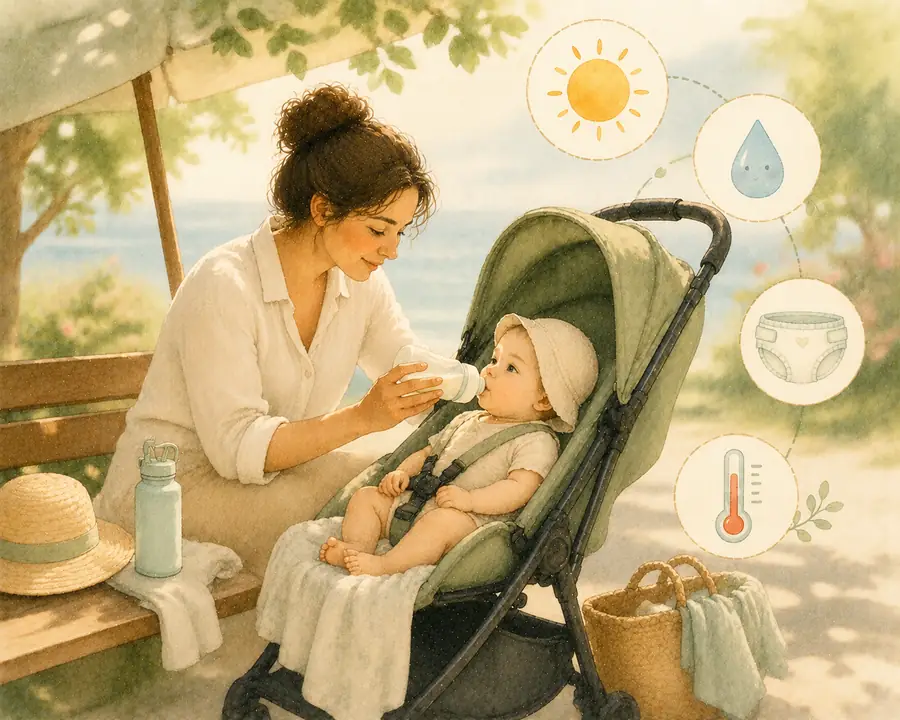
Babies overheat far faster than adults, and they can't tell you when they're too hot or thirsty. Here is what actually keeps a small child safe in summer heat:
- Big surface, small body. A baby has more skin relative to body mass, so they heat up and lose fluid much faster than you do.
- Under 6 months, no plain water. Hydrate with more frequent breast or formula feeds. Plain water can dilute their blood sodium dangerously.
- Watch the nappies. Fewer wet nappies than usual is one of the earliest, clearest signs of dehydration.
- Cool, don't shock. Shade, fewer layers, fluids, a tepid (not ice-cold) bath. Never leave a child in a parked car.
Most overheating happens on an ordinary warm day, not a heatwave: a long stroller walk, a car with the AC off for ten minutes, a nap in a sunny room. This guide walks through heat and dehydration calmly, because panic helps no one and fear-marketing helps even less.
Quick reference
| Situation | What's happening | What to do first |
|---|---|---|
| Hot, fussy, flushed | Early overheating | Move to shade, remove a layer, offer fluids |
| Fewer/darker wet nappies | Mild dehydration | More frequent feeds (or sips of water if 6m+) |
| Dry lips, no tears, sunken eyes | Moderate dehydration | Fluids now, call your doctor if it doesn't improve |
| Drowsy, won't wake, sunken soft spot | Emergency | Call 194/112 immediately |
Why babies overheat so much faster than adults
A baby's body has a large surface-area-to-mass ratio, so heat moves in and fluid moves out quickly. Their sweating system is immature, and they cannot move themselves out of the sun, take off a layer, or say "I'm thirsty." The CDC lists infants and young children among the groups most vulnerable to heat illness for exactly these reasons.
It adds up fast. A stroller covered with a thin blanket "for shade" can turn into a hot box, with the air inside warming several degrees above the outside. A car interior climbs dangerously within minutes even on a mild day. This is why you never leave a child in a parked car, not even with a window cracked, not even for a quick errand. Keeping a baby's day calm and shaded matters as much as the outdoor play you plan around it.
Hydration in the heat: by age
How you hydrate depends entirely on age, and getting this wrong can cause harm.
Under 6 months. Do not give plain water. A young baby's kidneys can't handle it, and too much water can dilute the sodium in their blood, a condition called hyponatraemia or water intoxication. In hot weather, hydrate by offering the breast or bottle more often. Breastfed babies will often want shorter, more frequent feeds, and that is normal and enough.
From 6 months. Alongside their usual milk, you can offer small amounts of cooled, previously boiled water in a cup, especially with meals and in the heat. Milk (breast or formula) still does most of the hydrating in the first year. Once your baby is established on solids and a feeding rhythm, water-rich foods like cucumber and melon help too.
Toddlers. Offer water often rather than waiting for them to ask, because by the time a small child complains of thirst they are already behind. Watered-down feelings of "not thirsty" are unreliable in a busy, playing toddler. The NHS notes that children are more likely than adults to become dehydrated quickly.
Signs of dehydration you can actually see
You don't need to guess. The body shows it:
- Fewer wet nappies than normal, or a much longer gap between them. This is the single most useful sign.
- Dark, strong-smelling urine instead of pale.
- Dry mouth and lips, and a baby who seems thirsty but tired.
- No tears when crying.
- Sunken eyes, and in babies, a sunken soft spot (fontanelle) on the top of the head.
- A change in behavior: unusually sleepy, floppy, or unusually cranky and hard to settle.
The AAP flags drowsiness and a child who is difficult to rouse as red flags that move this from "watch at home" to "get help now."
When to act, when to wait
Here is the simple decision logic.
- Hot and a bit fussy, still alert, still feeding, normal wet nappies? Cool them down and offer fluids. Watch. This is the most common scenario and it usually resolves at home.
- Fewer wet nappies, dry lips, but drinking and responsive? Step up fluids. For illness-related dehydration (vomiting, diarrhea), ask your pharmacist or doctor about oral rehydration solution. Reassess over the next few hours.
- Not improving, sunken eyes, very few wet nappies, or you just feel something is off? Call your doctor the same day. Trust that instinct.
- Drowsy and hard to wake, sunken soft spot with lethargy, repeated vomiting and can't keep fluids down, or very hot and confused? This is an emergency. Call 194 or 112 now.
How to cool a child safely: move to a cool, shaded place; remove excess clothing down to a single light layer; offer fluids appropriate for their age; use a cool (not ice-cold) compress on the neck or forehead; and a tepid bath can help. Skip the ice bath and the cold shower. Shocking a small body with cold can backfire.
Common mistakes
- Over-bundling in summer. "She might get cold" wins over "she's overheating" far too often. One light layer is usually right indoors in summer.
- Giving water to a baby under 6 months. Well-meant and genuinely risky. Feed more often instead.
- Covering the stroller with a blanket for shade. It traps heat. Use a clip-on sunshade that lets air move.
- Waiting for the toddler to say they're thirsty. They won't, until they're already dehydrated. Offer first.
- Ice-cold baths or showers to cool fast. Tepid and gradual is safer.
- The "quick errand" in the car. There is no safe version of leaving a child in a parked car in the heat.
When to call the doctor
Call your pediatrician the same day if your baby has noticeably fewer wet nappies, dry lips and no tears, sunken eyes, or is unusually sleepy or irritable and not improving with fluids. For dehydration from a stomach bug, ask about oral rehydration solution rather than improvising. The same wait-versus-call logic we use for fever and cough applies here. If you do call, a quick note of nappy counts, feed times, and when things started makes the conversation much faster, which is exactly the kind of prep this guide covers for getting ready for a pediatric appointment.
Call emergency services (194 or 112) immediately if your child is very drowsy or won't wake, has had no wet nappy for many hours, has a sunken soft spot along with lethargy, is vomiting repeatedly and can't keep any fluid down, or is very hot, confused, or floppy. These can be signs of severe dehydration or heatstroke, and they need care now, not in the morning.
Frequently asked questions
Can I give my 4-month-old water in hot weather?
No. Under 6 months, plain water isn't safe because it can dilute the sodium in your baby's blood. In the heat, offer the breast or bottle more often instead. Your baby may want shorter, more frequent feeds, and that covers their fluid needs.
How can I tell if my baby is dehydrated?
The clearest early sign is fewer wet nappies than usual. Others include dark urine, dry lips and mouth, no tears when crying, sunken eyes, a sunken soft spot in babies, and unusual sleepiness or fussiness. If several appear together, call your doctor.
What's the fastest safe way to cool an overheated baby?
Move them somewhere cool and shaded, take off the extra layers down to a single light one, offer age-appropriate fluids, and use a cool (not ice-cold) compress or a tepid bath. Avoid ice baths and cold showers, which can shock a small body.
Is it normal for my baby to feed more often in hot weather?
Yes, completely. Breastfed babies in particular tend to take shorter, more frequent feeds in the heat to stay hydrated. Follow their cues and offer the breast or bottle more often. This is the right way to keep a baby under 6 months hydrated.
When does overheating become heatstroke?
Heatstroke is a medical emergency. Warning signs include very hot skin, confusion or unusual drowsiness, a child who won't wake properly, and being floppy or unresponsive. If you see these, call 194 or 112 immediately and start cooling while you wait.
How KidyGrow helps you
Let's be honest about the limits first: no app cools your baby down or makes them drink. Shade, fluids, and your attention do that. What KidyGrow can do is hold the thread of a summer that keeps breaking the routine you worked to build, so a tired parent doesn't have to keep all of it in their head.
Heat scrambles everything. Feeds shift earlier, naps get short and sweaty, a baby who was settling beautifully suddenly isn't. By the second week of a hot spell, the morning Daily Brief might point out something you were too foggy to connect: that the fussiest, most restless afternoons follow the days you were out longest in the sun. The app remembers what last week actually looked like when you can barely remember yesterday. Sometimes it won't find a useful pattern, and some weeks really are just heat plus a cold plus bad luck. But when it does spot something, you get to decide with information instead of guessing.
The morning question shifts from "why has this week felt so off" to "this is what this week was, and here's the one thing I'll change tomorrow." That, and a slightly less frazzled you, is most of the job.
Sources
- Centers for Disease Control and Prevention (CDC). About Extreme Heat. https://www.cdc.gov/heat-health/about/index.html
- National Health Service (NHS). Dehydration. https://www.nhs.uk/conditions/dehydration/
- American Academy of Pediatrics (HealthyChildren.org). Protecting Children from Extreme Heat. https://www.healthychildren.org/English/safety-prevention/at-home/Pages/Protecting-Children-from-Extreme-Heat-Information-for-Parents.aspx