 Kidy
Kidy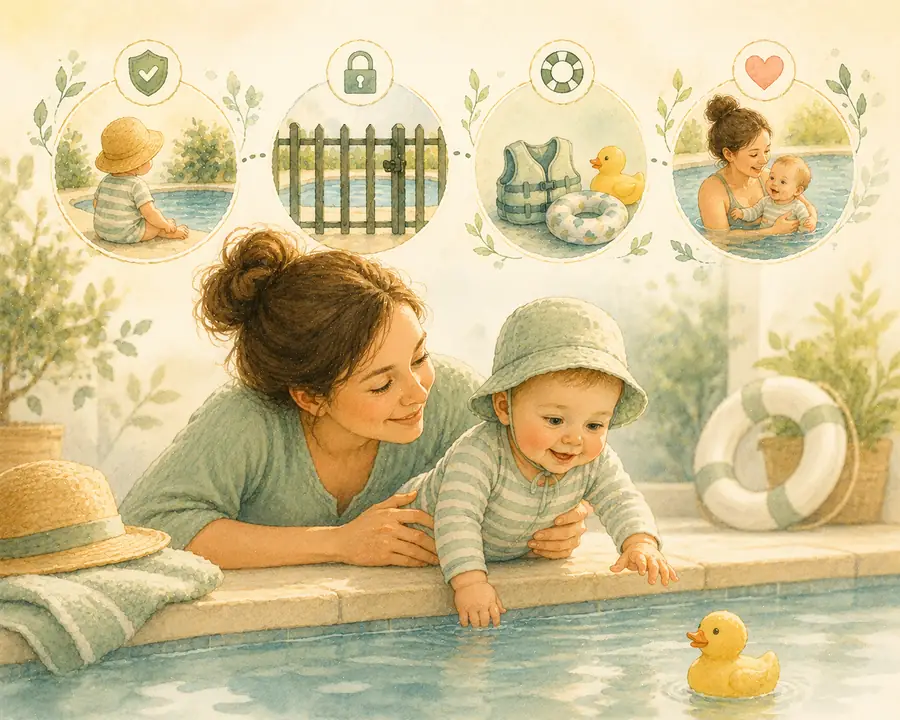
Drowning is the quietest emergency you will ever almost miss. Here is what actually keeps a small child safe near water:
- Touch supervision for any child under 4 near water: close enough to reach out and grab, not "watching from the deck chair."
- Drowning is silent. No splashing, no shouting. A toddler can slip under in about 20 seconds, in as little as 5 cm (2 inches) of water.
- Layers, not one fix. A fence, a designated water-watcher, swim lessons, and CPR each cut risk. Together they cut it dramatically.
- The bathtub and the bucket count too. Most under-1 drownings happen at home, not at the beach.
Most parents picture drowning as a loud, thrashing scene. It almost never looks like that. This guide walks through water safety for babies and toddlers calmly, because panic doesn't keep anyone safe and fear-marketing doesn't either. You need a system you can actually run on a normal summer day.
Quick reference
| Setting | Biggest risk | The one thing that matters most |
|---|---|---|
| Pool | Unsupervised access between activities | Four-sided fence + self-latching gate |
| Sea / open water | Currents, drop-offs, distraction | One adult assigned to one child, in arm's reach |
| Bathtub | "Just a second" of leaving | Never leave a child alone, not even to grab a towel |
| Buckets, paddling pools, ponds | Forgotten standing water | Empty and tip everything after use |
Why water is the summer risk parents underestimate
For children aged 1 to 4, drowning is the leading cause of injury death in many countries, according to the CDC. The reason it stays so high is exactly what makes it feel unlikely: it happens fast, it happens quietly, and it usually happens during a normal moment, not a reckless one. Someone went to answer the door. Two adults each assumed the other was watching.
The World Health Organization frames drowning as one of the most preventable causes of child death, and prevention is almost entirely about the adults, not the water. Small children are top-heavy and curious. They lean toward what interests them. Water interests them.
The system that actually works: layers of protection
No single measure is enough on its own. The American Academy of Pediatrics recommends stacking independent layers so that if one fails, another catches the gap.
- Barriers. A four-sided, climb-resistant fence around a home pool, at least 1.2 m high, with a self-closing, self-latching gate. This is the single most studied intervention.
- A water-watcher. One adult, sober, phone away, whose only job for that block of time is to watch the children in the water. Hand off the role out loud: "You're on, I'm getting drinks." Don't assume.
- Swim readiness. Formal lessons reduce risk and can start around age 1 for many children. Lessons do not make a child "drown-proof," and no parent should treat them as a substitute for supervision.
- CPR. If you do one thing this summer beyond supervision, learn infant and child CPR. The minutes before paramedics arrive are the ones that decide outcomes.
Stack them. One layer is a hope. Four is a plan.
Water safety by setting
At the pool. The danger is rarely the swim itself. It's the in-between. A child wanders back out while the table is being cleared. Fence the pool off from the house so reaching the water requires getting through a gate, never a single open patio door.
At the sea. The Adriatic is calmer than an ocean, but it has its own traps: sudden drop-offs a meter from shore, slippery rocks, and the way a parent relaxes on holiday. Assign one adult to one young child, in arm's reach, in the water. Bright swimwear helps you spot a child fast; a child in pale blue against blue-green water nearly disappears. Plan the dry hours too: shaded, lower-stimulation outdoor play between swims keeps an overtired child from melting down right when you need to watch the water.
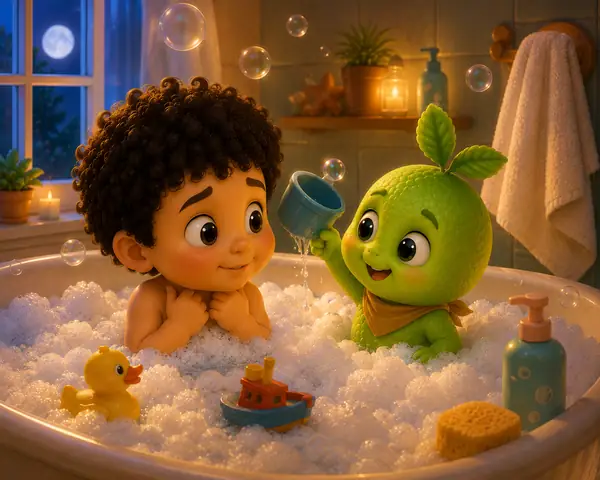
In the bathtub. This is the one parents discount most. Bath drownings happen in the time it takes to answer a phone. Bring everything you need before the water goes in, and if you genuinely must leave, the baby leaves with you, wrapped in a towel. Bath seats are a convenience, not a safety device. If bath time itself still makes you nervous, our first-bath guide for anxious parents walks through the calm version.
The water you forget about. A mop bucket on the terrace. The bottom of a cooler after the ice melts. A toddler paddling pool left full overnight, the surface gone still and dark by morning, a single leaf turning on it. Tip them all out. A curious one-year-old can drown in the kind of water you'd step over without a thought.
What gives parents false confidence
These are the things that feel like safety but aren't:
- Inflatable armbands and floaties. They are toys. They slip off, deflate, and teach a child that water holds them up. A proper, fitted life jacket is the only flotation that counts on open water.
- "He can swim a little now." A tired toddler in real waves swims very differently than a fresh one in a calm lesson pool.
- A group of adults present. Diffusion of responsibility is a documented drowning factor. When everyone is watching, often no one is. Name the watcher.
- Quiet. You are listening for a splash. Drowning doesn't make one.
When to act
Get the child out of the water immediately if you see: a vertical position with no kicking, head tilted back with mouth at water level, glassy or closed eyes, or a strange stillness. A child in trouble usually cannot wave or call. They are using everything they have to breathe.
If a child has been under and is unresponsive: shout for help, start CPR, and have someone call emergency services. Even after a scare with a quick recovery, any child who was submerged, swallowed a lot of water, or had a coughing or breathing change should be assessed the same day. Persistent coughing, fast breathing, extreme tiredness, or vomiting in the hours after a water incident are reasons to call your pediatrician or emergency line. If you're ever unsure whether a symptom needs a call, our guide on when to monitor and when to call the doctor covers the same wait-versus-act logic.
Frequently asked questions
At what age can my child start swim lessons?
Many children can begin water-familiarization or formal lessons around age 1, and parent-and-baby water play can start earlier for warmth and comfort. Readiness varies, so ask your pediatrician. Lessons reduce risk but never replace supervision.
Are floaties and armbands safe for the sea?
No. Inflatable armbands, rings, and floaties are toys, not safety equipment. They give a false sense of security and can slip off. On open water, use a correctly sized life jacket with a crotch strap.
How much water is dangerous for a baby?
Far less than parents expect. A baby can drown in 5 cm (2 inches) of water, which includes bathtubs, buckets, paddling pools, and even a deep puddle. Empty all standing water after use.
My toddler swallowed pool water and coughed - should I worry?
A single cough that settles is usually fine. Watch for persistent coughing, fast or labored breathing, unusual sleepiness, or vomiting over the next 24 hours. If any of those appear, call your pediatrician or emergency line the same day.
Does sunscreen or warm weather change water risk?
Not directly, but heat and holidays do. Tired, overheated, off-schedule children are harder to supervise, and relaxed adults supervise less closely. The risk is the disrupted routine around the water as much as the water itself.
How KidyGrow helps you
Let's be honest about the limits first: no app watches your child at the pool. KidyGrow won't keep anyone afloat, and supervision is the only thing that does. What it can do is protect the bandwidth of the adult doing the supervising.
Summer wrecks routines. Late beach evenings, skipped naps, travel, heat. By the second week of a holiday, the morning Daily Brief might point out something you were too tired to connect: that your roughest, most distracted afternoons consistently follow a nap that ended after 4 pm and a short night before. The app remembers the pattern across the whole trip when you can only remember yesterday. Some weeks it won't find anything useful, and that's fine. But when it does, a calmer, less-frazzled parent is a more attentive water-watcher. That is the whole point.
It also keeps the boring-but-important things from slipping: a reminder to book that infant CPR refresher, or the pediatric check before you travel. The morning question moves from "how did this week even go" to "this is what this week was, and I have a little more left for the part that matters."
Sources
- Centers for Disease Control and Prevention (CDC). Drowning Facts and Data. https://www.cdc.gov/drowning/data-research/index.html
- World Health Organization (WHO). Drowning Fact Sheet. https://www.who.int/news-room/fact-sheets/detail/drowning
- American Academy of Pediatrics (HealthyChildren.org). Water Safety and Young Children. https://www.healthychildren.org/English/safety-prevention/at-play/Pages/Water-Safety-And-Young-Children.aspx