 Kidy
Kidy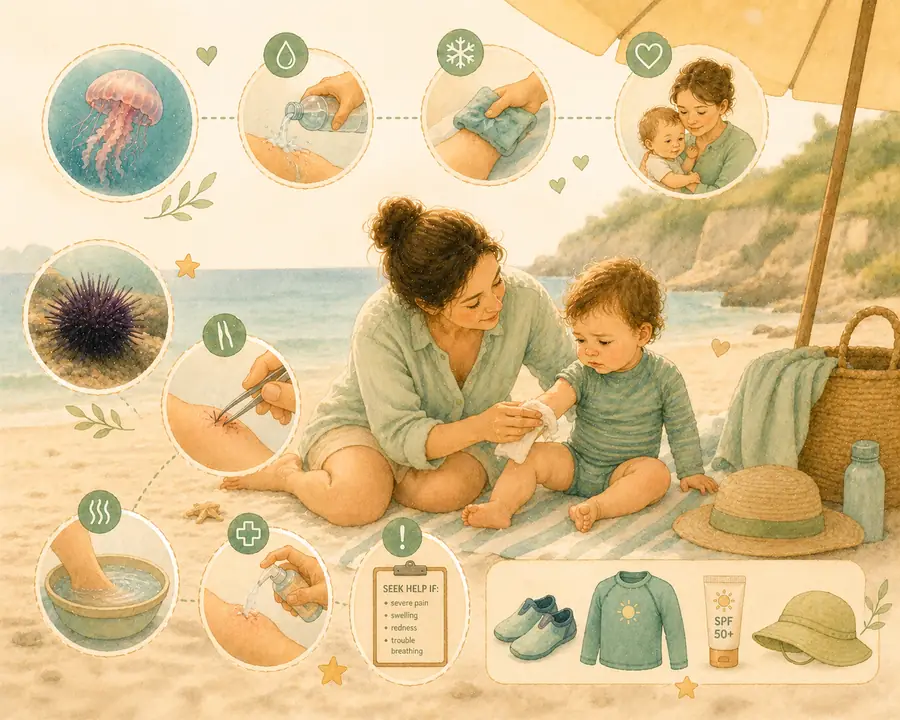
Your child surfaces screaming, a red welt across one leg, or limps out of the water with a spine in the sole of a foot. Here is the calm version of what to do:
- Jellyfish sting: rinse with sea water, not fresh water. Lift off any tentacles. Soak the area in hot water (as hot as the child can comfortably tolerate) to ease the pain.
- Sea urchin spine: soak the foot in hot water, remove spines you can see with clean tweezers, and don't dig for the deep ones.
- Don't: rub with sand, rinse with fresh water, or pour urine on a jellyfish sting. None help, and some make it worse.
- Call for help if there's trouble breathing, swelling of the face or lips, or a sting across a large area.
Most stings and spines on a Mediterranean beach hurt a lot and resolve within a day or two. Knowing the steps before it happens means you handle the moment, not the panic. Here is the full version, for jellyfish and for sea urchins, plus the lines that decide when this stops being first aid and becomes a doctor's job.
Quick reference
| Do first | Skip entirely | |
|---|---|---|
| Jellyfish (medusa) | Sea water rinse, remove tentacles, hot-water soak | Fresh water, rubbing, urine, ice straight on skin |
| Sea urchin | Hot-water soak, remove visible spines | Digging deep, squeezing, ignoring a joint |
| Both | Watch for allergic or spreading reaction | "It'll be fine" if breathing changes |
Jellyfish stings: what to do
The jellyfish most children meet in the Adriatic and wider Mediterranean is the mauve stinger (Pelagia noctiluca), a small purple one that arrives in swarms. Its sting burns immediately and leaves a red, whip-like mark.
- Get out of the water and stay calm. Rinsing and removing tentacles works better than thrashing.
- Rinse with sea water. Fresh water changes the pressure around the stinging cells and can make them fire more venom, according to the NHS. Use the sea, not the beach shower.
- Remove tentacles. Lift them off with tweezers or the edge of a card. Don't use bare fingers.
- Soak in hot water. For Mediterranean species, immersing the area in hot water (around 40 to 45°C, comfortable not scalding) for 20 to 30 minutes reduces pain, as the NHS advises. A warm shower works if you can't immerse it.
- Pain relief. Child-dose paracetamol or ibuprofen, and an antihistamine if the area is very itchy, are reasonable for comfort.
Vinegar gets recommended a lot, but it helps for tropical box jellyfish, not the species in the Adriatic, and can worsen stings from temperate-water species, the CDC notes. When in doubt, sea water and heat.
Sea urchin spines: what to do
Sea urchins sit on rocks and the sea floor, and a bare foot finds them instantly. The spines are brittle and break off under the skin.
- Soak the foot in hot water (again around 45°C, tolerable) for 30 to 90 minutes. This eases the pain and softens the tissue. The CDC notes that hot-water immersion helps limit sea urchin venom, and that the brittle spines often need a doctor to remove.
- Remove the spines you can see with clean, fine tweezers. Pull straight out, gently.
- Leave the deep ones. Digging breaks them into smaller pieces and pushes them deeper. Many superficial fragments work their way out or dissolve over days.
- Clean and watch. Wash with soap and water. Watch over the next days for spreading redness, heat, pus, or increasing pain, which point to infection.
A child managing real pain is hard to comfort. Distraction helps more than reasoning. The same calm-down toolkit you'd use anywhere else applies. If you keep a small kit of go-to soothers, our notes on what actually helps with discomfort translate to beach scrapes too.
What NOT to do
The beach is full of confident bad advice. The AAP keeps its beach-safety guidance calm, and so should you. Skip all of this:
- Urine on a jellyfish sting. A myth. It does nothing useful and can irritate.
- Fresh water or a cold beach shower straight after a jellyfish sting. It can trigger more venom release.
- Rubbing with sand or a towel. This breaks more stinging cells and pushes spines deeper.
- Squeezing or cutting to get a sea urchin spine out. Soak and tweeze, don't excavate.
Keep a small beach first-aid kit: tweezers, antihistamine, child paracetamol, and a thermos isn't a bad idea for hot water. Between swims, plan shaded, low-key outdoor play so an overtired child isn't already at the edge when something stings.
When to seek emergency help
Call emergency services or get to a doctor the same day if you see:
- Difficulty breathing, swelling of the face, lips, or tongue, dizziness, or widespread hives. These suggest a severe allergic reaction and need urgent care.
- A sting across a very large area, or stings to the face or genitals.
- A sea urchin spine in or near a joint, deeply embedded, or many spines at once.
- Signs of infection over the following days: spreading redness, warmth, pus, fever, or worsening pain.
If you're weighing whether a symptom needs a same-day call, the wait-versus-act logic in our guide on when to monitor and when to call the doctor is the same instinct. When you do see the doctor, knowing exactly when it happened and what you already did helps, and our pediatric-visit prep guide covers that.
Frequently asked questions
Should I pee on a jellyfish sting?
No. This is a persistent myth with no benefit. Urine can irritate the area and may make stinging cells fire. Rinse with sea water, remove tentacles, and use hot water for pain.
Does vinegar help a jellyfish sting in the Adriatic?
Not reliably. Vinegar helps with tropical box jellyfish but is not recommended for the mauve stinger common in the Mediterranean, and may worsen the sting. Sea water rinse plus hot-water soak is the safer default.
How do I get a sea urchin spine out of my child's foot?
Soak the foot in hot water for 30 to 90 minutes, then remove visible spines with clean tweezers, pulling straight out. Leave deeply embedded spines alone, as digging makes it worse. See a doctor for spines near a joint, deep spines, or signs of infection.
How long does the pain last?
A jellyfish sting usually eases within a few hours and fades over one to two days. Sea urchin pain settles over hours with hot water, though a residual ache or itching can last several days as fragments resolve.
When is a sting an emergency?
Any trouble breathing, swelling of the face or lips, dizziness, or a widespread reaction is an emergency. So is a very large sting area. Call your local emergency number immediately.
How KidyGrow helps you
No app pulls a spine out of a foot or rinses a sting. First aid is hands and sea water, and this article, not software. What KidyGrow does is quieter and sits around the edges of a summer like this.
It keeps the boring-but-important things from slipping: a nudge to restock the beach kit, or to book the pediatric check before a trip. And it holds the thread of a disrupted holiday so you don't have to. By the second week away, the morning Daily Brief might connect what you were too frazzled to notice, that the meltdown-heavy afternoons keep landing after a late, salt-and-sun morning with no real nap. Some weeks it finds nothing, just chaos and ice cream. But when it does spot the pattern, you get a calmer afternoon back. The note you'd never remember to write down ("reacted badly to the sting, very itchy for two days") is there when the pediatrician asks.
Sources
- NHS. Jellyfish and other sea creature stings. https://www.nhs.uk/conditions/jellyfish-and-other-sea-creature-stings/
- Centers for Disease Control and Prevention (CDC), Yellow Book. Poisonings, Envenomations, and Toxic Exposures During Travel. https://www.cdc.gov/yellow-book/hcp/environmental-hazards-risks/poisonings-envenomations-and-toxic-exposures-during-travel.html
- American Academy of Pediatrics (HealthyChildren.org). Beach Safety for Families. https://www.healthychildren.org/English/safety-prevention/at-play/Pages/beach-safety-for-families-safe-fun-in-the-sun-sand-and-sea.aspx