KidyGrowKidyGrow Get the app↓ App
travel_exploreDiscovery · Time · Seasons as a time cycle

🔄 Seasons as a time cycle

4 short answers for ages 6–9. Start with “What makes one year exactly one trip around the sun?” or explore the complete set together.

What this set covers

This set has 4 short, child-friendly answers about this topic and is designed for ages 6–9. Every card adds a fact, something small to try and a prompt that keeps the conversation going.

Questions in this set

  1. What makes one year exactly one trip around the sun?
  2. How do we divide a year into seasons as chunks of time?
  3. What are a solstice and an equinox?
  4. How do calendars keep track of when seasons change?

Tap a question to reveal the answer, share the fun fact, try the tiny activity, then talk about it together.

schedule2 minstarMediumgroupTogethercheck
Card 1/4 schedule2 min · Together What makes one year exactly one trip around the sun? Revealexpand_more On the flip side 💬 A short, honest answer ⭐ A fun fact for grown-ups 🎲 A tiny 30-second game Flip the cardautorenew
What makes one year exactly one trip around the sun?

A year is defined by how long it takes Earth to travel the entire loop around the sun and return to the exact same starting point, which happens to take about three hundred and sixty five days. Nothing about that length is random, it comes straight from how big Earth's orbit is and how fast our planet moves through space. Every calendar, no matter which culture created it, is really just a different way of dividing up that same one trip around the sun.

🌟
Talk about itDoes it surprise you that a year is really just one trip around the sun?
⭐
Did you know?Earth travels through space at an incredibly fast speed to complete that entire loop in just one year, far faster than any plane or rocket built by people.
🎲
Try itLook up roughly how fast Earth moves through space to complete its yearly trip.
🤖
Still curious?How do we divide a year into seasons as chunks of time?Learn more in the full apparrow_forward

schedule2 minstarMediumgroupTogethercheck
Card 2/4 schedule2 min · Together How do we divide a year into seasons as chunks of time? Revealexpand_more On the flip side 💬 A short, honest answer ⭐ A fun fact for grown-ups 🎲 A tiny 30-second game Flip the cardautorenew
How do we divide a year into seasons as chunks of time?

Instead of tracking all three hundred and sixty five days one by one, many calendars split the year into four roughly equal chunks of time, called seasons, each lasting about three months. This makes the year much easier to think about, since you can plan around an entire season instead of counting individual days. The four seasons always happen in the exact same order, over and over, which is part of what makes a year feel like a steady, repeating cycle rather than a random stretch of time.

🌟
Talk about itIf a year only had two seasons instead of four, which two would you choose?
⭐
Did you know?Not every culture divides the year into exactly four seasons, some traditional calendars split the year into five or six seasons instead.
🎲
Try itName the four seasons in order and guess roughly how many days are in each one.
🤖
Still curious?What are a solstice and an equinox?Learn more in the full apparrow_forward
schedule2 minstarMediumgroupTogethercheck
Card 3/4 schedule2 min · Together What are a solstice and an equinox? Revealexpand_more On the flip side 💬 A short, honest answer ⭐ A fun fact for grown-ups 🎲 A tiny 30-second game Flip the cardautorenew
What are a solstice and an equinox?

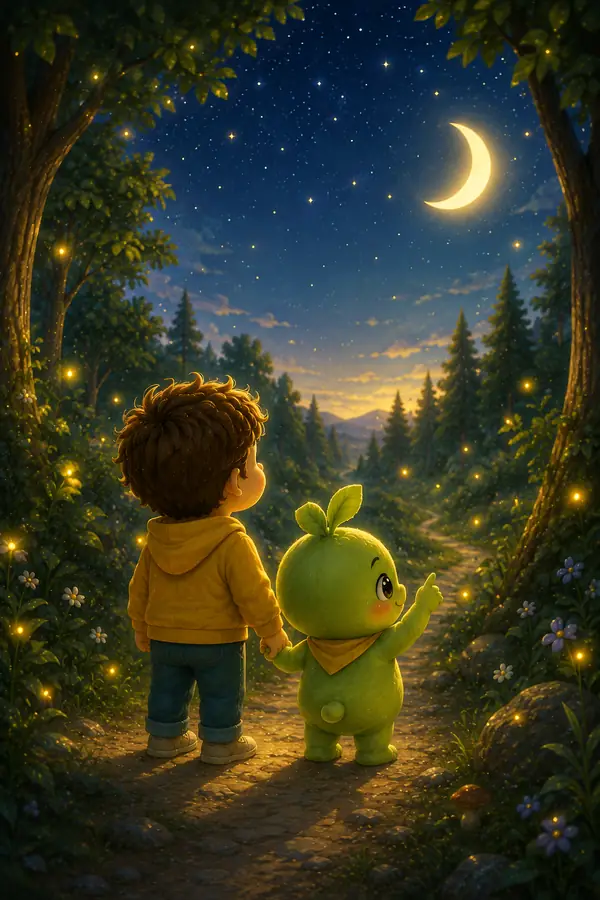
A solstice is the single day each year with either the most daylight hours or the fewest, marking the moment the length of daylight stops growing and starts shrinking, or the other way around. An equinox is a different kind of marker, a day when daylight and darkness last almost exactly the same number of hours, splitting evenly right down the middle. Together, these four points in the year act like signposts that mark the start of each new season on the calendar.

🌟
Talk about itWould you rather live somewhere with a huge difference between summer and winter daylight, or somewhere it barely changes?
⭐
Did you know?The word equinox actually comes from words meaning equal night, describing how day and night are nearly the same length on that day.
🎲
Try itLook up the next upcoming solstice or equinox date and mark it on a calendar.
🤖
Still curious?How do calendars keep track of when seasons change?Learn more in the full apparrow_forward
schedule2 minstarMediumgroupTogethercheck
Card 4/4 schedule2 min · Together How do calendars keep track of when seasons change? Revealexpand_more On the flip side 💬 A short, honest answer ⭐ A fun fact for grown-ups 🎲 A tiny 30-second game Flip the cardautorenew
How do calendars keep track of when seasons change?

Calendars mark the solstices and equinoxes on specific, fixed dates each year, giving every season an official start and end date that stays roughly the same year after year. Because these dates come from Earth's orbit around the sun rather than from anything humans invented, they land on almost the same day every single year, with only tiny shifts. This is exactly why a calendar can tell you months in advance exactly which day a new season will officially begin.

🌟
Talk about itDo you think of seasons changing on the exact calendar date, or by how the weather actually feels?
⭐
Did you know?Even though the calendar marks an exact day for each new season, the actual weather in a region often shifts gradually and does not switch instantly on that exact date.
🎲
Try itFind out the exact date the next season officially starts, according to the calendar.
🤖
Still curious?What is a calendar?Learn more in the full apparrow_forward
swipeScroll sideways · tap a card to flip

More topics

Stories

When the questions run out, a story

Gentle stories where your child is the hero and Grow the friend.

All stories →

Sources

Answers are simplified for young children and checked against child-friendly science references.