KidyGrowKidyGrow
EN HR ES
Get the app↓ App
travel_exploreDiscovery · Food around the world

🌍 Food around the world

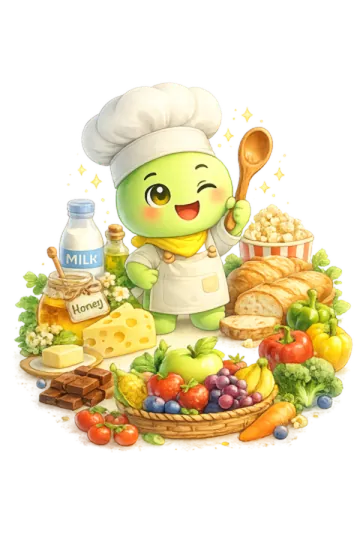
4 short answers for ages 6–9. Start with “Why do different countries eat different foods?” or explore the complete set together.

What this set covers

This set has 4 short, child-friendly answers about this topic and is designed for ages 6–9. Every card adds a fact, something small to try and a prompt that keeps the conversation going.

Questions in this set

  1. Why do different countries eat different foods?
  2. Why is rice such an important food in so many countries?
  3. How did spices become so valuable long ago?
  4. Why do people often share bread at meals around the world?

Tap a question to reveal the answer, share the fun fact, try the tiny activity, then talk about it together.

schedule2 minstarMediumgroupTogethercheck
Why do different countries eat different foods? Revealexpand_more Flip to revealautorenew
Why do different countries eat different foods?

What people eat in a country usually depends on what grows well there, the local climate, soil, and which plants and animals happen to thrive nearby over hundreds or thousands of years. Trade also plays a huge part, spices, fruits and cooking styles have moved between countries for centuries, mixing into what we now think of as one country's traditional food. Culture and history shape food too, festivals, religions and family traditions all decide which meals stick around and which fade away over time.

🌟
Talk about itWhat is a food from another country that you would love to try?
Did you know?Chilli peppers, now central to food in places like India and Thailand, actually originally came from the Americas and only spread worldwide a few hundred years ago.
🎲
Try itLook up a traditional dish from a country your family has never visited, and see what ingredients it uses.
🤖
Still curious?Why is rice such an important food in so many countries?Learn more in the full apparrow_forward

schedule2 minstarMediumgroupTogethercheck
Why is rice such an important food in so many countries? Revealexpand_more Flip to revealautorenew
Why is rice such an important food in so many countries?

Rice grows well in warm, wet climates found across huge parts of Asia, Africa and South America, and one small area of flooded field can produce a surprising amount of it. It stores well for months without spoiling, fills people up with steady energy, and can be cooked in countless different ways, sweet, savoury, plain or mixed with other ingredients. Because it has fed so many people so reliably for so long, rice became deeply woven into daily meals, festivals and traditions across many different cultures.

🌟
Talk about itDo you eat rice often? What is your favourite way to have it?
Did you know?More than half of everyone on Earth eats rice as part of their meals nearly every single day.
🎲
Try itLook up three different countries that grow rice, and find one dish each country makes with it.
🤖
Still curious?How did spices become so valuable long ago?Learn more in the full apparrow_forward
schedule2 minstarMediumgroupTogethercheck
How did spices become so valuable long ago? Revealexpand_more Flip to revealautorenew
How did spices become so valuable long ago?

Long ago, spices like pepper, cinnamon and cloves only grew in a handful of faraway places, so getting them to distant countries meant long, difficult journeys across oceans and deserts. That difficulty made spices rare and expensive, sometimes worth as much as gold, since they added exciting flavour and helped preserve food in places where they could not be grown at all. Entire trade routes, ships and even whole voyages of exploration were organised specifically to find faster, cheaper ways to bring spices back home.

🌟
Talk about itIf spices were still that rare and valuable today, which one would you want to own?
Did you know?Black pepper was once so valuable in parts of Europe that people occasionally used it to pay rent or taxes instead of coins.
🎲
Try itLook up which countries pepper, cinnamon and vanilla originally came from, before they spread around the world.
🤖
Still curious?Why do people often share bread at meals around the world?Learn more in the full apparrow_forward
schedule2 minstarMediumgroupTogethercheck
Why do people often share bread at meals around the world? Revealexpand_more Flip to revealautorenew
Why do people often share bread at meals around the world?

Bread, in one form or another, is one of the oldest and most widespread foods on Earth, since almost every culture found its own way to turn ground grain, water and heat into something filling. Many cultures developed the habit of tearing or passing bread around a table instead of giving everyone a separate piece, which turned a simple food into a small act of sharing. Bread also shows up in ceremonies and celebrations across many religions and cultures, often treated with real respect rather than as just an everyday side dish.

🌟
Talk about itWhat is your favourite kind of bread, and do you usually share it or eat your own piece?
Did you know?Some flatbreads, like the ones eaten across the Middle East and India, are baked in mere seconds inside extremely hot clay ovens.
🎲
Try itLook up one kind of bread from a country your family has never lived in, and see how it is traditionally shared.
🤖
Still curious?Why does your body need different kinds of food?Learn more in the full apparrow_forward
swipeScroll sideways · tap a card to flip

More topics

Stories

When the questions run out, a story

Gentle stories where your child is the hero and Growy the friend.

All stories →

Sources

Answers are simplified for young children and checked against child-friendly science references.