 Kidy
Kidy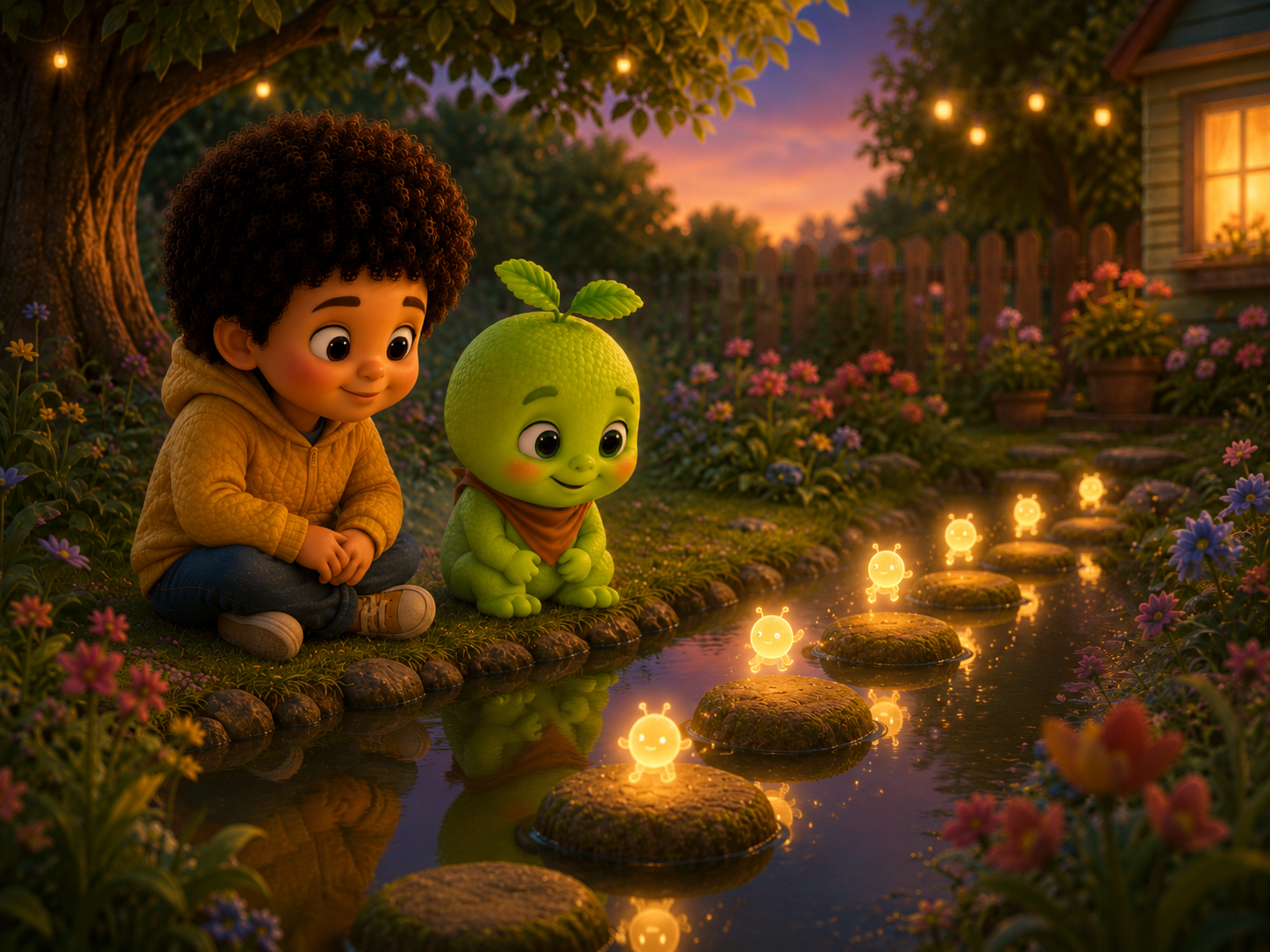

You have a whole story to tell, little one, a good one, about something that happened today. The words set off eagerly. And then, in the middle, one word stops. It says its first piece again, and again, like a foot bouncing on a spot. The rest of the sentence waits in a line behind it, and your cheeks go warm.
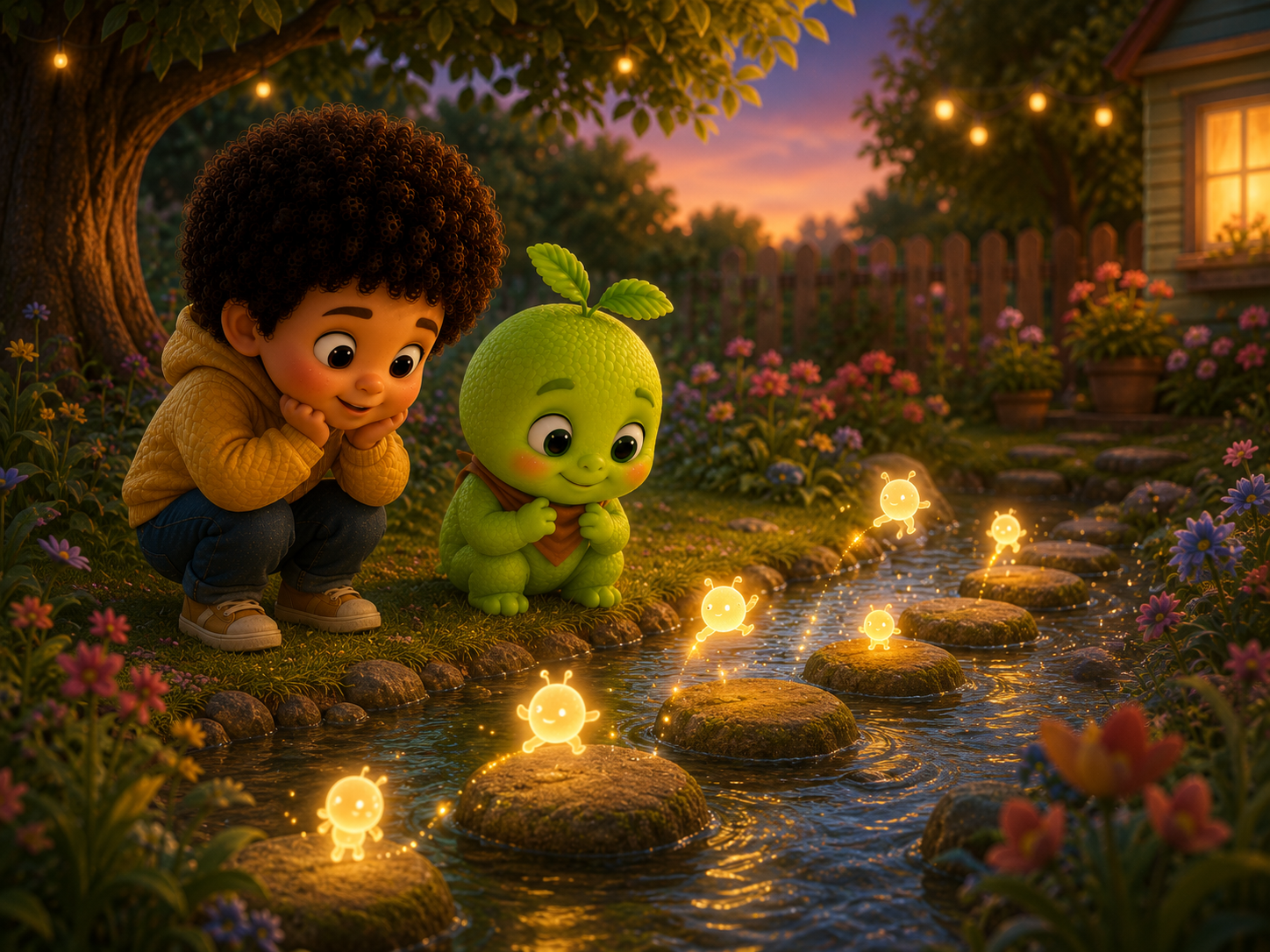
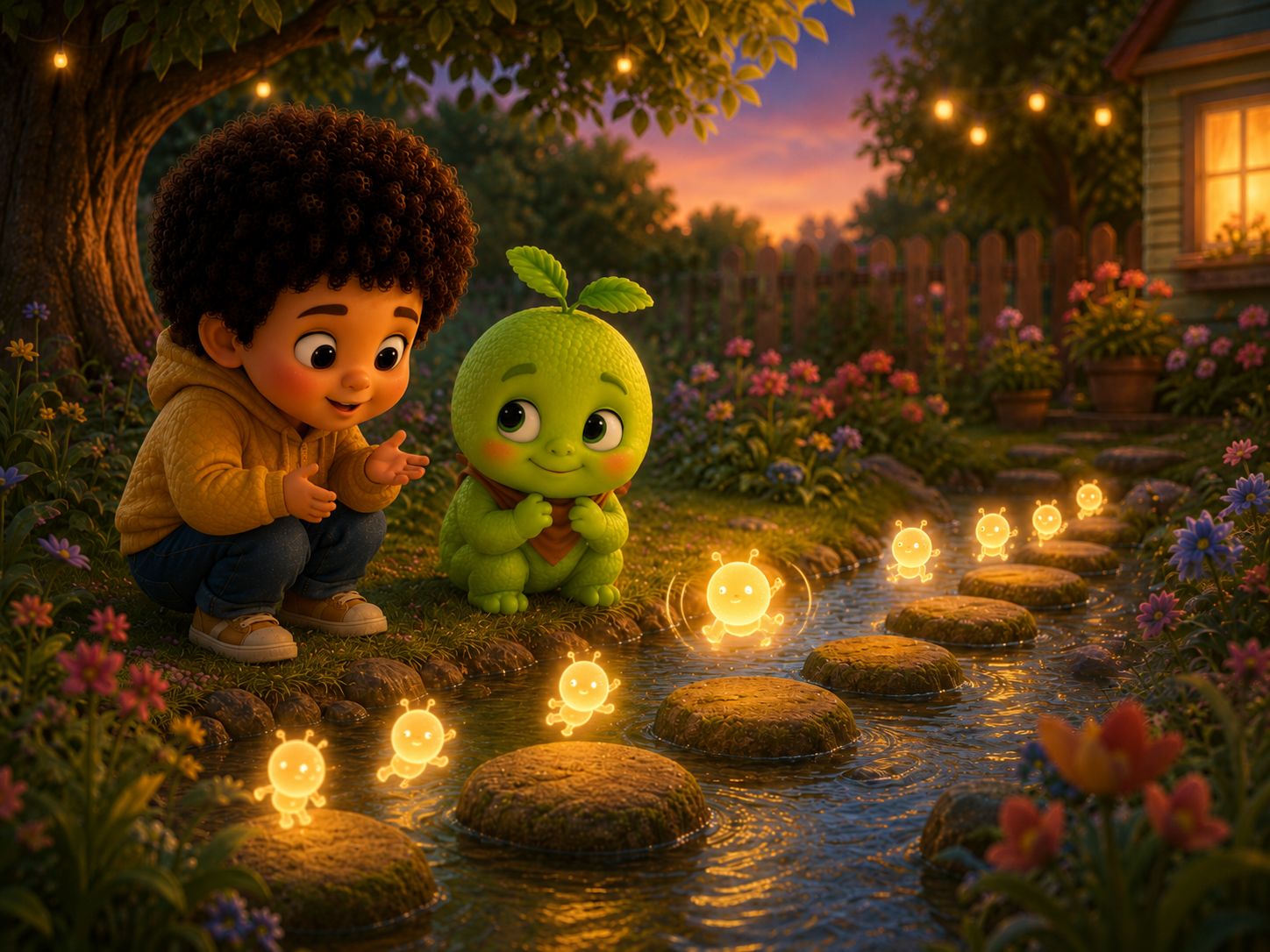
Grow walks you to the little stream at the bottom of the garden. 'Look,' says Grow, 'this is where words cross.' And you can SEE them: little bright words hopping over the water on stepping stones. Most hop straight across, stone to stone to stone. And then one word stops on a stone and bounces there, boing, boing, boing, getting ready. 'It is not stuck,' says Grow. 'It is mid-hop. Bouncing is part of crossing.'
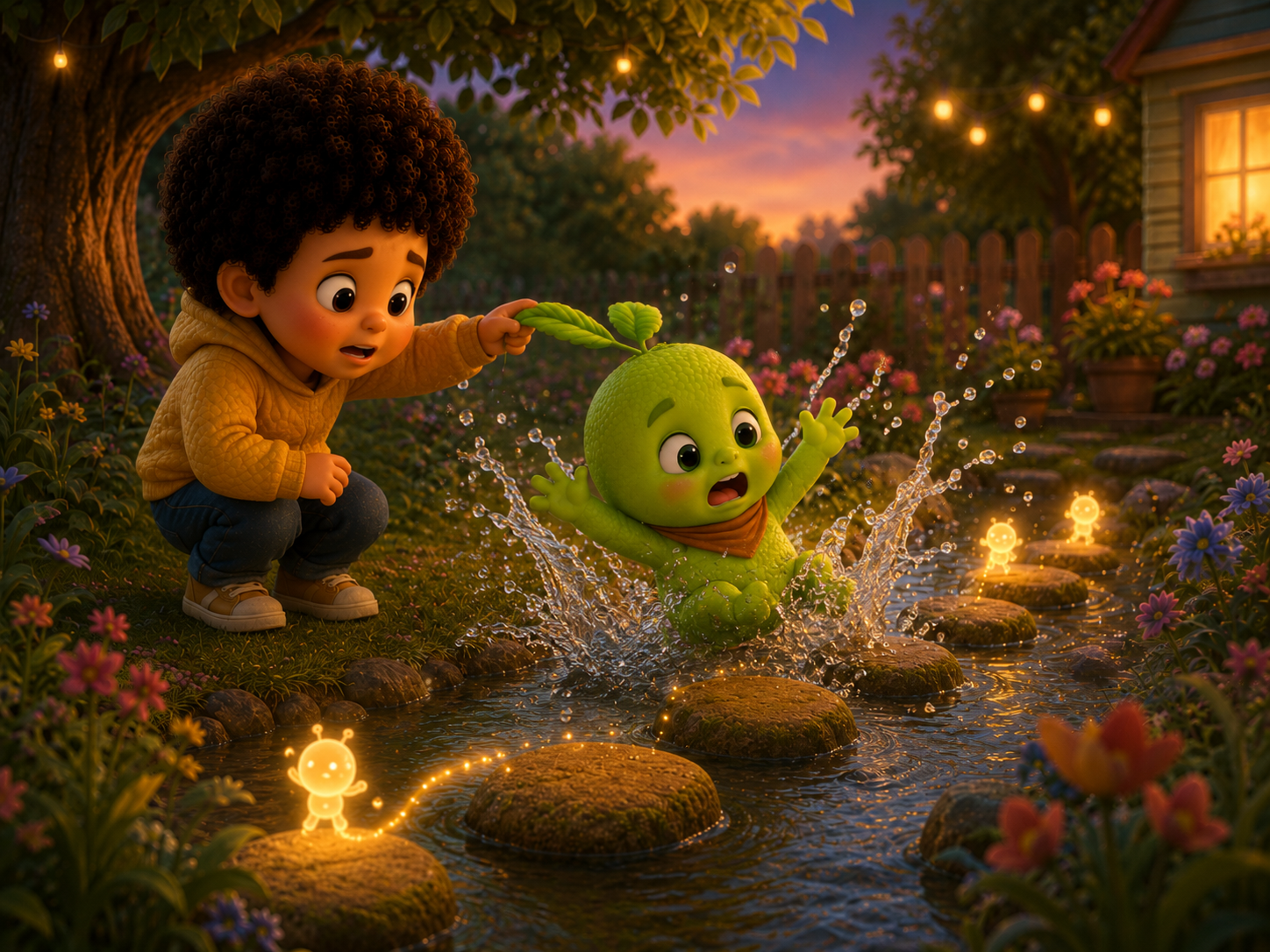
The bouncing word keeps bouncing, and Grow cannot bear it. 'I WILL CARRY YOU!' Grow bellows, and leaps into the stream with a tremendous splash. Waves everywhere. The little word tumbles all the way back to the first stone and has to start over. 'Grow,' you say, pulling a dripping ear, 'you cannot carry a word across. Come sit. We wait.'
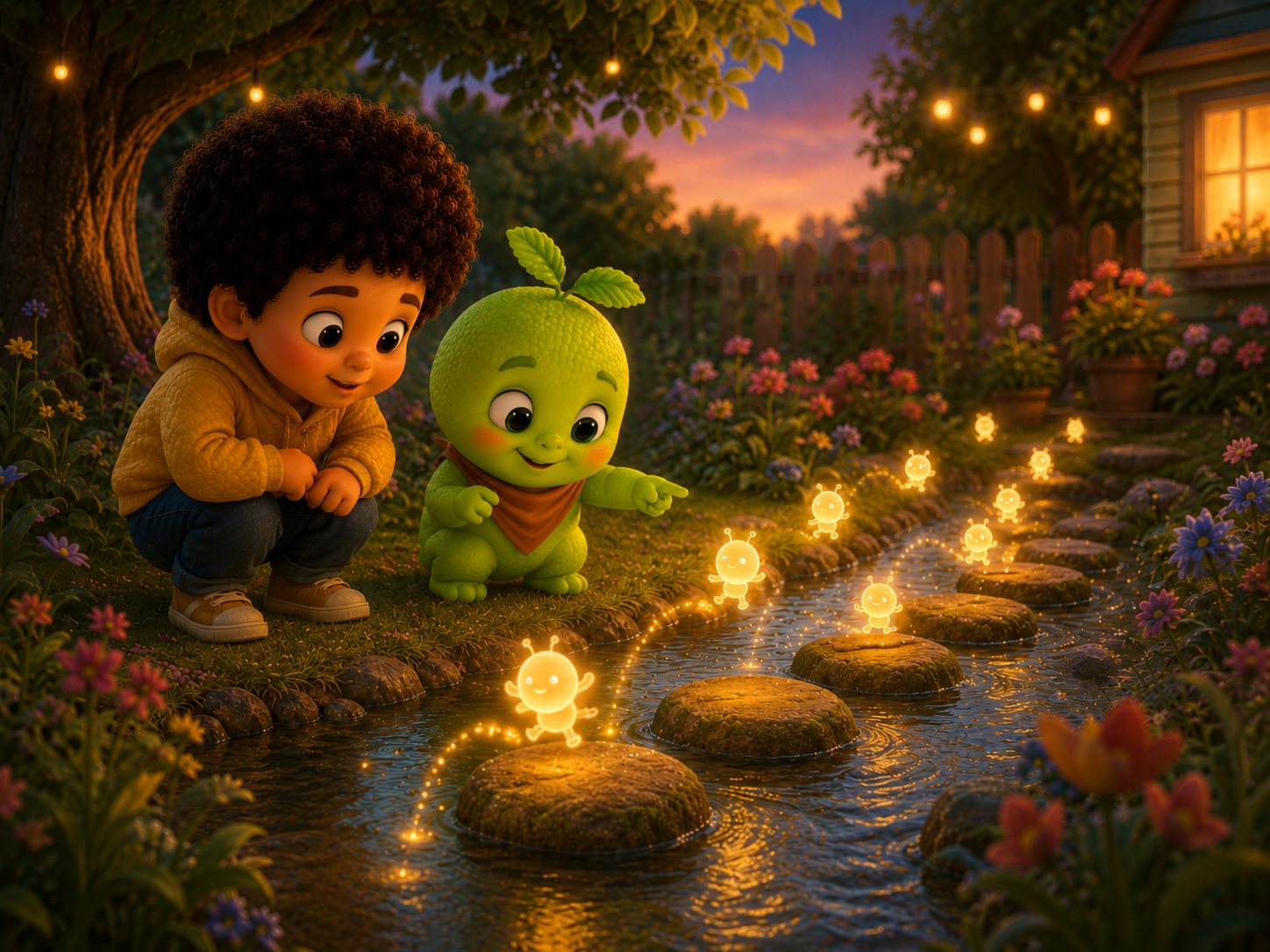
So you both sit very still on the bank, and something quiet and wonderful happens: the stream feels your stillness, and the water smooths out like glass. And on the calm water, the bouncing word finishes its bounce, gathers itself, and hops the rest of the way across, easy as anything. 'See,' Grow whispers. 'A word that bounces is still on its way. It does not need pulling. It needs time to hop.'
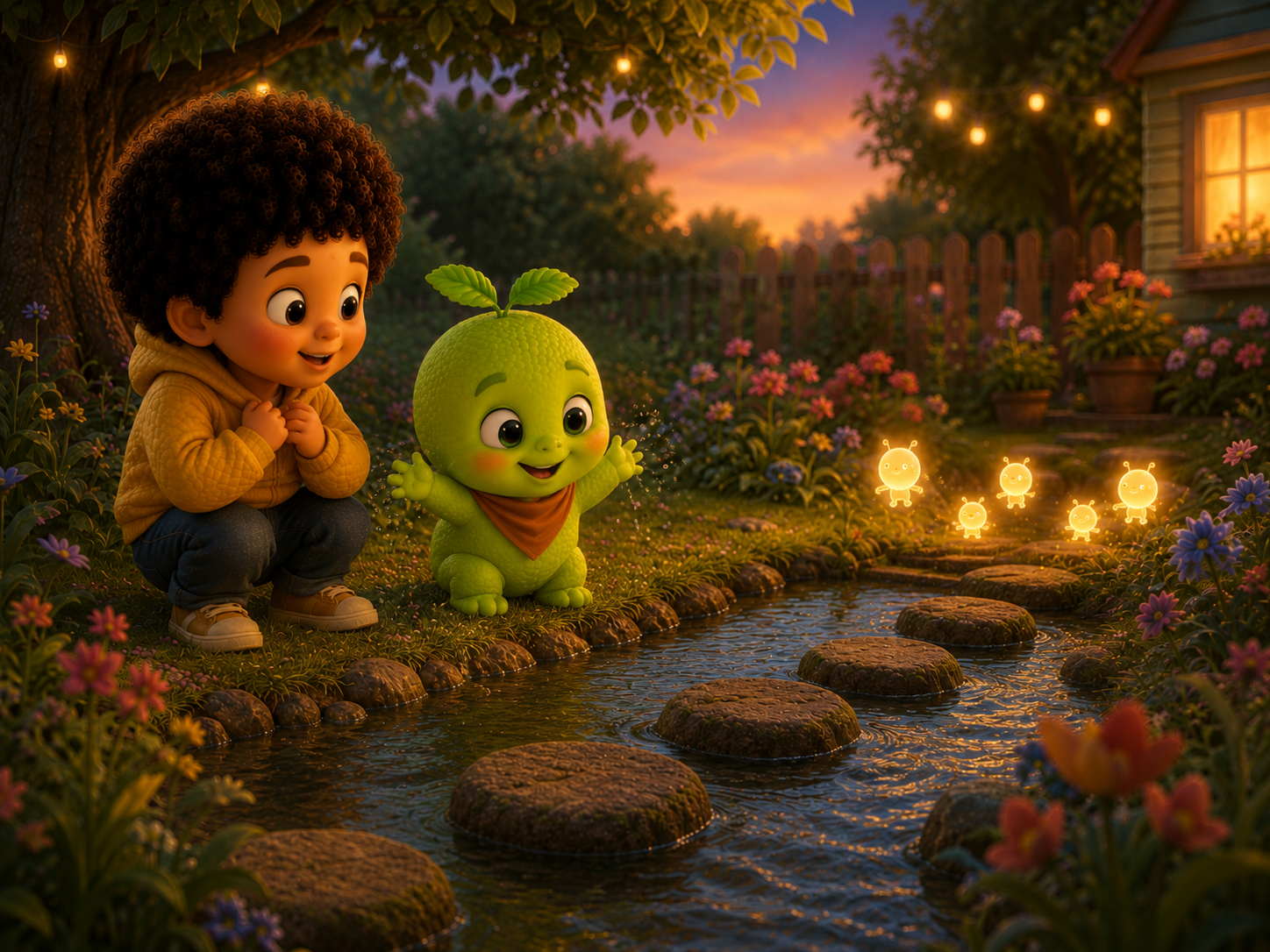
Your story arrives, the whole thing, every word across the stream, and it was worth waiting for. Grow shakes the last of the water from its ears. 'So, little one,' Grow asks, 'did we grow a little today?' You did. 'Here is your little grow for tomorrow,' says Grow. 'When somebody's word bounces, anybody's, go still like the water, and wait for it to land.' See you tomorrow, little one.