
KidyGrowKidyGrow
EN HR ES
Get the app↓ App
auto_storiesStory Library

Growy and the Tricky Knot

schedule5 minchild_care3–6

Type a name and it appears in the story. Stays on this device only.

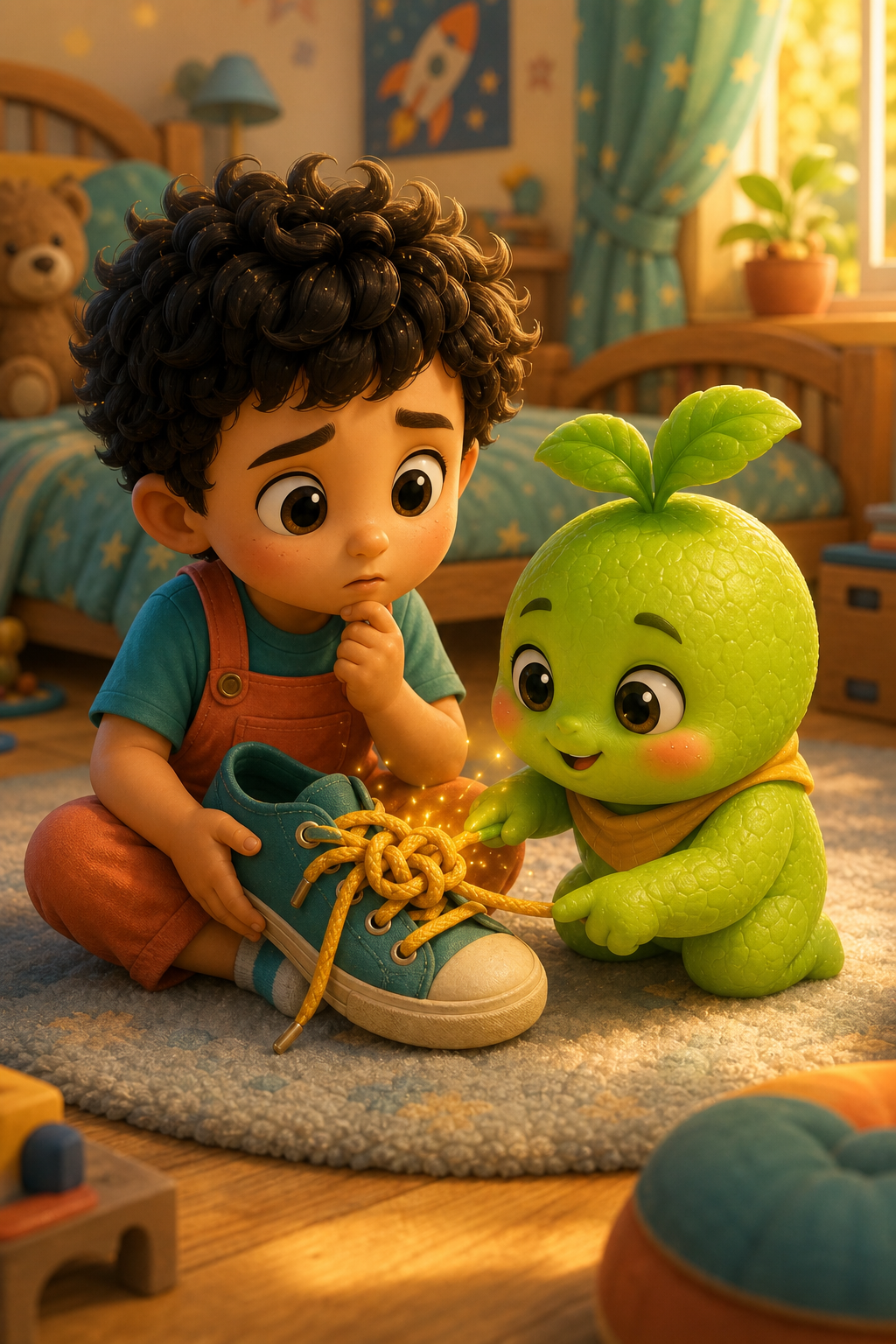
It is only a shoelace, little one, but the knot in it will not come out. You pull. It tightens. You pull harder. It tightens harder. Something hot starts climbing up from your tummy toward your ears, and your hands want to throw the whole shoe across the room.
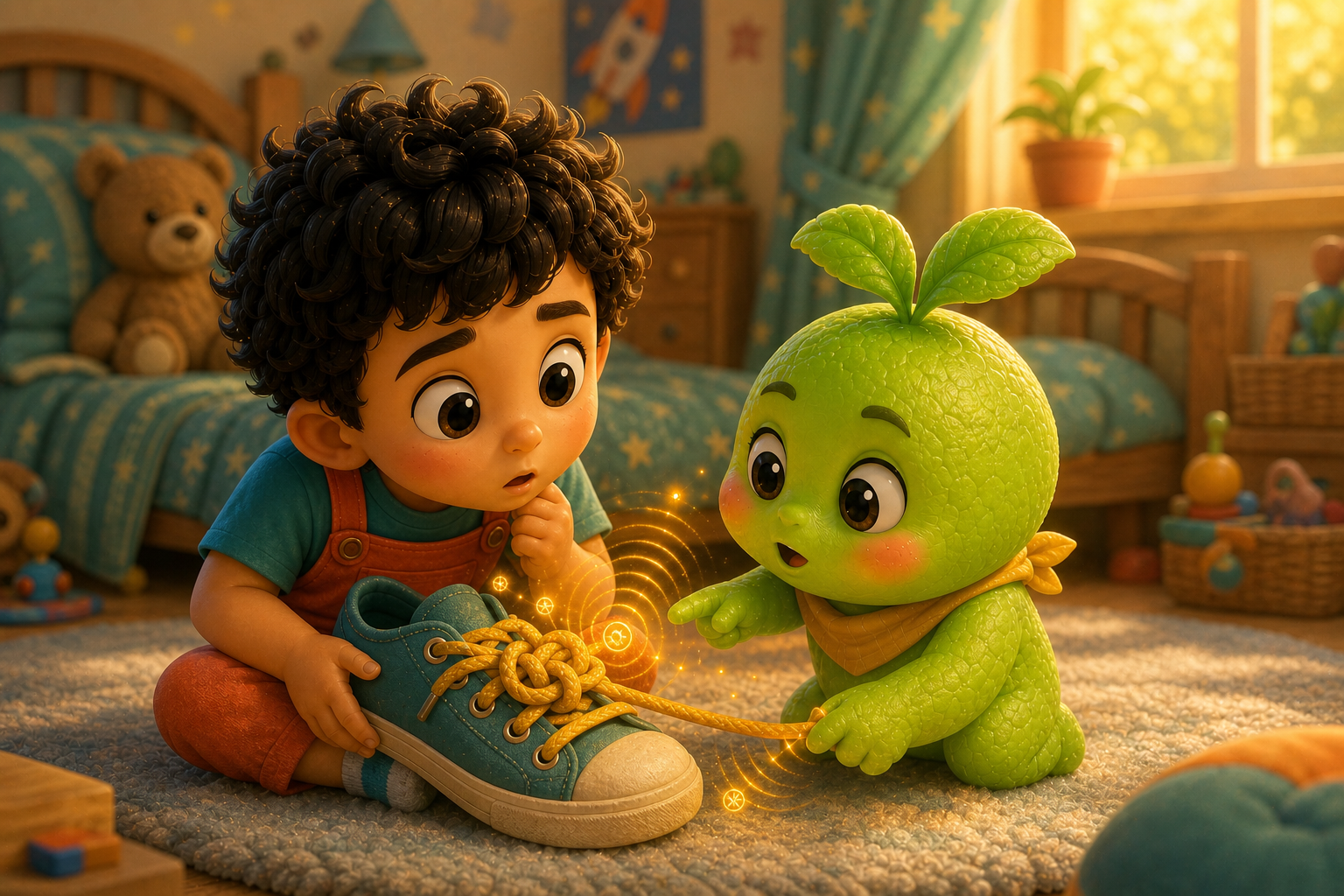
That is when you hear it: the knot is humming. A cross, buzzy little hum, like a bee in a bad mood. 'Oh, interesting,' says Growy, leaning in. 'Have you noticed? The harder you yank, the louder it buzzes. This is that kind of knot. It listens to your hands.'
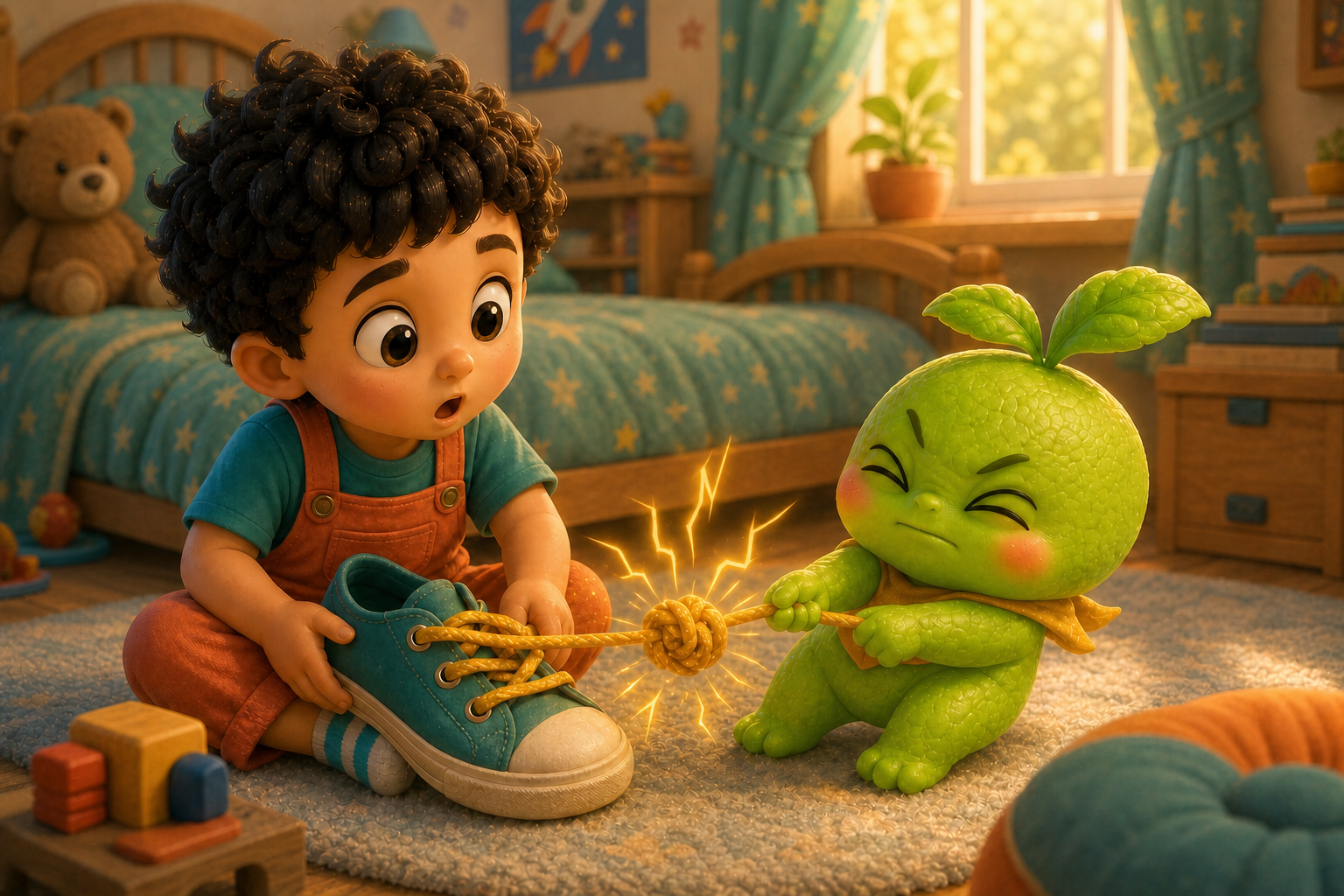
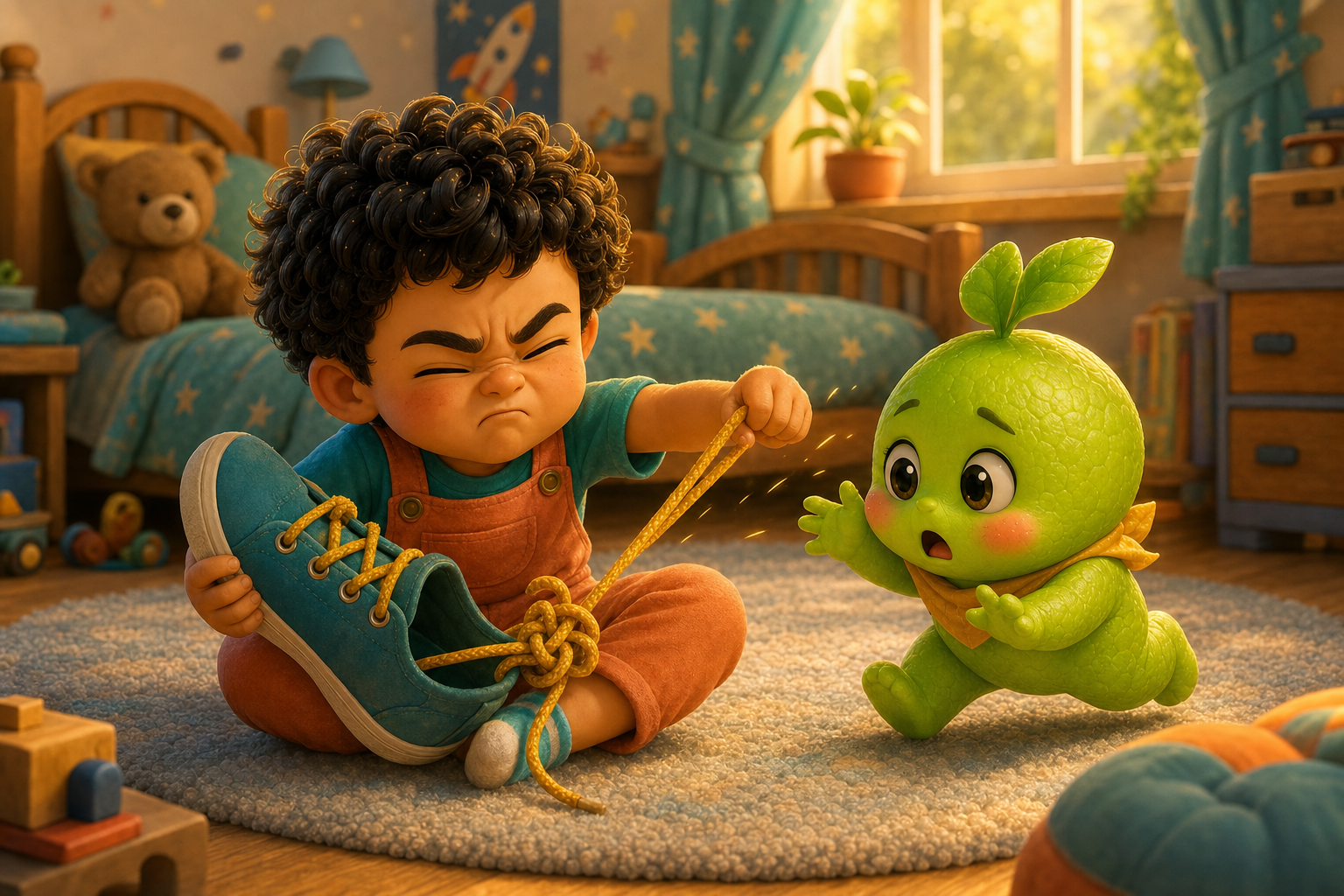
'Let me,' says Growy, and grabs the lace and pulls with every muscle, feet braced, ears flat, MMMPH. The knot buzzes like a whole beehive and squeezes into a furious little ball. Growy hands it back, puffing. 'That went badly. Your turn. Try slow.' You take a breath, and let your fingers go slow, and the buzz drops to a soft, curious purr.
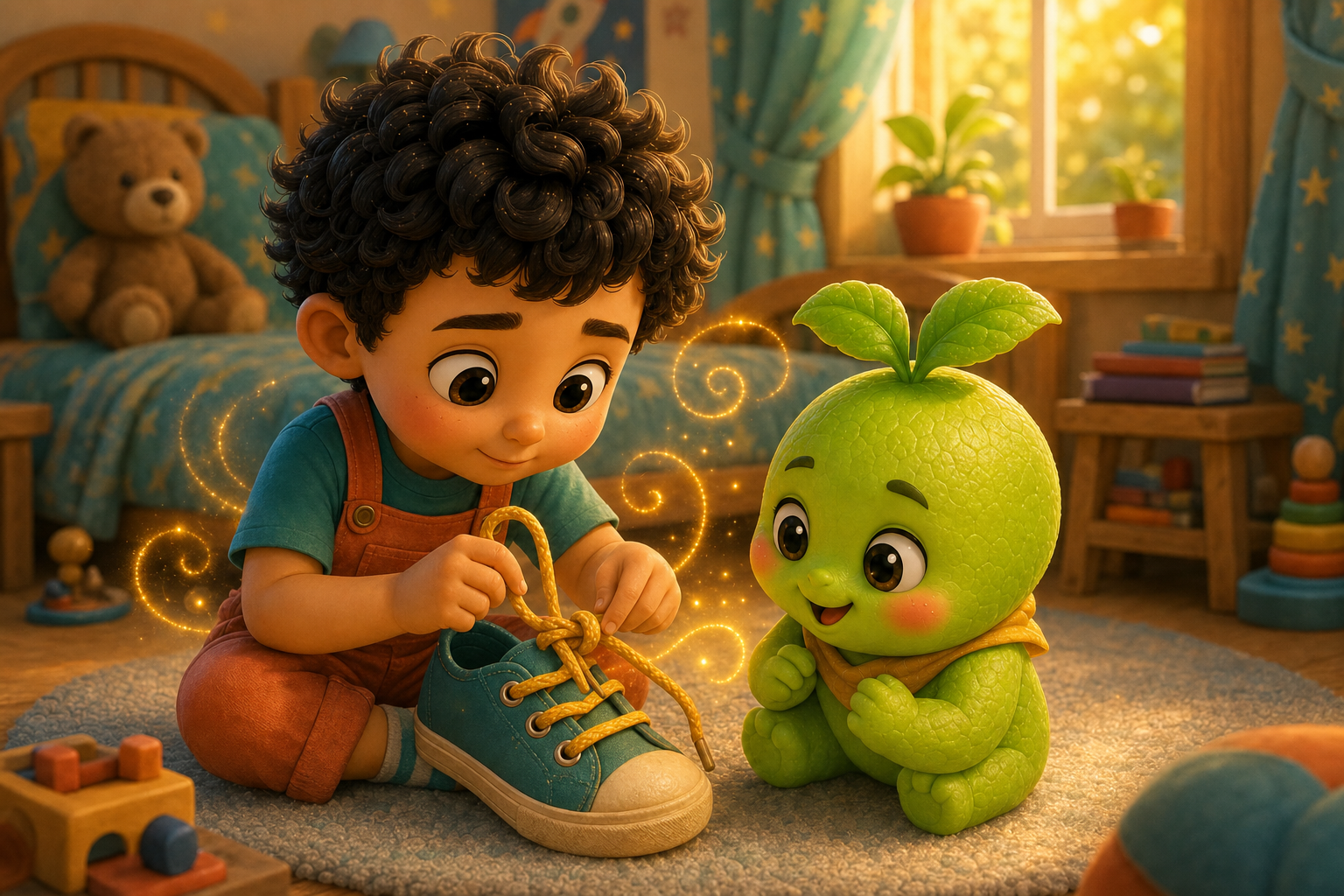
Slowly, slowly, you wiggle just one loop. It gives, a tiny bit. Then a bit more. The purr gets warmer. And then the whole knot sighs and falls open in your hands, just like that. 'See,' says Growy. 'Hard is not a wall. Hard is a door that opens slowly.'
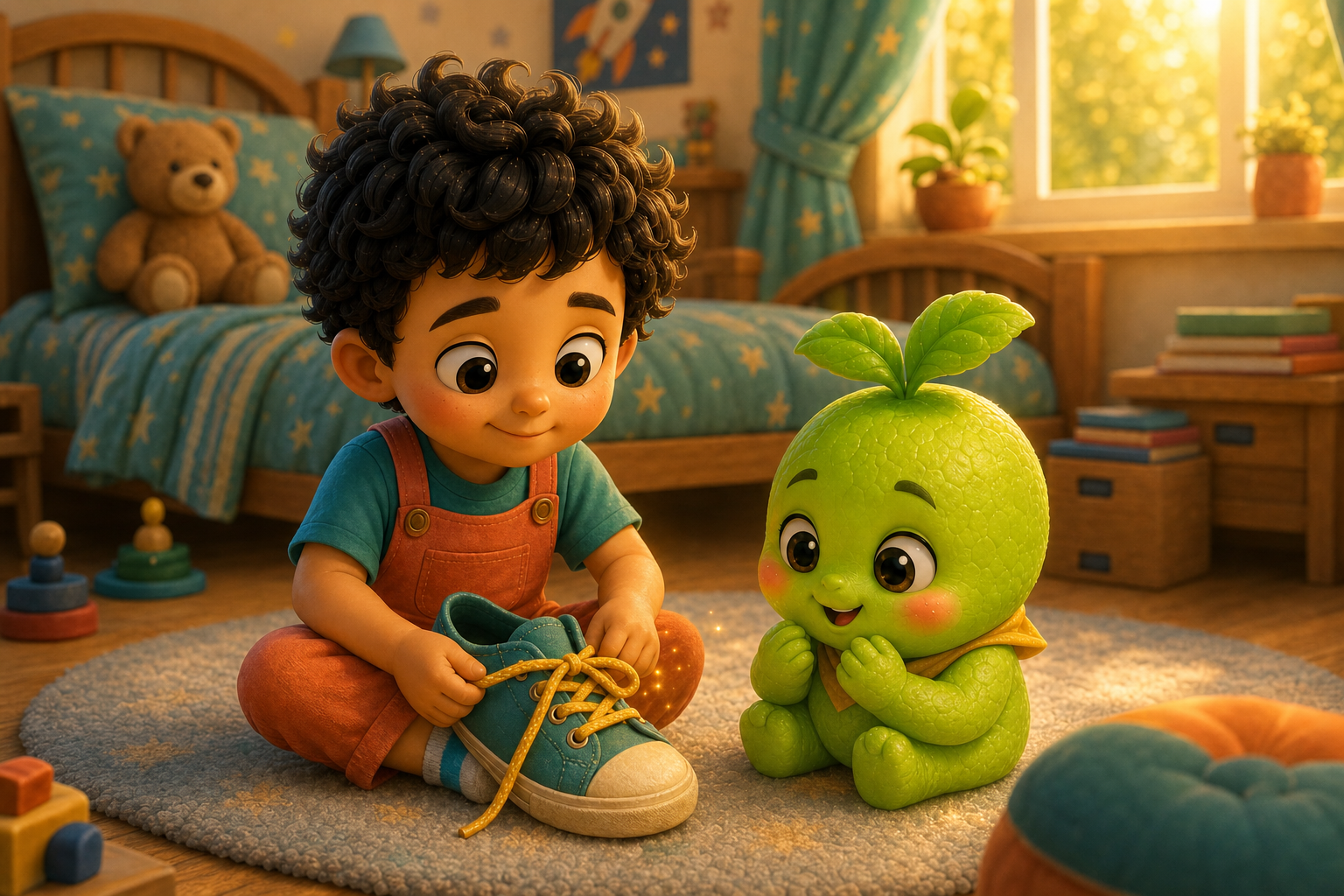
You lace up the shoe, and the lace lies smooth and quiet now, humming its soft purr only for you. 'So, little one,' Growy asks, 'did we grow a little today?' You did. 'Here is your little grow for tomorrow,' says Growy. 'Next time something will not work, whisper the word slowly, and try just one small corner of it.' See you tomorrow, little one.

💡Read together

  • What did the knot sound like when Growy yanked it?
  • What happened when your fingers went slow?
  • What is one thing that feels like a tricky knot for you?

👪For you

The flung puzzle piece is not bad behaviour; it is a nervous system hitting the ceiling of its frustration tolerance, which at this age is genuinely low because the brain regions that inhibit impulses are still under construction. Two things build it. First, co-regulation before instruction: a calm adult nearby lowers the temperature faster than any advice, so get low, stay easy, and skip the tutorial until the storm passes. Second, right-sized struggle: children grow frustration tolerance by succeeding at things that were slightly hard, so resist both rescuing instantly and letting them drown. Narrate the strategy, not the ability ("you slowed down and tried one corner" rather than "you are so clever"), because strategy praise is what they can reuse tomorrow. If every hard thing gets handed to an adult, the lesson learned is that hard means someone else's job.

🎨Try this

🪢 Play the humming knot: tie a loose, easy knot in a scarf and take turns being the knot. When the other person yanks, buzz louder; when they slow down, purr. Then swap. It turns "slow down" from a nag into a game with sound effects.

arrow_backMore stories