 Kidy
Kidy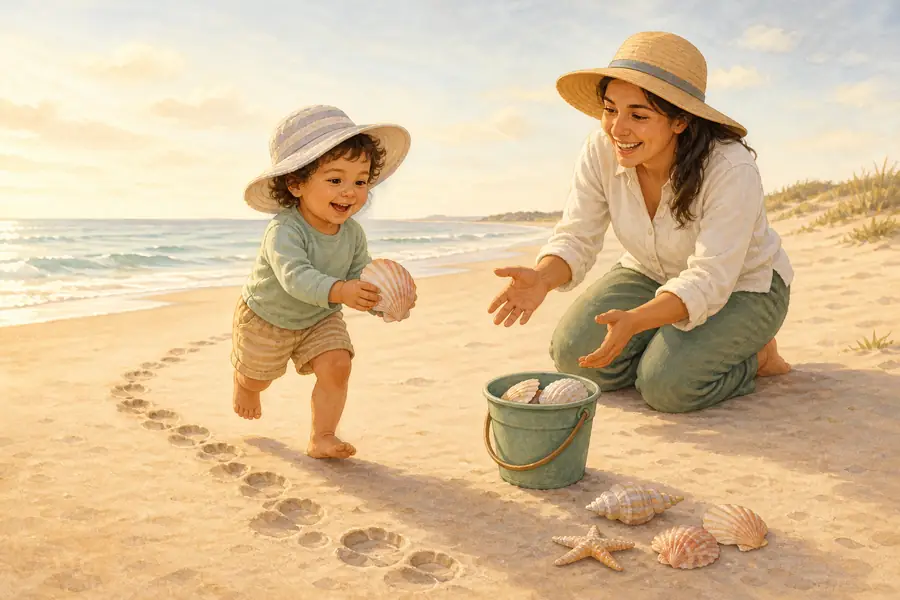
Most parents pack a full bag of toys for the beach. Here's the funny part: kids usually ignore most of it after five minutes. Sand, water, and shells become the real toys, and a kid is quietly building real skills while playing with them.
- Sand, water, sun, and the sound of waves activate all five senses at once, at no cost.
- Games like shell hunts run 10 to 15 minutes and work best for concentration in kids aged 2 to 5.
- Unstructured outdoor play is directly linked to better mental health in children (AAP).
- For the youngest, ages 1 to 2, one plastic cup and a little water is enough. No rules, no setup.
A stick and a patch of wet sand often hold a kid's attention longer than the fanciest toy in that bag. If this is your first family beach trip, baby's first time at the beach covers what to pack; this article is about what to actually do once you're there. If you're curious why play matters this much for brain development in the first place, see play is development: the brain science. The eight games below cover ages one through kindergarten, and each one builds something specific: observation, fine motor skills, language, or courage. Try two or three per trip, not all eight at once. A kid loses interest fast when an adult runs the game instead of watching it unfold.
Quick reference
| Game | Age | Time | Builds |
|---|---|---|---|
| Water pouring | 1-2 yr | 5-15 min | Fine motor skills |
| Shell hunt | 2-4 yr | 10-30 min | Observation and focus |
| Whose footprint? | 2-4 yr | 10-15 min | Comparison |
| Sand drawing | 2-5 yr | 10-20 min | Creativity and imagination |
| Sandcastle building | 2-6 yr | 15-30 min | Planning and patience |
| Naming game | 1.5-4 yr | 10-15 min | Language and vocabulary |
| Jumping the waves | 2.5-6 yr | 10-15 min | Motor skills and courage |
| Building a sand city together | 3-6 yr | 20-40 min | Cooperation and sharing |
Looking for a quick beach activity for a toddler? Start with water pouring, a shell hunt, or sand drawing. Each takes under 20 minutes and needs almost no gear.
Which beach games build observation and concentration?
Two games do this best, and both lean on what the child has already found, not on what you hand them.
Shell hunt. Ask your kid to find the biggest shell on the beach, then the smallest, then a white one, then a striped one. Each new request changes the search criteria, so the child has to look at the same sand with different eyes. For a 3-year-old, this holds attention for about ten minutes before interest drops. For a 5-year-old, it can stretch to half an hour if you add categories like "a shell with a hole" or "a shell that rattles when you shake it."
Whose footprint? Compare footprints in the wet sand: mom's, dad's, the kid's. Which one is biggest? Which one shows the most toe detail? The tide erases old prints and makes new ones every few minutes, so the game resets itself without any effort on your part. This works especially well for two-year-olds who are just learning the words "bigger" and "smaller." Suddenly the abstract idea has an actual foot they can set next to another foot.
How does sand encourage creativity and imagination?
Sand drawing. With a finger or a stick, have your kid draw a heart, a star, a fish, a house. There is no wrong shape in sand. A wave erases it in five minutes and the child gets a fresh page without you having to tear one out of a notebook. One four-year-old spent an entire afternoon drawing the same boat over and over. Three hours, the same boat, and dinner finally took the last version away.
Sandcastle building. A classic, but worth naming because it requires planning ahead: how much water, how much sand, where the tower goes. That's a skill most kids otherwise only practice in preschool tasks. Older preschoolers can run the whole process themselves; younger ones need an adult holding the bucket, not building the castle for them.
Which beach games build motor skills and coordination?
Water pouring. Two cups or small buckets, nothing else. The kid pours water from one to the other, watches the level change, spills half, tries again. For an 18-month-old this is a top-tier wrist-and-finger workout, though no one at the beach calls it that. For more ideas at this age, see outdoor play ideas for babies ages 0-2.
Jumping the waves. Hold your kid's hand and jump together over small waves breaking at ankle height. This asks for balance, timing, and, honestly, a dose of courage in kids who are wary of water. Don't push a kid further than they want to go on their own. That one line matters more than any explanation of why.
Which beach games build language and social skills?
Naming game. As you walk the beach, name everything you find: the color of a shell, the shape of a cloud, the size of a wave. For a kid who is just learning to talk, this is the densest language exercise you'll run all day, and it looks like an ordinary walk.
Building a sand city together. With a sibling or another kid from the beach, build a "city" where each child gets their own building but shares tools and water. This is where real sharing shows up for the first time, not the forced kind, but the kind a kid chooses because they want the city to get bigger.
Which game fits which age?
- Under 2 years old → water pouring or free digging, no instructions needed.
- Between 2 and 4 → shell hunt, footprint comparison, sand drawing.
- Older than 4 → sandcastle building, jumping the waves, building a sand city together.
- If the kid refuses everything → sit down and dig by yourself. Most kids join within two minutes, not because you convinced them, but because you stopped waiting for them to join.
Common mistakes parents make at the beach
The most common mistake isn't a lack of ideas, it's too much gear. A bag full of toys actually shortens attention span: the kid moves from toy to toy instead of staying with one idea long enough to explore it.
Second mistake: directing the game instead of watching it. If you correct how your kid builds a castle or draws a fish every few seconds, the game becomes yours, not theirs. Let the castle fall. Following your child's lead and staying calm beside them is exactly what gentle parenting actually looks like day to day.
Third, less obvious one: playing during the hottest part of the day. Between 11am and 3pm the sun is strongest, and a kid gets tired and cranky before the game even starts (NHS). If a rainy day cancels the trip, indoor sensory activities for babies cover similar ground.
Safety before the fun
None of these games require a child to go into water deeper than ankle height, and that's intentional. Drowning remains one of the leading causes of injury in young children, and supervision within arm's reach, not from a towel ten feet away, is the only protection that actually works (CDC, AAP). For a fuller guide, see water safety for babies and toddlers.
Sunburn happens faster in young kids than in adults. A hat, shade between 11am and 3pm, and UV-protective swimwear do more work than sunscreen applied once in the morning.
If your kid has a fever, vomiting, or unusual drowsiness after a beach day, that's not "too much sun." Call the pediatrician.
Frequently asked questions
How long should a kid stay active at the beach?
For a 2- to 4-year-old, 20 to 30 minutes of directed play is enough before attention drops. The rest of the time can be free play or rest in the shade.
Is the beach safe for a kid who's afraid of water?
Yes, as long as play stays on dry sand or in ankle-deep water. Fear fades faster when a kid sets their own pace, not when someone pushes them forward.
What's the best game for a kid who hates getting messy?
The naming game or whose-footprint, both ask for looking and comparing, not touching sand or water.
Do kids need special beach toys?
No. A cup, a small bucket, and a stick cover almost every game in this article. Expensive sand toy sets look good in photos, but a kid enjoys a kitchen cup just as much.
How often do we need to go to the beach for these games to matter?
Once a week is enough to hold a kid's interest and skill. There's no need for daily trips for development to show.
How KidyGrow Helps You
After a day at the beach, it's hard to remember which game actually landed, especially with more than one kid. KidyGrow remembers it for you: you log one line about the day, and the app connects it to your child's age and past activities.
By the second or third entry, the Tonight Plan stops suggesting a generic "try sand play" and starts saying something sharper: "the naming game ran twice as long as drawing yesterday, maybe try that again today." That's the difference between a list and something that actually kept track.
With two kids of different ages, the app tracks that separately instead of averaging them into one. For a 3-year-old it notes that a shell hunt holds attention for about ten minutes; for a 5-year-old sibling, that the same game needs an extra category before it gets boring. The difference is small, but it's easy to lose track of it yourself, especially when both kids are tired and there's sand in the towel.
Sometimes the app won't find a clear pattern, and that's fine. Not every day is data.
You probably won't remember which game made them laugh hardest this summer. They will. Years from now, they won't remember which toy you packed. Just that you were down in the sand with them.
Sources
- HealthyChildren.org (AAP) - Playing Outside: Why It's Important for Kids
- HealthyChildren.org (AAP) - Water Safety and Young Children
- CDC - Drowning Prevention
- NHS - Sunscreen and Sun Safety
- PMC/NCBI - The importance of outdoor play for young children's healthy development
🎨 Something to try today: the Developmental activity finder suggests play that fits your child's age and what they are working on.