 Kidy
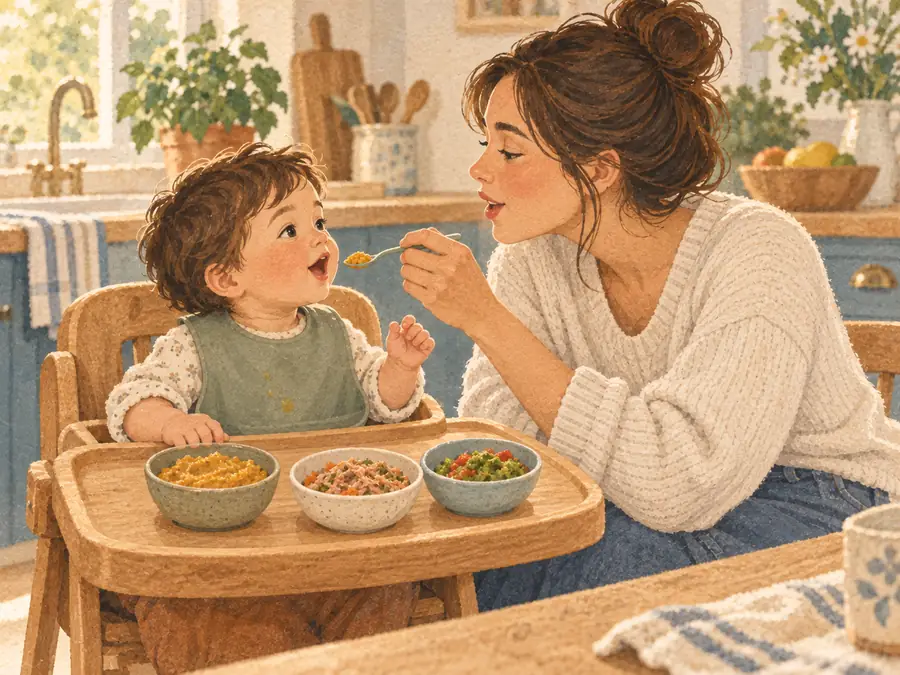
Iron deficiency is the most common nutritional shortfall in babies and toddlers, and it almost never announces itself.
- Iron stores a baby is born with are largely used up after 4 to 6 months of breastfeeding
- At least 15% of toddlers were affected by iron deficiency in US data from 2003 to 2010
- 40% of children aged 6 to 59 months worldwide are anaemic, and iron deficiency is its most common nutritional cause
- After the first birthday, the AAP caps cow's milk at about 700 ml (24 oz) a day; European paediatric guidance says under 500 ml
What makes this one hard is that there is no moment. No rash, no fever, no night you can point to. A baby who is low on iron looks like a baby who is a bit tired and a bit pale and a bit off their food, which describes roughly every baby in a teething week. The signs are real, they are just slow, and they show up in a range that overlaps entirely with normal.
Quick Reference
| Age | What is happening with iron | What to do |
|---|---|---|
| 0 to 4 months, term baby | Stores from birth are covering it | Breast milk or formula. Preterm babies are the exception and need earlier supplementation |
| 4 to 6 months | Stores are running down as demand climbs | The AAP's 2026 guidance includes an iron supplement for exclusively breastfed babies by 6 months. European guidance (ESPGHAN) does not recommend routine drops for healthy term babies. Your pediatrician decides |
| Around 6 months | Demand keeps climbing | Iron-rich solids start doing most of the work |
| 6 to 12 months | Iron needs rise sharply | Meat, fish, lentils, fortified cereal at most meals. No cow's milk as a main drink |
| 9 to 12 months, mostly breastfed | US screening window (formula-fed: 15 to 18 months) | Ask your pediatrician whether a blood test makes sense for your baby |
| 12 to 24 months | The cow's milk years | Keep cow's milk under the cap (AAP: about 700 ml; ESPGHAN: under 500 ml), pair iron foods with vitamin C |
What iron deficiency actually looks like in a baby
The American Academy of Pediatrics lists the visible signs as "pale, yellowish or ashy skin", "faded cheeks, lips, nail beds and eyelids", and "feeling tired or needing naps more often" (HealthyChildren, AAP).
Read that list again and notice what it does not contain. Nothing sudden. That is exactly why it gets missed: slow signs are still signs.
The one sign that does stand out is pica: "craving or chewing nonfood items (called pica), such as ice, dirt or paper". A toddler who keeps going back to the sandpit to eat sand, or who chews the cot rail with real intent, is worth raising with your pediatrician without waiting for the next checkup. Parents tend to file that one under toddler weirdness. It is often the most specific thing in the whole picture. If your child may have swallowed something dangerous, like a button battery, a magnet or a chemical, that is an emergency, not an iron question.
Pallor is easier to judge on the inside of the lower eyelid and the nail beds than on the cheeks, because room light and crying both change how skin reads. Compare against yourself. If you have a photo from six weeks ago in similar light, compare against that instead of against memory.
Why babies run low between 6 and 24 months
A baby arrives with a supply of iron built up before birth. The German federal complementary-feeding network is direct about what happens next: "the child's iron reserves are largely exhausted after 4 to 6 months of breastfeeding" and "iron requirements rise sharply in the second half of the first year" (Gesund ins Leben).
Two curves cross at almost exactly the moment solids start. Stores fall, demand climbs. That crossing point is why German guidance builds the very first purée around meat rather than fruit, and why the AAP puts prevention this early. The AAP's 2026 summary lists "delayed cord clamping at birth, early iron supplementation for preterm infants, and iron supplementation for exclusively breastfed infants by 6 months of age" (AAP, 2026). An older AAP parent page, last updated in 2022, went further and advised drops from four months for partly or fully breastfed babies (AAP, 2022). European guidance takes a different line: ESPGHAN finds "insufficient evidence to support general iron supplementation of healthy European infants and toddlers of normal birth weight" and relies on iron-rich food from 6 months (Domellöf et al., 2014). Whether your baby needs drops, and at what dose, is your pediatrician's call. Iron-rich food from around six months is common ground.
It also reframes what starting solids is for. The readiness signs tell you when a baby can handle food. Iron is a large part of why the timing matters at all.
Breast milk is not the problem here, and no one is suggesting it is. Its iron is low in quantity but absorbed well, which works beautifully for four months and stops being enough somewhere around six.
The cow's milk trap
Here is the part most parents have not heard, and the one worth repeating to a friend.
The classic iron-deficient toddler is not an underfed child. It is a thriving, milk-loving 15-month-old whose parents are doing everything right by the standards they were given. Milk is filling, it is easy, it is what a tired parent reaches for at 5pm when dinner has been refused. And it works against iron three ways at once: cow's milk is poor in iron, it fills a small stomach so the iron-rich food does not get eaten, and dairy actively reduces absorption of the iron that does go in. The NHS puts milk and dairy on the same list as tea and coffee for things to cut back on when iron is low (NHS).
That is also why cow's milk is not a main drink before 12 months at all. It "should not be given as a main drink to babies until they're 12 months old" because it does not carry the right balance of nutrients, iron included (NHS). After the first birthday the AAP says "limit your child to no more than 24 ounces of milk a day", about 700 ml. The European paediatric society ESPGHAN draws the line lower, at under 500 ml a day for toddlers (Domellöf et al., 2014). Either way it is a ceiling, not a target to reach.
Picture a toddler who drinks close to a litre of milk a day and refuses almost every dinner for weeks. The two look unrelated, and often they are not. A lot of milk can be part of why dinner gets refused, not only the comfort after it. If that sounds like your evenings, the milk and food amounts by age are the place to start, before anyone reaches for a supplement.
Which babies are most at risk
- Babies born preterm or with low birth weight, whose stores were never fully built
- Mostly breastfed babies past 6 months with few iron-rich solids
- Toddlers drinking more cow's milk than the cap (under 500 ml in European guidance, about 700 ml in American)
- Children eating little or no meat, where plant iron is not deliberately paired with vitamin C
- Babies whose solids stalled, so milk is still carrying most of the intake at 9 or 10 months
If your child is on a vegetarian diet, this is a planning question rather than a warning. German public health guidance is specific: regular oats and millet "protect children from iron deficiency", legumes and iron-rich vegetables several times a week, and because "vitamin C improves iron utilisation, a vitamin-C-rich food should be part of meals" (kindergesundheit-info.de, BIÖG). Orange segments with the lentils is not a folk remedy. It measurably changes how much iron gets absorbed.
How it is tested, and why a normal haemoglobin is not the end of it
This is the part that changed recently, and it matters.
Iron deficiency and iron deficiency anaemia are two different stages. A child can be running low on iron long before the haemoglobin drops far enough to be called anaemia, and the effects start in that earlier window. The AAP states it plainly: iron deficiency "can impact the cognitive abilities of children and adolescents, result in fatigue, and if unrecognized, can progress to anemia".
So a blood count that comes back "normal" answers the anaemia question, not the iron question. The AAP's 2026 clinical report covers screening, diagnosis and treatment across the whole age range and is the current American reference (Powers et al., Pediatrics, 2026). For timing, the AAP's parent page says babies and toddlers "should be screened for iron deficiencies starting at about 9 to 12 months for babies that mostly consume breast milk and 15 to 18 months for babies who mostly consume infant formula". It also says symptoms "should prompt screening", whatever the age. That is the US schedule; other countries often test when there are risk factors or symptoms, so ask what your pediatrician recommends.
To see the stores themselves, not just the haemoglobin, a pediatrician may ask for ferritin. Ferritin also rises during infections and inflammation, so a reading taken during a cold can look reassuring when stores are low. That is why the result is read together with symptoms and other values, and sometimes repeated.
The stakes are not subtle. The WHO links anaemia in young children to "poor cognitive and motor development", and puts the global figure at 40% of children aged 6 to 59 months (WHO). This is treatable, and it is treatable faster the earlier it is caught.
Wait, adjust, or test
- Eating meat or fortified cereal most days, growing well, no pallor → nothing extra is needed on diet grounds alone. Keep iron-rich food in the rotation and do the routine screening your pediatrician recommends for your baby's age and feeding.
- Solids going slowly at 8 or 9 months, milk still dominant → change the plate first. Iron-rich food at the start of the meal when hunger is highest, vitamin C alongside, milk after rather than before. There is a fuller playbook for a baby refusing solids at 8 months.
- Milk above the cap in a toddler → bring it down over one to two weeks. That is worth doing anyway, but a better appetite does not rule out low iron. If there is pallor, new tiredness or pica, ask for a blood test without waiting.
- Pallor, new tiredness, or pica → do not wait for the next scheduled visit. Ask for a blood test now.
- Preterm or low-birth-weight baby, or a mostly breastfed baby past 6 months eating few iron-rich foods → talk to your pediatrician about iron and a blood test, however well your baby seems.
Deciding between those is easier with a week of real data than with a week of trying to remember.
Common mistakes
Treating iron with a supplement you chose yourself. Dose matters and so does the reason. Iron that is not needed is not harmless, and iron that is needed usually points at a cause worth finding. This is a prescription conversation.
Waiting for the tiredness to be obvious. Do not wait for it to become pronounced. The early signs of iron deficiency are usually subtle, and they are the ones worth acting on.
Swapping meat for spinach and calling it done. Plant iron is absorbed far less readily than the haem iron in meat. It works, it just has to be built deliberately, with vitamin C and with repetition.
Cutting milk to zero. The number is a cap, not a ban. Milk is still food.
Assuming a normal blood count last year settles it. Iron status moves with what a child eats this month.
Reading the growth chart as an all-clear. A steady curve tells you about calories, not about iron, and the two come apart precisely in the milk-heavy toddler. What weight percentiles actually mean is worth understanding before you use one to rule anything out.
When to call your pediatrician
Call if your baby or toddler is persistently pale, especially the lips, eyelids and nail beds. Call if tiredness is new, lasting, and out of character. Call if your child keeps eating non-food items. Call if your baby was born preterm and has not been screened.
Book a routine conversation, not an urgent one, if you simply cannot say with any confidence how much iron-rich food your child has eaten in the last month. That is a normal thing not to know, and it is exactly what the checkup is for. Walking in with a week of actual meals beats walking in with an impression, and the whole approach is laid out in how to prepare for a pediatric visit using your child's data.
Frequently asked questions
How long does it take to correct iron deficiency?
Longer than parents expect. Once treatment starts, energy and appetite often improve within a few weeks, but refilling stores takes months, and stopping early is a common reason it comes back. Your pediatrician sets both the dose and the finish line, and will usually check how your child responds before stopping. Keep iron drops and tablets out of reach: the NHS warns that "an overdose of iron in a young child can be fatal" (NHS).
Can a baby be iron deficient and still gain weight normally?
Yes, and this is the case that gets missed. A toddler drinking a lot of milk takes in plenty of calories. Growth looks fine on the chart, colour and energy do not, and the iron picture is poor. Weight gain is not a proxy for iron status.
Does breastfeeding cause iron deficiency?
No. Breast milk delivers iron in a form that is absorbed unusually well, and it covers the first months completely. What changes is the demand. Iron needs climb sharply in the second half of the first year, which is why the AAP's 2026 guidance includes an iron supplement for exclusively breastfed babies by 6 months, while European guidance (ESPGHAN) relies on iron-rich food from about six months rather than routine drops for healthy term babies. Either way, solids from around six months matter a lot.
Which first foods have the most usable iron?
Meat and fish carry haem iron, the form the body absorbs most efficiently, which is why German guidance builds the first purée around a vegetable, potato and meat combination. The AAP's list also includes eggs, lentils, chickpeas, soybeans, and greens like spinach, kale and broccoli. Pair the plant sources with something vitamin-C rich in the same meal.
Is pica really a sign, or just toddler behaviour?
Both, which is what makes it confusing. Most mouthing is ordinary exploration. What is worth reporting is a persistent craving: repeatedly seeking out and chewing ice, dirt, paper or chalk over weeks, with intent rather than curiosity. The AAP lists it among the signs of iron deficiency, so it belongs in the conversation.
My toddler refuses meat completely. What now?
Plan around it rather than fighting it. Iron-fortified cereal, lentils, chickpeas, oats and millet several times a week, always with a vitamin-C food in the same sitting. Keep milk under the cap so there is appetite left for the rest. Pressure at the table backfires here as reliably as it does with picky eating generally. If refusal has lasted months, ask for a blood test rather than waiting to see whether it passes.
How KidyGrow helps you
The pediatrician asks how much milk your child drinks and whether they actually eat meat, and you realise you are guessing. Almost everyone is. In KidyGrow you log meals and bottles in a few taps, and after a couple of weeks they sit side by side, so you can see for yourself how often meat or lentils showed up and how much milk went in. The app doesn't add it up into an iron verdict, and some weeks show nothing clear.
KidyGrow also remembers what you tell it, like a premature birth or a worry about pale skin, and adapts later answers to it. Before a check-up it can prepare a short summary and questions to bring (Pro).
Sources
- American Academy of Pediatrics, HealthyChildren.org: Iron Deficiency and Anemia in Babies, Children & Teens
- American Academy of Pediatrics, 2026: AAP Updates Screening, Prevention & Treatment Guidance
- Powers JM, Heeney MM, Hord J, et al. Prevention, Screening, Diagnosis, and Treatment of Iron Deficiency and Iron Deficiency Anemia in Infants, Children, and Adolescents: Clinical Report. Pediatrics. 2026;158(1):e2026077414
- American Academy of Pediatrics, HealthyChildren.org: Where We Stand: Vitamin D & Iron Supplements for Babies (last updated 2022)
- World Health Organization: Anaemia fact sheet
- NHS: Iron deficiency anaemia and Drinks and cups for babies and young children
- Netzwerk Gesund ins Leben: Abfolge und Auswahl der Beikost
- BIÖG, kindergesundheit-info.de: Vegetarische Ernährung für Kinder
- Domellöf M, Braegger C, Campoy C, et al. (ESPGHAN Committee on Nutrition): Iron requirements of infants and toddlers. J Pediatr Gastroenterol Nutr. 2014;58(1):119–129