 Kidy
Kidy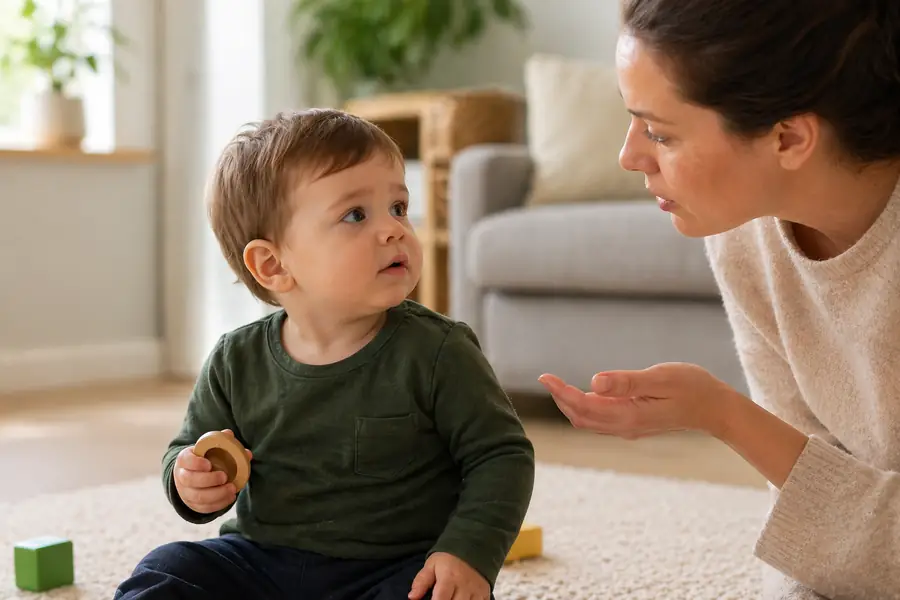
You call their name. Nothing.
Again. Still nothing.
And suddenly your brain jumps to: “Is something wrong?”
If your toddler isn’t responding to their name, you’re not alone, and it’s important to know this upfront:
not responding to their name is not a diagnosis. It’s a signal with a short list of common causes you can test quickly.
A toddler not responding to their name often looks like:
- little or no turning when you call
- limited eye contact when called
- responding in quiet settings but not noisy ones
- “selective hearing” when focused on play
- getting upset when interrupted, even if they did hear you
In practice, it helps to think about this in 3 steps:
1) rule out urgent red flags
2) identify the likely driver (hearing vs attention vs sensory load vs language/development)
3) run a 3‑day pattern test so you stop guessing
Quick Reference: Toddler not responding to name
| Question | Answer |
|---|---|
| Is it normal sometimes? | Yes, especially when a toddler is deeply focused, tired, or in a noisy place. |
| What’s the most important first check? | Hearing (especially if this is new or inconsistent). |
| When should I worry? | If it’s persistent across settings plus there are other communication/social red flags or loss of skills. |
| What can I do today? | Use short calls + get close + reduce noise + “name → pause → help” routine for 3 days. |
Quick answer (what’s most likely)
Most common reasons toddlers don’t respond to their name:
1) Attention/focus (they’re locked into play)
2) Hearing issues (fluid in ears, frequent ear infections, wax, temporary hearing loss)
3) Sensory overload (noise, crowds, bright environments)
4) Language processing delay (they hear, but the “meaning” arrives slowly)
5) Sleep/overwhelm (overtired, hungry, stressed)
6) Developmental differences (including autism, but never based on one sign alone)
If you do only one high‑ROI move this week: treat it as a hearing + environment + routine problem first, then evaluate the pattern.
Many parents notice this shows up together with sleep or big transitions. If your toddler is overtired, responsiveness often drops (see what to do when nothing helps toddler sleep). If drop‑offs are hard, the same “noise + overwhelm” dynamic can apply (see daycare transition: tears, separation, and smoother mornings).
Step 0: Red flags (don’t wait)
Contact your pediatrician soon (or urgent care when appropriate) if:
- your child has sudden hearing change, ear pain, fever, or drainage
- your child doesn’t react to loud sounds (door slamming, dog barking)
- there is loss of skills (words/gestures/social connection decreasing)
- your child seems unusually lethargic, very unwell, or you’re deeply concerned
The KidyGrow Name‑Response Triage (If X → do Y)
Use this decision logic in order. Don’t skip step 1.
1) If the pattern is new or inconsistent → assume hearing until proven otherwise
If: your toddler sometimes responds and sometimes doesn’t, especially after colds
Then: book a hearing check / ask about ear fluid (“glue ear”).
Why: pediatric guidance consistently treats hearing as a first‑line check when communication concerns rise, and toddler ear fluid after colds is common. Even mild hearing change can look like “ignoring.”
2) If they respond in quiet but not in noise → it’s often sensory + attention, not “defiance”
If: they respond at home but not at daycare/playground
Then: reduce competing noise, get closer, touch shoulder gently, use a short phrase: “Name, look.”
This is a processing load issue: toddler brains don’t filter sound like adult brains.
3) If they don’t respond when deeply focused → treat it as a “transition skill”
If: they ignore you most when building/stacking/watching something
Then: use the Name → Pause → Help routine:
- say name once
- pause 2–3 seconds
- move closer and help them “switch channels” (touch + point)
Avoid repeating their name 10 times (it trains “name = background noise”).
4) If they respond better to visuals than words → support processing
If: they follow gestures better than speech
Then: pair name with a visual cue and one short instruction (“Name, shoes.” + point).
Language processing can lag behind hearing. This doesn’t automatically mean a disorder, it means simplify inputs.
5) If they rarely respond anywhere + also show social communication differences → evaluate sooner
If: name response is low across settings and you also see multiple signs like limited pointing, limited back‑and‑forth play, limited imitation, or limited shared enjoyment
Then: talk to your pediatrician about developmental screening and early intervention options.
Important: many toddlers with speech delay respond to their name, and many toddlers who miss their name sometimes are typical. You’re looking for clusters and persistence.
Hearing vs attention vs sensory overload vs “bigger concern” (60‑second guide)
Use this mini‑table to get oriented:
| What you notice | Most likely driver | Best first move |
|---|---|---|
| responds to loud sounds, but ignores when focused | attention/transition | name once → pause → move closer → touch cue |
| responds in quiet, not in noise | sensory load | reduce noise, get close, add visual cue |
| inconsistent after colds/ear infections | hearing fluctuation | hearing check / ask about ear fluid |
| low response across settings + limited gestures/joint attention | broader developmental concern | talk to pediatrician about screening |
By age: what’s typical vs what’s worth checking
Development varies, but these are useful expectation ranges (CDC milestones can help anchor what’s typical).
12–18 months
- Many children respond to their name most of the time in quiet settings.
- Misses are common when tired, hungry, or very engaged.
What to watch: whether your child is communicating (gestures, pointing, bringing objects, shared enjoyment).
18–24 months
- Attention becomes “stickier.” Name response can dip during intense play.
- Language understanding grows fast, but processing can still be slow in busy environments.
What to watch: increasing comprehension over months, not day‑to‑day.
2–3 years
- Many toddlers can ignore selectively (they are practicing autonomy).
- If name response is low, environment and routine often explain it first.
What to watch: response improves with the right setup (close, calm, one cue).
Quick home checks (not a diagnosis)
These aren’t substitutes for a hearing test, but they help you decide what to do next.
- Sound reaction check: does your toddler react to everyday loud sounds behind them (vacuum, door, dog bark)?
- One‑step direction check: in a quiet room, can they follow a simple instruction paired with a gesture (“bring shoes”)?
- Ear history check: frequent colds, ear pulling, or recurrent ear infections increase the odds of temporary hearing changes.
If any of these raise concern, prioritize a hearing screen. (AAP guidance emphasizes that ear problems are common and worth checking.)
What this looks like in practice
Imagine: At home your toddler responds 7/10 times. At a loud birthday party: 1/10 times.
That pattern points to environment + attention load, not a “won’t listen” problem.
Your lever isn’t louder calling, it’s:
- get close
- reduce noise when possible
- use one clear cue
- help with transitions
A pattern parents often miss: “background calling” teaches non-response
If a toddler hears their name constantly (“Max! Max! Max!”) without a predictable next step, they learn:
name = noise.
Instead, make name meaningful:
- call once
- follow with one action (help them look, show object, connect)
- praise the smallest turn toward you
This is not “training” like a dog, it’s teaching a communication pattern that reduces stress for both of you.
What NOT to do (common mistakes)
- Don’t shout from across the house. Distance + noise + competing stimuli make failure likely.
- Don’t repeat the name over and over. Say it once, then move your body closer.
- Don’t punish non-response. If the cause is hearing/processing/overwhelm, punishment adds stress and reduces connection.
- Don’t jump to one conclusion. One sign alone cannot tell you “what it is.”
The KidyGrow 3‑Day Pattern Method (to stop guessing)
For 3 days, log:
- setting (quiet/noisy, home/daycare)
- what your toddler was doing (focused play? screen? hungry? tired?)
- how you called (distance, volume, once vs repeated)
- response (turned? looked? needed touch cue?)
Then look for patterns like:
- response drops after naps are short
- response drops in noise
- response drops when you call from another room
3‑day intervention (simple and realistic)
Pick one goal for 3 days:
- No background calling (name once, then move closer)
- Closer + cue (within 1–2 meters + gentle touch + point)
- Noise control (turn off TV/music while you ask)
Most families notice improvement in responsiveness quickly once the input is clearer and more predictable.
“Tonight checklist” (fast triage)
If you want a simple way to act today:
- Turn off background noise (TV/music) before you call
- Get close (within 1–2 meters)
- Say the name once (calm voice)
- Pause 2–3 seconds
- Add a gentle cue (touch shoulder + point)
- Follow through with one short request or connection (“Name, look.”)
How to improve name response (3-day HowTo)
This is the simplest “HowTo” plan most families can stick to.
Step 1: Choose one lever (don’t change everything)
Pick one for 3 days:
- no background calling
- closer + cue (touch + point)
- noise control
Step 2: Use the same call pattern every time
Name once → pause → move closer → gentle cue → one short instruction.
Step 3: Track the pattern (not one moment)
Log context (noise, tiredness, focus) and whether your toddler responded.
Step 4: Decide what it most likely is
If response improves with setup → attention/sensory load is likely.
If it stays low everywhere → hearing/developmental screening becomes higher priority.
When to seek professional help (how to decide)
Consider asking for help if:
- you suspect hearing issues or frequent ear infections
- name response is consistently low across settings after you’ve tried the 3‑day plan
- there are other communication/social concerns
- your child has lost skills
Early checks are not “overreacting.” They’re information.
For the full developmental arc of toddler speech (where name response sits among other communication milestones), the parent article of this cluster is toddler speech development: a parent's guide. For how to make the pediatric visit itself useful (what to log the week before, what to bring), see how to prepare for a pediatric visit.
## Frequently asked questions
Is it normal for a toddler to ignore their name?
Sometimes, yes, especially when focused or in stimulating environments. What matters is the overall pattern across settings and whether response improves when you get close and reduce noise.
Could it be a hearing problem?
Yes. Toddlers can have temporary hearing loss from fluid after colds or repeated ear infections. If it’s new or inconsistent, a hearing check is a high‑value first step.
Is not responding to name a sign of autism?
It can be one sign, but it is never enough on its own. Look for clusters (gestures, imitation, shared attention, social reciprocity) and persistence across settings, and discuss screening with your pediatrician. For deeper differentiation, see signs of autism vs speech delay and baby not pointing at 12 months.
How can I improve name response without yelling?
Use “name once → pause → move closer → gentle touch cue.” Reduce background noise. Make name meaningful by pairing it with predictable follow‑through and praise for tiny turns.
When should I seek help?
If there's loss of skills, hearing concerns, persistent low response across settings, or your worry is growing, talk to a pediatrician. Earlier evaluation can only help. See when to seek help for speech delay for the broader escalation timeline.
If you’re still unsure after 3 days, that’s exactly where patterns matter most, because the answer is usually in when it happens, not just that it happens.
How KidyGrow can help
KidyGrow learns your child as you log calls, responses, mood, naps, and context, and the name-response question is exactly when pattern visibility wins. The hardest part isn't deciding "should I be worried"; it's seeing whether 7 of 10 calls today were ignored or whether 3 of 10 across calm + distracted settings were missed.
The Daily Brief surfaces those patterns in a few days, because the app remembers the small notes you'd otherwise forget (Tuesday at 16:00 in living room: 4/5 calls responded; Wednesday at daycare pickup: 1/5 responded). The view is personalized to your child's real week, not a generic milestone chart. When you bring that record to the pediatrician, the conversation becomes specific instead of vague. Calibration takes 3–5 days of regular logging; the longer you use it, the sharper the picture.
This article is based on:
- pediatric guidance and developmental screening resources (sources below)
- practical pattern-tracking methods used in developmental science
_Last updated: April 2026_
---
Sources (hard citations)
- CDC, developmental milestones (communication/social): https://www.cdc.gov/parents/essentials/index.html
- American Academy of Pediatrics (HealthyChildren.org), hearing & ear infections hub: https://www.healthychildren.org/English/health-issues/conditions/ear-nose-throat/Pages/default.aspx
- NIDCD (NIH), speech & language development: https://www.nidcd.nih.gov/health/speech-and-language
- NHS, hearing loss in children (overview): https://www.nhs.uk/conditions/hearing-loss/
_Educational content only. Not medical advice._