 Kidy
Kidy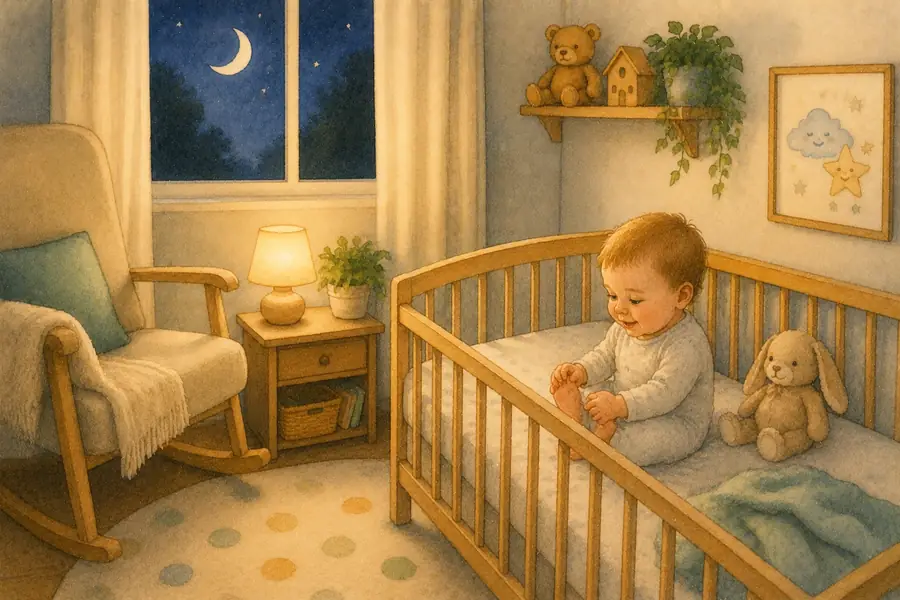
A baby who wakes in the middle of the night and lies there awake and content for one to three hours, then falls back asleep, is having a "split night." It is almost always a schedule problem, not a medical one, and it usually fixes within a week or two.
- The usual cause is too much sleep in a 24-hour period, or a bedtime that is too early for the child's current needs.
- The tell is that the baby is calm, not crying. A distressed night waking is a different problem.
- It often shows up after a long or late nap, or when total daytime sleep creeps up.
- The fix is usually a schedule tweak, not more soothing: slightly less day sleep or a slightly later bedtime.
If your baby is awake, quiet, maybe babbling or playing with their feet at 2am, and nothing is obviously wrong, you are most likely looking at a split night. Feeding, rocking, or entertaining through it tends to make it last longer.
Quick Reference
| Question | Short answer |
|---|---|
| What is a split night? | Waking mid-night and staying awake, calm, for 1–3 hours. |
| Main cause? | Too much total sleep, or bedtime too early. |
| Is the baby upset? | No. Calm/awake = split night; crying = other cause. |
| First fix to try? | Trim daytime sleep OR push bedtime 15–30 min later. |
| How long to fix? | Usually 1–2 weeks of a consistent adjusted schedule. |
It is usually a split night if:
✔ the baby is calm, not distressed
✔ they wake at a similar time each night
✔ it started after naps got longer or bedtime got earlier
✔ they eventually fall back asleep on their own
It is probably something else if:
✔ they are crying, in pain, or hard to settle
✔ there is fever, congestion, or teething signs
✔ it lines up with a known sleep regression
✔ they seem hungry and feed fully
Why does my baby wake up and stay awake at night?
Sleep is driven by two things: how much sleep pressure has built up, and where the body clock sits. A split night happens when those two fall out of sync, usually because the child simply has more sleep available than they need. If bedtime is at 6:30pm and the baby needs eleven hours overnight, the maths does not work: they will wake around 2–3am with nothing left to "spend," and stay up until enough pressure rebuilds.
The American Academy of Pediatrics publishes total sleep-need ranges by age, and split nights often appear when a child is getting the upper end of daytime sleep plus a full night. A long 3pm nap, a bedtime pulled early after a rough day, an extra catnap in the car: any of these can hand the body more sleep than it can use in one overnight block. Our baby sleep and wake-windows guide lays out the age-by-age numbers.
Why do split nights suddenly appear?
Split nights often show up out of nowhere, right after something shifted the sleep balance:
- A nap transition (3-to-2 or 2-to-1): for a week or two the old routine leaves too much day sleep.
- Naps running longer than usual, quietly adding to the 24-hour total.
- Bedtime creeping earlier, especially after a few hard days.
- Recovery from illness, when extra sick-day sleep resets the balance and takes a few nights to settle.
- A holiday or changed routine: travel, time zones, or a week of loose schedules.
The common thread is a recent change that tipped total sleep past what the child needs. Trace back seven to ten days and the trigger is usually sitting right there.
Is it a split night or a night waking?
The difference is the baby's state, and it decides your whole response.
```
TYPICAL SPLIT NIGHT NIGHT WAKING (something else)
-------------------- ----------------------------
2:00 baby wakes 2:00 baby wakes
| calm, content | crying, distressed
| plays quietly | pain / hunger / regression
| falls back asleep | needs soothing to settle
7:00 morning wake back asleep, then repeats
```
| What you see | Likely cause | What to do |
|---|---|---|
| Awake, calm, playing | Split night (too much sleep) | Adjust schedule, keep night boring |
| Crying, hard to settle | Discomfort, hunger, regression | Comfort, check needs |
| Wakes hungry, feeds fully | Genuine hunger | Feed, review daytime intake |
| Every 1–2 hours, distressed | Sleep association or regression | See regression guidance |
A content, wide-awake baby does not need feeding or rocking back to sleep. Those responses add stimulation and can teach the body that 2am is social time. If yours is genuinely upset, that is a different article: see baby suddenly waking more at night and baby wakes up every hour at night.
Decision logic: what to adjust first
- If total daytime sleep is at the high end for the age: cap it. Wake the baby from a long nap, or drop a fading catnap. Less day sleep raises overnight sleep pressure.
- If bedtime is early (before ~7pm) for the age: push it 15–30 minutes later over a few nights. A later bedtime concentrates sleep into one block.
- If wake time before bed feels short: lengthen the last wake window slightly so the child is tired enough to sleep through.
- During the awake stretch: keep it dark, quiet, and boring. No lights, no play, minimal talking. You are not punishing, you are simply not rewarding wake time.
Change one thing at a time and give it 4–5 nights. Chasing several tweaks at once makes it impossible to see what worked.
Common mistakes to avoid
Feeding to end every split night. If the baby is not truly hungry, a feed becomes a habit that props the waking up.
Turning on the light or starting play. It feels harmless at 2am; it teaches the clock that night is playtime.
Making bedtime even earlier "to catch up." This is the instinct that backfires most. An earlier bedtime usually deepens a split night, not fixes it.
Assuming it is a regression. Real sleep regressions come with fussiness and cluster around known ages. A calm, predictable 2am wake is far more often a schedule issue.
When to check with your doctor
Split nights are not a medical problem, so most need a schedule fix, not a visit. Talk to your pediatrician if the night waking comes with pain, fever, breathing changes, poor daytime feeding, or if your baby seems distressed rather than content, or if a genuine schedule adjustment over 2–3 weeks changes nothing. The NHS and AAP both note that broken sleep is extremely common in the early years; the flag is distress or a change in your baby's overall wellbeing, not the waking itself.
Split nights are almost always a schedule problem, and schedules shift every few months in the first two years. The baby sleep guide 0–2 years has the age-by-age totals to check yours against.
Frequently asked questions
What exactly is a split night?
It is when a baby or toddler wakes in the middle of the night and stays awake, usually calm and content, for one to three hours before falling back asleep. It is typically caused by having more total sleep available than the child needs.
Why does my baby wake at 2am and play?
Because sleep pressure has run out before morning, often due to too much daytime sleep or a bedtime that is too early. With nothing left to "spend," the body stays awake until enough pressure rebuilds.
Should I feed my baby during a split night?
Only if they are genuinely hungry and feed fully. A calm, awake baby usually does not need a feed, and feeding every split night can turn into a habit that keeps the waking going.
How do I fix split nights?
Adjust the schedule: trim daytime sleep if it is at the high end, or push bedtime 15–30 minutes later. Keep the awake stretch dark and boring. Change one thing at a time and allow about a week.
How long do split nights last?
With a consistent schedule adjustment, most resolve within one to two weeks. Split nights tied to a developmental phase or nap transition can pass on their own once the schedule settles.
Is a split night a sleep regression?
Usually not. Regressions come with fussiness and cluster around specific ages. A calm, predictable middle-of-the-night wake is much more often a scheduling issue than a regression.
How KidyGrow helps you
At 2am, staring at a wide-awake baby, you cannot see the pattern that caused it. That pattern lives in the last two weeks of naps and bedtimes, which no sleep-deprived parent is holding in their head. KidyGrow remembers it for you.
Log sleep as it happens, and after a week or so the daily brief stops giving generic advice and starts connecting your own dots: it might notice the 2am wakes only follow days with a nap ending after 4pm, or that they began the week bedtime crept to 6:15. That is the difference between "why does this keep happening" and "the Thursday split night matches the long Thursday nap." You change one input and watch the nights.
Some weeks it will not find a clean cause, just a run of odd nights, and it will say so instead of inventing one. What you get is the honest record of what the last two weeks actually held, so the fix starts from data, not from a 2am guess.
Sources
- American Academy of Pediatrics (HealthyChildren.org). Healthy Sleep Habits: How Many Hours Does Your Child Need? https://www.healthychildren.org/English/healthy-living/sleep/Pages/healthy-sleep-habits-how-many-hours-does-your-child-need.aspx
- American Academy of Pediatrics (HealthyChildren.org). Baby Sleep. https://www.healthychildren.org/English/ages-stages/baby/sleep/Pages/default.aspx
- NHS. Helping your baby to sleep. https://www.nhs.uk/conditions/baby/caring-for-a-newborn/helping-your-baby-to-sleep/