 Kidy
Kidy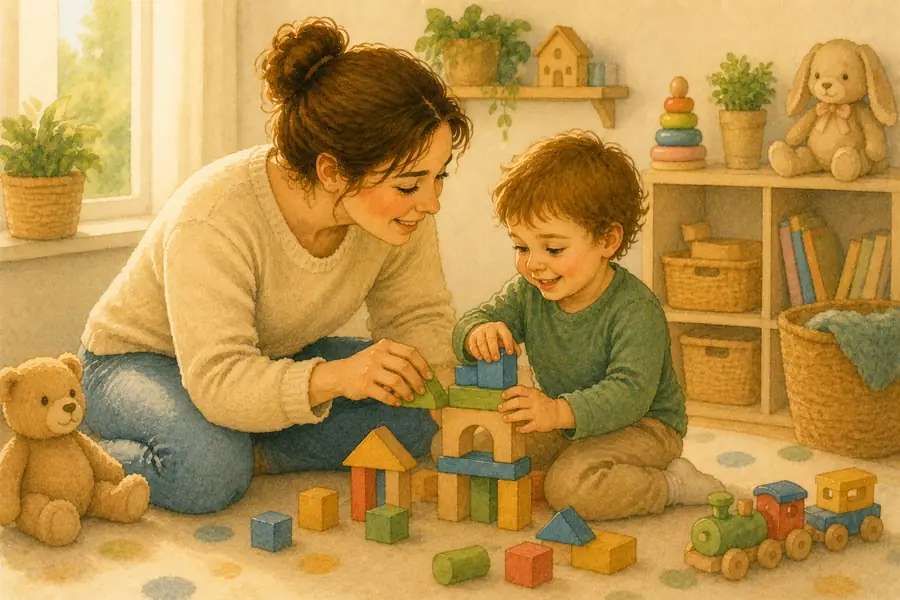
Special time is short, regular, child-led one-on-one attention: the same child, the same you, no phone, on a predictable rhythm. Here is what the research and the daily grind actually agree on.
- 10 to 15 minutes of focused one-on-one attention is usually enough to shift behavior. Consistency matters far more than length.
- Play is how children build the developing brain, and undivided attention is the fuel that makes it work (AAP).
- Children who feel securely connected tend to act out less. A lot of "attention-seeking" is a straightforward bid for exactly this.
- Frequency beats grandeur. A daily twelve minutes does more than a monthly trip to the zoo.
If you have more than one child, this is the single cheapest thing that reliably lowers the temperature at home. Not a weekend getaway. Not a new toy. Ten focused minutes, given on purpose, to one child at a time.
Quick Reference
| Question | Short answer |
|---|---|
| How long? | 10 to 15 minutes per child |
| How often? | Daily if you can; a fixed rhythm beats a long session |
| Who leads? | The child picks what you do |
| Phone? | Away and out of sight, every time |
| Best age? | Toddler through school age; just adapt the activity |
| The point? | Connection, not teaching, testing, or tidying |
What is special time?
Special time is a small, protected window where one child gets you completely. You are not cooking, not scrolling, not refereeing a sibling. You follow their lead, name what you see, and resist the urge to correct, quiz, or steer. That last part is the whole discipline. Special time is child-led on purpose, because the message a child absorbs is not "we played trains" but "I am worth my parent's full attention, exactly as I am."
It is not the same as being in the same room. Most of parenting is done alongside our kids while half our brain is on dinner or work. That "everyday" contact matters too, and I have written about how everyday moments build connection. But special time is different in one specific way: for those ten minutes, nothing competes. The undivided quality is the active ingredient.
Play is not a break from development; it is the work of it. The American Academy of Pediatrics calls play essential for building healthy brains and buffering stress, and it puts warm, responsive adult attention at the center of that (AAP, The Power of Play). When you get on the floor and let a four-year-old run the story, you are not indulging them. You are doing the developmental thing.
How long and how often does it need to be?
Short and regular beats long and rare. Ten to fifteen minutes a day, per child, is the sweet spot most parenting programs land on, and there is a reason it is that short: it has to be repeatable. A parent can protect twelve minutes on a Tuesday. A parent cannot protect ninety minutes, so the ninety-minute plan quietly never happens.
If daily genuinely is not possible in a hard season, aim for the same slot a few times a week and keep it sacred. Predictability is doing quiet work here. A child who knows "after dinner, it's my turn with Mama" stops having to fight for attention all day, because the attention is already scheduled and guaranteed. That security is a big part of why behavior improves. I unpacked the short-ritual version of this in 5-minute connection rituals for busy parents.
One honest caveat. Some days you will have five minutes, not fifteen, and you will be touched out and flat. Five real minutes still counts. Give the five.
What do I actually do in special time?
Almost nothing, and that is the point. You let the child choose, and then you narrate and join rather than direct.
- Let them pick. Blocks, dolls, drawing, a card game, driving toy cars in circles. If it is safe and they chose it, it qualifies.
- Narrate, don't quiz. "You're stacking the red one on top" lands better than "what color is that?" Special time is not a lesson.
- Match their pace. If they want to do the same thing eleven times, do it eleven times.
- Name the time. "This is our special time" tells them it is deliberate, not accidental.
- Protect the boundary. No phone, no "hang on, let me just...", no turning it into a chore.
There is no curriculum. If you want the science on why this open-ended, child-steered play does so much, play is development and the brain science backs it covers it. And if your child is still a baby, the same principle scales down: quality time with a baby has realistic ideas for what one-on-one looks like before they can pick an activity.
Does one-on-one time really change behavior?
Yes, and the mechanism is not mysterious. Children need attention the way they need food. If they cannot get it through connection, they will get it through conflict, because a scolding is still attention. The NHS is blunt about this: much difficult behavior is a child's way of communicating an unmet need, and predictable positive attention is one of the most effective responses (NHS, Behaviour).
Fill the cup on purpose and the desperate bids drop. This is also why connection has to come before the correcting. A regulated, connected child can actually hear a limit; a disconnected one just escalates. I go deeper into that order of operations in connection before correction, explained.
Special time also builds something slower and more durable: resilience. The AAP describes secure, responsive relationships as the foundation that lets children handle stress and bounce back (AAP, Building Resilience). Ten minutes a day is a small deposit into a large, long-term account.
How to make it work with more than one child
This is where most families get stuck, so here is the decision logic.
- If you have two kids and one parent tonight: stagger it. One child gets special time while the other has a set activity or screen slot, then swap. It does not have to be simultaneous.
- If you have two parents around: split up and each take a child, then trade the next night so nobody is always paired with the same parent.
- If a sibling interrupts: keep the boundary warm but firm. "It's Ana's turn right now. Yours is right after." The waiting itself teaches that their turn is real and coming.
- If schedules are chaos: anchor it to an existing routine (bath, the drive home, the ten minutes before lights-out) instead of finding a brand-new slot.
Give each child their own predictable turn. A five-year-old and a toddler do not need identical activities, just the same guarantee: you, undivided, on schedule.
Common mistakes
- Turning it into teaching. The moment special time becomes flashcards or "let's practice sharing," it stops being theirs. Drop the lesson.
- Making it a reward you withdraw. "No special time because you hit your brother" removes the exact connection that prevents hitting. Keep it unconditional.
- Going big instead of regular. The zoo is lovely, but a monthly outing does not do what a daily ten minutes does.
- Bringing the phone. A glance at a notification tells the child the world is more interesting than they are. Even a quick check breaks it.
- Skipping it on the hard days. The days you least feel like it are usually the days the child needs it most.
When to seek professional help
Special time is a connection tool, not a treatment. If a child's acting out is intense, sudden, or not budging after a few consistent weeks, that is worth a conversation with your pediatrician. The same goes for aggression that hurts others, big regressions, or a persistent flatness and withdrawal that connection does not seem to touch. Asking is not an overreaction; it is just good parenting with backup.
Special time is the most concrete piece of what people mean by connection-first parenting. For the rest of the frame, including the limits that make the warmth work, see what gentle parenting actually is.
Frequently asked questions
How long should special time be?
Ten to fifteen minutes per child is plenty. Short and daily beats long and occasional, because the repeatable version is the one that actually happens.
Does it have to be every day?
Ideally, yes, but a fixed few-times-a-week rhythm that you truly protect is better than a daily plan you keep dropping. Consistency and predictability are the active ingredients.
My child just wants to do the same boring thing every time. Is that okay?
Completely okay. Repetition is how young children feel safe and in control. Your job is not to enrich the activity; it is to be fully present in whatever they picked.
Can special time be with a grandparent or the other parent?
Yes. The specific bond with each caregiver is its own good thing. Ideally each child gets one-on-one time with more than one trusted adult across the week.
We have three kids and no time. Is this realistic?
Stagger short turns and anchor them to routines you already have. Three children times ten minutes is thirty minutes, not three lost hours, and it can be split across the day and across two parents.
Will it stop tantrums?
It reduces the attention-driven ones, which are a large share. It will not erase tantrums caused by tiredness, hunger, or being two. Nothing does, and that is fine.
How KidyGrow helps you
The hardest part of special time is not the ten minutes. It is remembering, across a blurry week, whether you actually gave each child their turn or whether the quiet one quietly got skipped. Exhausted parents cannot hold that ledger in their heads. KidyGrow holds the thread for you.
Log a quick note after each child's turn, and the app remembers what you can't at 9pm. By the second week, the Daily Brief might say something like: "You've had one-on-one time with your older child four days running, and none with the toddler since Sunday." That is the pattern most parents feel vaguely guilty about but never actually see. Sometimes the app finds nothing useful and just nods along, and that is honest too. But when it does catch the drift, it turns a vague "am I being fair to both of them" into "the toddler is due, tonight."
The point was never the log. It is walking into the evening knowing whose turn it is, instead of hoping you remembered.
Sources
- American Academy of Pediatrics. "The Power of Play." healthychildren.org. https://www.healthychildren.org/English/family-life/power-of-play/Pages/default.aspx
- American Academy of Pediatrics. "Building Resilience." healthychildren.org. https://www.healthychildren.org/English/healthy-living/emotional-wellness/Building-Resilience/Pages/default.aspx
- NHS. "Behaviour." nhs.uk. https://www.nhs.uk/conditions/baby/babys-development/behaviour/