 Kidy
Kidy
Your baby wakes up with one eye glued shut, crusty yellow gunk sealing the lashes, the white of the eye gone pink. Pink eye (conjunctivitis) in babies and toddlers usually looks like:
- A red or pink eyeball, in one eye or both
- Sticky discharge: clear and watery, or thick yellow-green and crusty
- Lashes stuck together after sleep, sometimes sealed shut in the morning
- Watering, blinking, or rubbing at the eye
- Mild swelling or puffiness of the eyelid
Most pink eye in healthy babies over a month old is mild and clears on its own within a week or two. But the eye is one of the few places where "wait and see" has firm limits. A newborn under 28 days, swelling and redness spreading around the eye, or a baby who can't open the eye are reasons to call the same day, not next week.
This guide walks through the three main types, what you can do at home, when antibiotic drops actually matter, daycare rules, and the red flags that change everything.
Quick reference: pink eye in babies
| Question | Short answer |
|---|---|
| Is it normal? | Common and usually mild after 1 month of age; viral is the most frequent cause. |
| How long does it last? | Viral: 1–2 weeks. Bacterial: improves in 2–5 days, faster with drops. Allergic: as long as the trigger is around. |
| Is it contagious? | Viral and bacterial yes, very. Allergic, no. |
| Antibiotic drops needed? | Often not. Many bacterial cases clear without them; doctor decides. |
| When is it urgent? | Newborn under 28 days, eyelid swelling/redness spreading, no eye opening, light sensitivity, vision worry. |
Viral, bacterial, or allergic: how to tell
The type matters because it changes both contagion and treatment. You usually can't be certain at home, but the pattern gives you a strong hint.
Viral conjunctivitis is the most common type, per the American Academy of Pediatrics. The discharge is usually watery and clear or whitish. It often rides along with a cold: runny nose, mild cough, a low fever. One eye starts, the other often follows a day or two later. It's very contagious and it does not respond to antibiotic drops, because antibiotics don't touch viruses.
Bacterial conjunctivitis tends to produce thick, yellow or green pus that comes back quickly after you wipe it. The lashes crust and seal, especially after naps. It can hit one eye or both. It's also contagious. Some bacterial cases clear without treatment, which is why doctors don't automatically reach for drops.
Allergic conjunctivitis is itchy. Both eyes, watery, often with sneezing or a stuffy nose, and it flares with pollen, dust, or pet dander. It is not contagious and does not respond to antibiotics. Allergic pink eye is less common in young babies than in older toddlers and children.
A blocked tear duct is the great impostor in the first months. It causes watery, sometimes goopy eyes without the white of the eye turning red. If the eyeball isn't pink, it's probably the tear duct, not conjunctivitis, and most clear on their own by the first birthday.
What to do at home
For a baby over one month with mild pink eye and no red flags, home care is the first line.
- Wipe the discharge. Use a clean, damp cotton ball or soft cloth, wiping from the inner corner outward. Fresh cotton for each wipe, fresh cloth for each eye, so you don't shuttle infection from one side to the other.
- Warm compress. A clean cloth soaked in warm (not hot) water, held gently over the closed eye for a minute or two, loosens crust and soothes. Do this a few times a day.
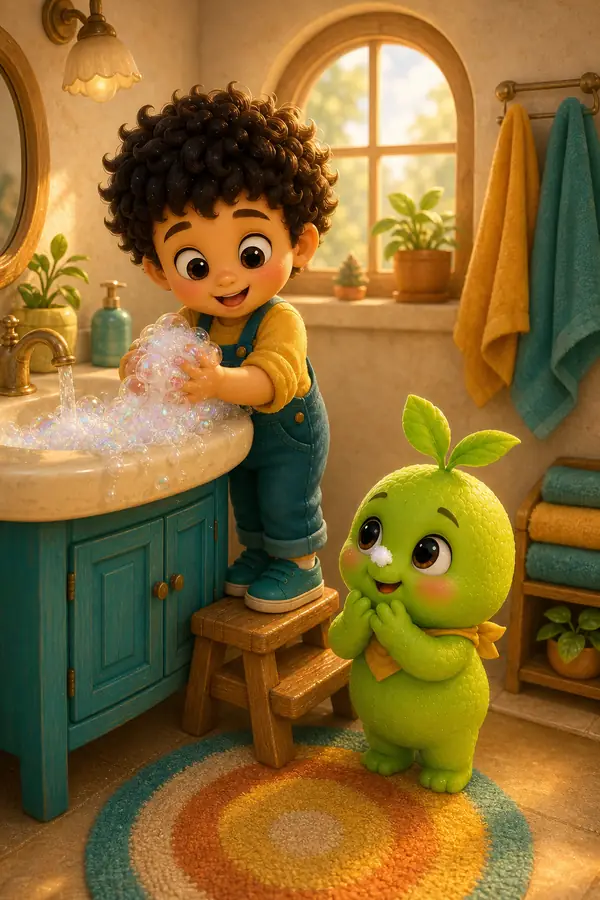
- Hand hygiene, relentlessly. Wash your hands before and after touching the eye. This is the single biggest lever for not catching it yourself and not passing it to siblings.
- Don't share towels, washcloths, or pillows. Give the baby their own. Wash bedding and any soft toys that touch the face.
- Skip contact lenses entirely (not relevant for babies, but worth knowing as they grow).
Do not use leftover antibiotic drops from a sibling or a previous illness. Do not put breast milk, herbal washes, or anything not recommended by your doctor into a baby's eye. The eye is delicate and the wrong thing can make it worse.
Decision logic: wait, call, or go in
Here is how to choose, fast, in the middle of a goopy morning:
- If your baby is under 28 days old with any eye redness or discharge → call the doctor today. Newborn conjunctivitis (ophthalmia neonatorum) can involve serious bacteria and needs prompt assessment. This is not a wait-and-see situation.
- If the eye is pink and goopy but baby is over a month, feeding, alert, no fever spike, no swelling around the eye → home care, watch for 1–2 days.
- If thick yellow-green pus keeps coming back, both eyes are affected, or it isn't improving after 2–3 days of home care → call your pediatrician; they may prescribe antibiotic drops or ointment.
- If the eyelid or skin around the eye is swollen, red, warm, or hard, the eye is bulging, baby resists the eye being moved, or there's fever → this can be orbital (or periorbital) cellulitis, a deeper infection. Get seen urgently, same day or emergency.
- If baby is very sensitive to light, the eye looks cloudy, or you sense a vision problem → urgent evaluation.
When in doubt with an infant's eye, the threshold to call is low. You are not overreacting.
Do babies need antibiotic drops for pink eye?
Often, no. This surprises parents who grew up assuming pink eye always means drops. The Centers for Disease Control and Prevention notes that mild bacterial conjunctivitis frequently clears on its own, and viral conjunctivitis (the most common kind) gets no benefit at all from antibiotics. The NHS takes a similar wait-and-watch stance for uncomplicated cases.
Doctors do prescribe antibiotic drops or ointment in specific situations: clearly bacterial cases with heavy pus, symptoms that aren't budging, certain ages, daycare requirements, or when getting back to childcare quickly matters. The decision is theirs, made by looking at the eye. The takeaway for you: a goopy eye is not an automatic prescription, and that's normal, not neglect.
If drops are prescribed, finish the full course even after the eye looks clear. Stopping early invites the infection back.
Is pink eye contagious? Daycare and siblings
Viral and bacterial conjunctivitis spread easily, through eye discharge on hands, towels, and shared surfaces. Allergic pink eye does not spread.
Daycare exclusion rules vary by country and by center, and many have softened. Some no longer exclude children with simple conjunctivitis at all, while others ask for 24 hours on antibiotic drops first, or a doctor's note. Call your daycare and ask their specific policy rather than assuming.
At home, the realistic goal isn't perfect quarantine of a baby who touches everything. It's relentless handwashing, separate towels, and not letting the well siblings rub the sick one's eye toys against their own faces. One family I know of gave up on stopping the spread between twins by day two and just doubled down on washing every set of hands that came near a face. Sometimes that's the honest plan.
Common mistakes to avoid
- Reaching for a sibling's old antibiotic drops. Wrong type, wrong dose, possibly contaminated, and you skip the assessment that tells you whether drops are even needed.
- Assuming every goopy eye is infection. In the first months, a blocked tear duct is more likely if the white of the eye stays clear.
- Wiping both eyes with the same cloth. That's how one pink eye becomes two.
- Treating a swollen, red, warm eyelid as "just bad pink eye." Swelling and redness spreading into the skin around the eye is a different, more serious problem and needs urgent care.
- Stopping prescribed drops early because the eye looks better. The infection can rebound.
When to seek professional help
Call your pediatrician or seek urgent care if:
- Your baby is under 28 days old with any red or discharging eye.
- The eyelid or the skin around the eye is swollen, red, warm, or tender, or the eye looks like it's bulging.
- Baby won't open the eye, seems in pain, or flinches from light.
- The eye looks cloudy or you're worried about vision.
- There's a fever alongside the eye symptoms.
- Symptoms aren't improving after 2–3 days, or are getting worse.
For non-urgent but persistent pink eye, your regular pediatrician is the right call. For sudden eyelid swelling with redness and fever, don't wait for an appointment slot. Go in.
Frequently asked questions
How long does pink eye last in a baby?
Viral conjunctivitis usually runs 1 to 2 weeks and clears on its own. Bacterial conjunctivitis often improves within 2 to 5 days, sometimes faster with antibiotic drops. Allergic conjunctivitis lasts as long as the trigger is present.
Can I treat my baby's pink eye at home without a doctor?
For a baby over one month with mild symptoms and no red flags, gentle home care (warm compresses, wiping discharge, strict handwashing) is reasonable for a day or two. A newborn under 28 days, eyelid swelling, fever, or no improvement after 2 to 3 days all mean call the doctor.
Is baby pink eye always contagious?
No. Viral and bacterial conjunctivitis are very contagious, but allergic conjunctivitis is not. If both eyes are itchy and watery with sneezing and there's no sick contact, allergy is more likely, and it won't spread to others.
My newborn has a goopy eye. Is it serious?
Any eye redness or discharge in a baby under 28 days old should be checked the same day. Newborn conjunctivitis can involve serious bacteria and needs prompt evaluation. A blocked tear duct (watery, goopy, but the eyeball stays white) is common and usually less worrying, but a doctor should confirm which it is.
When is pink eye an emergency?
Swelling and redness spreading into the skin around the eye, a bulging eye, severe pain, high fever, light sensitivity, or any vision concern can signal orbital cellulitis or another serious problem. These need urgent, same-day care, not a wait-and-see approach.
Do daycares require my child to stay home with pink eye?
It depends on the center and country. Some no longer exclude children with simple conjunctivitis, others ask for 24 hours on antibiotic drops or a doctor's note first. Call your daycare and ask their exact policy.
How KidyGrow helps you
A goopy eye rarely arrives alone. It shows up mid-cold, mid-teething, mid-bad-sleep-week, and by day three the timeline blurs. Was the runny nose before the red eye or after? Did the fever spike the same night the discharge turned yellow?
KidyGrow remembers what a tired parent can't, and holds that thread when you can't. When you note the symptoms over a few days, the morning brief stops giving generic lines like "babies get colds" and starts reflecting your actual week back to you: the red eye started two days after the runny nose, the discharge has been watery not thick, no fever since Tuesday. That's the difference between guessing on the phone with the nurse and reading off real notes.
It takes a few days of steady notes before the picture sharpens; the app isn't magic on day one. And sometimes there's no neat pattern at all, just a virus making the rounds and a long week. But when you do reach the pediatrician, the pediatric visit prep feature turns those scattered observations into a short, organized summary the doctor can scan in seconds, so the most useful detail isn't the one you forgot in the waiting room.
Related reading: Fever and cough: when to monitor and when to call · Swimmer's ear in children · Baby teething: signs and what helps · Prepare for a pediatric visit using your child's data
_This content is educational and does not replace medical advice. For any eye concern in a baby, especially a newborn, contact your pediatrician._
Sources
- American Academy of Pediatrics, HealthyChildren.org. "Conjunctivitis (Pink Eye)." https://www.healthychildren.org/English/health-issues/conditions/eyes/Pages/pinkeye-conjunctivitis.aspx
- Centers for Disease Control and Prevention. "About Conjunctivitis (Pink Eye)." https://www.cdc.gov/conjunctivitis/about/index.html
- NHS. "Conjunctivitis." https://www.nhs.uk/conditions/conjunctivitis/
- American Academy of Pediatrics. "Periorbital and Orbital Cellulitis" clinical guidance, HealthyChildren.org.