 Kidy
Kidy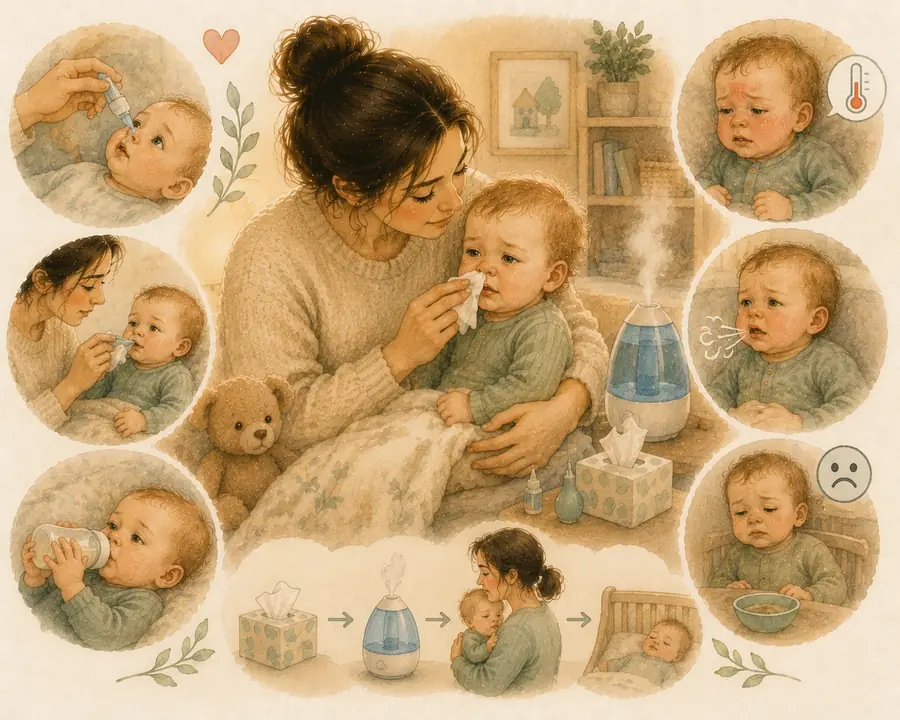
A baby runny nose is one of the most common reasons parents call the pediatrician, and most calls end the same way: it is a cold, keep doing what you are doing. The short version:
- Healthy babies catch 8 to 10 colds a year, more with daycare or older siblings (AAP)
- A typical cold peaks around day 3 to 5 and clears within 10 days (NHS)
- Mucus that turns yellow or green mid-cold is normal immune progression, not an automatic antibiotic (CDC)
- Under 3 months, congestion plus a fever of 100.4 F (38 C) means calling the doctor the same day (AAP)
The hard part is not wiping the snot. It is telling the tenth ordinary runny nose apart from the one that actually needs a doctor. This guide covers both.
Quick reference
| What you see | Most likely | What to do |
|---|---|---|
| Clear runny nose, mild cough, fussiness | Ordinary cold | Saline, suction, fluids, patience |
| Thick yellow-green mucus day 4 to 6, baby improving | Normal cold progression | Keep up home care |
| Clear watery nose for weeks, sneezing, no fever | Allergies (uncommon under 1) | Mention at the next checkup |
| Symptoms past 10 to 14 days, or worse after day 5 to 7 | Possible sinus or ear infection | Call the doctor |
| Under 3 months with fever, or labored breathing | Needs assessment | Call same day |
Why does my baby have a runny nose all the time?
Because small children and viruses share everything. Eight to ten colds a year (AAP), each dripping for up to 10 days: a perfectly healthy baby can spend a third of the winter with a crusty nose. Daycare multiplies exposure; so does a school-age sibling with a new virus every other Friday.
One family in our beta was convinced their daughter was "always sick." Their notes told a different story: three separate, ordinary colds back to back, starting two weeks after daycare began, each about ten days, with a clear gap between them. Three colds in a row is not a broken immune system. It is September.
Is it a cold, an allergy, or teething?
Check the color and the timeline first.
A cold usually starts with clear discharge that thickens over a few days, often with a mild fever, a cough, and a crankier baby. Allergies look different: clear and watery for weeks, sneezing fits, itchy eyes, no fever. True nasal allergy is uncommon in the first year; in a baby, a runny nose is a cold until proven otherwise.
Then there is teething, which gets blamed for everything. At most it adds extra drool and a slightly wet, clear nose on the worst gum days. It does not produce thick or colored mucus, a real cough, or a fever above 100.4 F. If those show up, a virus arrived alongside the tooth. More in our teething signs guide.
Does green snot mean my baby needs antibiotics?
No, and this is the most persistent cold myth. Mucus changes color over a normal cold: clear at first, then cloudy, then yellow or green around day 4 to 6 as immune cells flood in, then back toward clear. The CDC is explicit that colored mucus by itself does not mean a bacterial infection and is not a reason for antibiotics.
The timeline matters more than the color. A cold should be improving after day 5 to 7. Green snot on day 5 in a baby who feeds well is normal. Green snot on day 12 with a returning fever can point to a sinus or ear infection and belongs to the doctor. Temperature specifics by age are in our fever and cough guide.
What actually helps a congested baby at home?
Honestly: nothing cures a cold. A few things make the ten days more livable.
- Saline drops plus suction. A few drops in each nostril, wait 30 to 60 seconds, then suction. Do it 10 to 15 minutes before feeds and before sleep. Cap it at 3 to 4 rounds a day; more irritates the lining.
- A cool-mist humidifier in the sleep room, cleaned often.
- Upright time while awake. Congestion drains better on your chest or in a carrier. For sleep, the crib stays flat and the baby on their back: no propped mattress, no pillows.
- Fluids as usual. Breast milk or formula, smaller and more frequent if needed.
What not to give: over-the-counter cough and cold medicines. The AAP advises against them under age 4; they do not work in young children and can cause serious side effects. Honey can soothe a cough only after the first birthday, never before.
How do babies eat and sleep with a blocked nose?
Badly, mostly. Babies breathe mainly through the nose in the early months. Blocked nose, hungry baby. Bad combination. Expect shorter, more frequent feeds and a lot of pulling off to gulp air. Suction before the feed, not after.
Nights get worse before they get better. Congestion pools when a baby lies down, so a baby who slept decent stretches may wake hourly mid-cold. That is the virus, not a new sleep problem; the old pattern usually returns within a week of recovery. If the waking outlasts the snot, see why babies wake up crying at night; newborn sleep expectations covers normal under 3 months.
Somewhere around the third cold of the season you stop registering any of this as an event. There are two crumpled tissues in every coat pocket you own, a third one in the washing machine that has just confettied a load of dark laundry, and the saline bottle lives on the changing table like it pays rent. This is not a problem you solve. It is a season you exit.
When to wait and when to act
A simple way to decide:
- Over 3 months, feeding reasonably, breathing comfortably, under day 10: home care and patience.
- Green mucus but everything else improving: keep waiting. Color alone changes nothing.
- No improvement by day 10 to 14, or worsening again after day 5 to 7: call. That second wind often means a sinus or ear infection.
- Ear pulling plus fever, any fever under 3 months, real trouble breathing: stop deciding and call.
Common mistakes with a baby's runny nose
- Giving cold medicine. Nothing over-the-counter under age 4.
- Suctioning constantly. More than 3 to 4 rounds a day makes the swelling worse.
- Pushing for antibiotics because the snot is green. Color is not a bacteria test.
- Inclining the crib or adding a pillow. Unsafe. Flat surface, back sleeping.
- Letting feeds slide. Dehydration is the real cold risk in babies; noticeably fewer wet diapers is a warning sign.
When to call the doctor
Call the same day if:
- Under 3 months with a fever of 100.4 F (38 C) or higher (AAP)
- Pulling or rubbing one ear with a fever or unusual crying
- Symptoms past 10 to 14 days, or clear worsening after day 5 to 7
- Refusing most feeds, fewer wet diapers than usual, no tears when crying
- Unusually sleepy, floppy, or hard to wake
Seek emergency care now if:
- Breathing is hard work: very fast breaths, ribs pulling in, nostrils flaring, grunting
- Blue or gray lips or face
- Refusing all fluids
Frequently asked questions
How long does a runny nose last in a baby?
Most colds run 7 to 10 days, with the worst congestion around days 3 to 5. A mild drip can linger up to two weeks. Past 10 to 14 days with no improvement, check in with your doctor.
Is it normal for my baby to be congested every few weeks?
Yes, especially in winter or once daycare starts. Healthy babies catch 8 to 10 colds a year. A baby who feeds, grows, and has clearly well days in between is having normal colds, not an immune problem.
Should I worry if the snot turns green?
Not because of the color alone. Yellow and green mucus mid-cold is a normal sign that immune cells are doing their job. Watch the timeline instead: green discharge past day 10, a fever that returns, or worsening after day 5 to 7 deserve a call.
Can I give my baby anything for a cold?
Not over-the-counter cold medicine; the AAP advises against it under age 4. Saline drops, suction, a cool-mist humidifier, and small frequent feeds are the safe toolkit.
Is a runny nose a sign of teething?
At most, teething adds extra drool and a slightly watery, clear nose for a day or two. It does not cause thick or colored mucus, a real cough, or fever above 100.4 F (38 C).
How KidyGrow helps you
A cold week blurs. Was the snot still clear on Tuesday or already yellow? No sleep-deprived parent holds a ten-day timeline in their head, and it's exactly what the doctor asks for. The app remembers it.
Jot a quick note when something changes: runny nose, fed less, woke more, a temperature. Each entry lands on the timeline with its date and time, so on day 8 you scroll back instead of guessing. When a fever is logged, the Daily Brief and the Tonight plan lean toward comfort.
For an appointment, see preparing for a pediatric visit with your child's data. The app doesn't diagnose. What changes is the call: "day 8, fever gone, still congested."
Sources
- American Academy of Pediatrics, HealthyChildren.org: Children and Colds. https://www.healthychildren.org/English/health-issues/conditions/ear-nose-throat/Pages/Children-and-Colds.aspx
- NHS: Common cold. https://www.nhs.uk/conditions/common-cold/
- CDC: About Common Cold. https://www.cdc.gov/common-cold/about/index.html
- American Academy of Pediatrics, HealthyChildren.org: When to Call the Pediatrician. https://www.healthychildren.org/English/health-issues/conditions/fever/Pages/When-to-Call-the-Pediatrician.aspx
- American Academy of Pediatrics, HealthyChildren.org: Coughs and Colds: Medicines or Home Remedies? https://www.healthychildren.org/English/health-issues/conditions/chest-lungs/Pages/Coughs-and-Colds-Medicines-or-Home-Remedies.aspx