 Kidy
Kidy
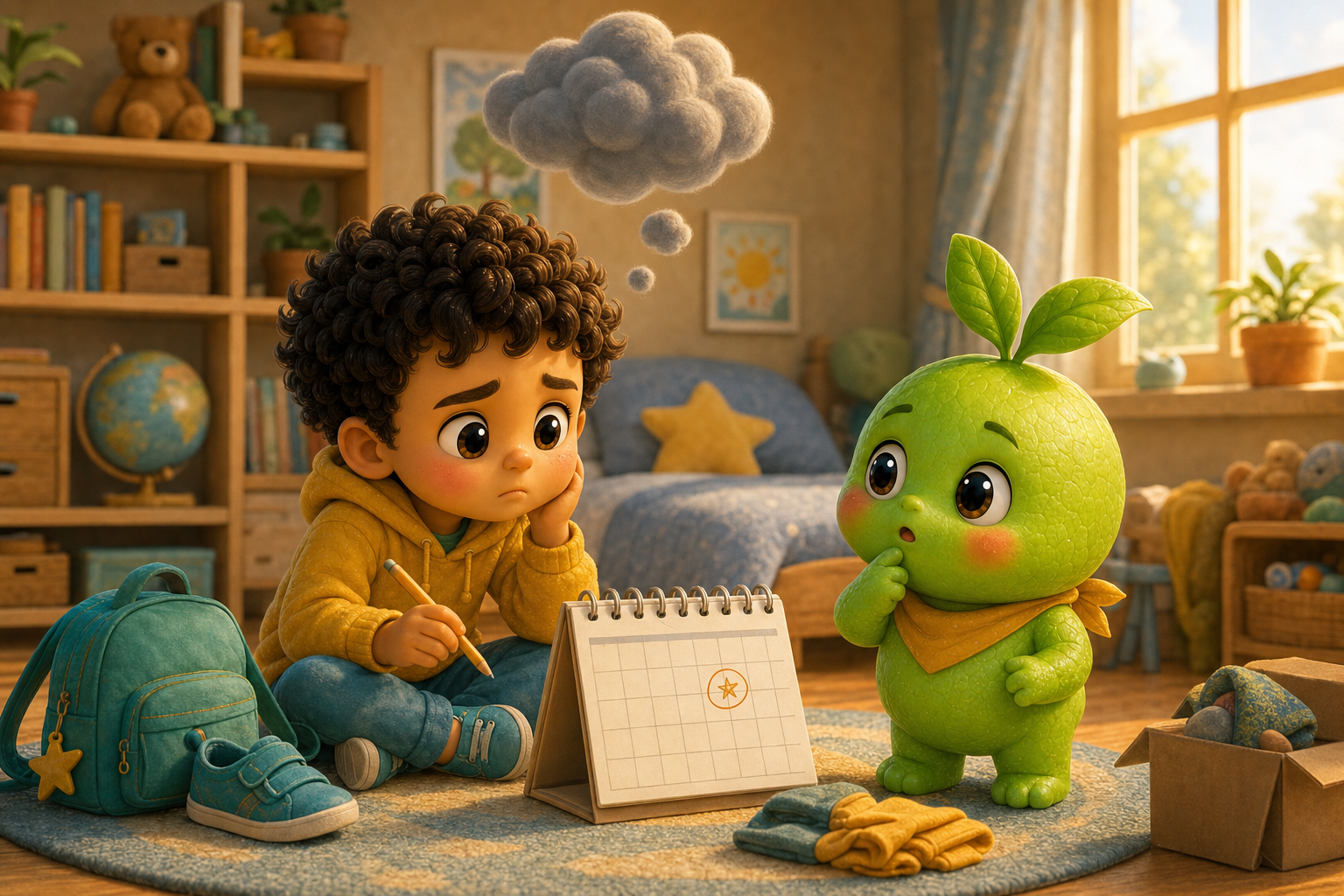
There is something new tomorrow, little one, and your head has gone busy with what-ifs. What if it is too hard. What if nobody talks to me. What if I get it wrong. The what-ifs pile up over your head like a grey cloud, getting bigger and puffier the longer you keep them in.
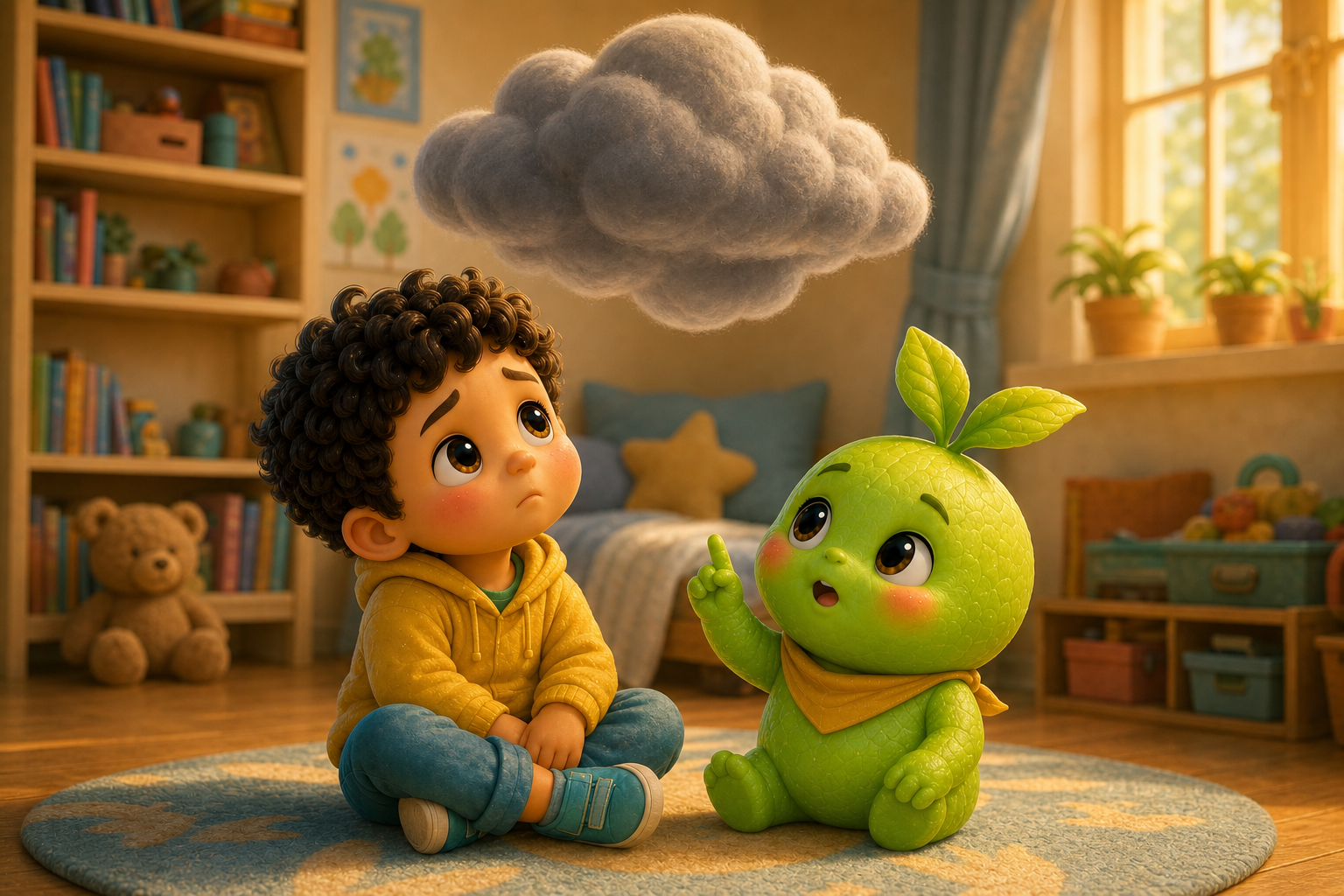
Grow looks up at the cloud gathering over you. 'Ah, the what-if cloud,' Grow says, not worried at all. 'I know this one. Here is the strange thing about worries: they only grow that big when they stay inside, in the dark, where you cannot see their real size.'
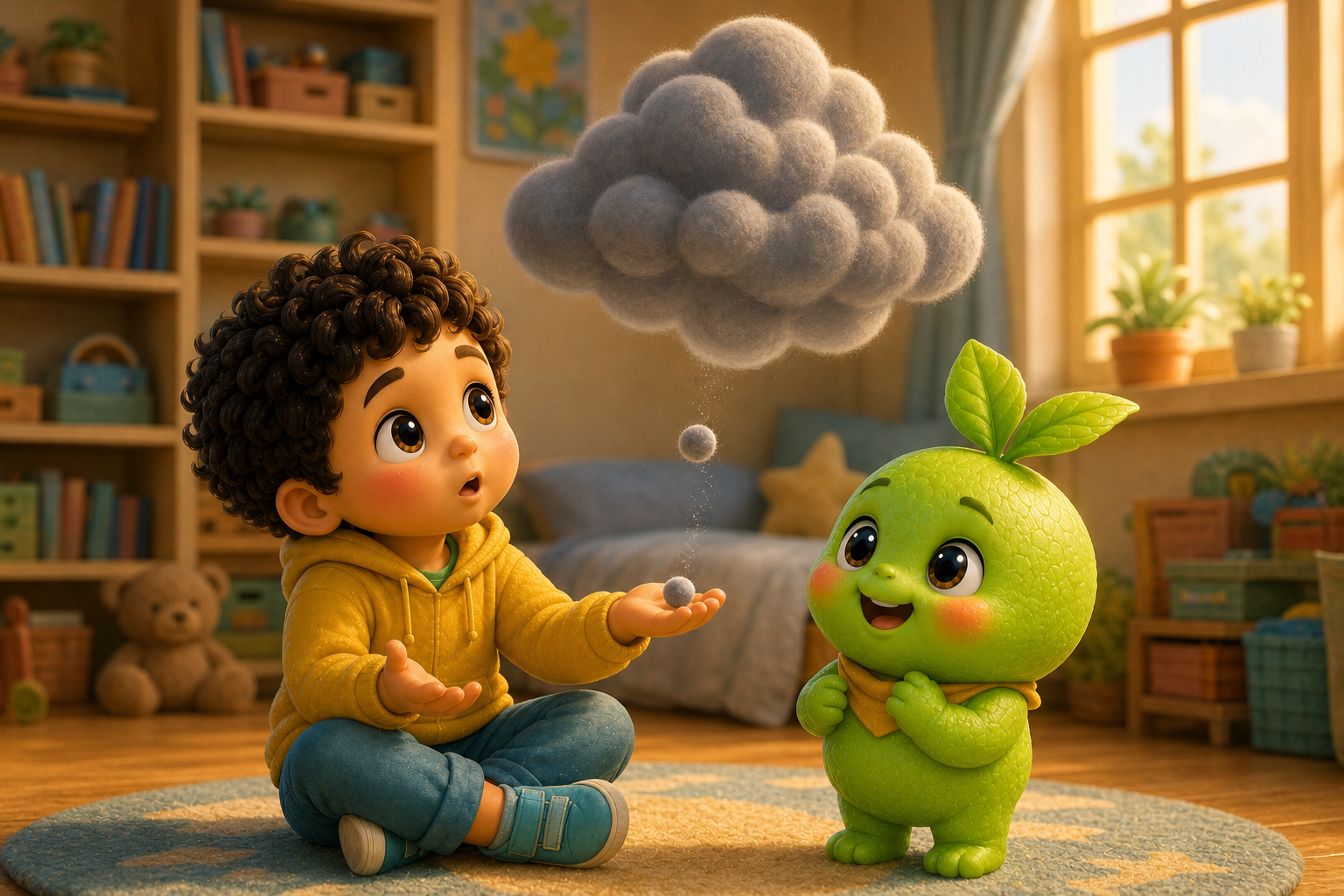
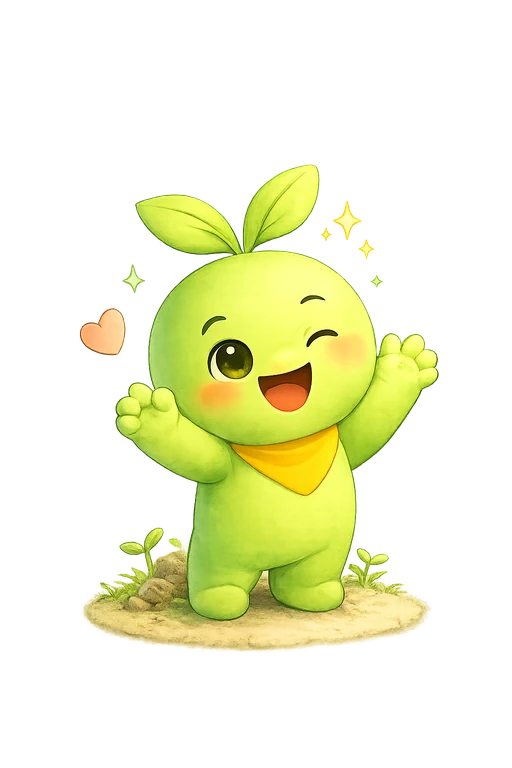
'Try one,' says Grow. 'Say it right out loud.' You take a breath. 'What if nobody plays with me?' And the moment you say it, a little grey puff floats out of the cloud, drifts down, and shrinks, and shrinks, until it is just a small grey pea resting in your palm. You blink. It is so much smaller out here than it felt in there.
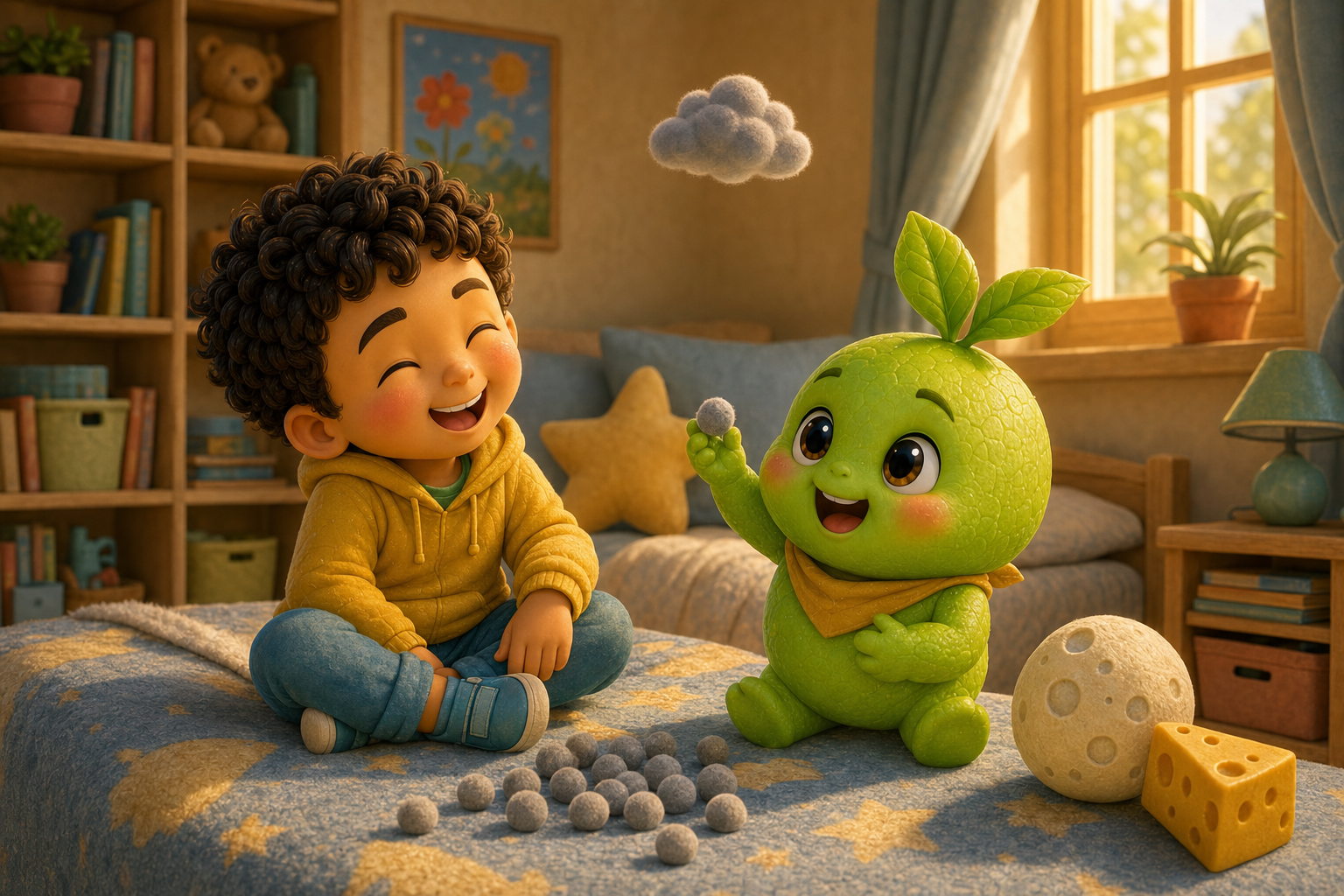
So you say them all, one by one, and one by one they float down and shrink to peas you can hold. Grow adds one too: 'What if the moon is really cheese and somebody eats it?' A tiny pea pops into Grow's paw, and you both laugh. 'A worry said out loud is small,' Grow says. 'A worry kept inside grows in the dark.'
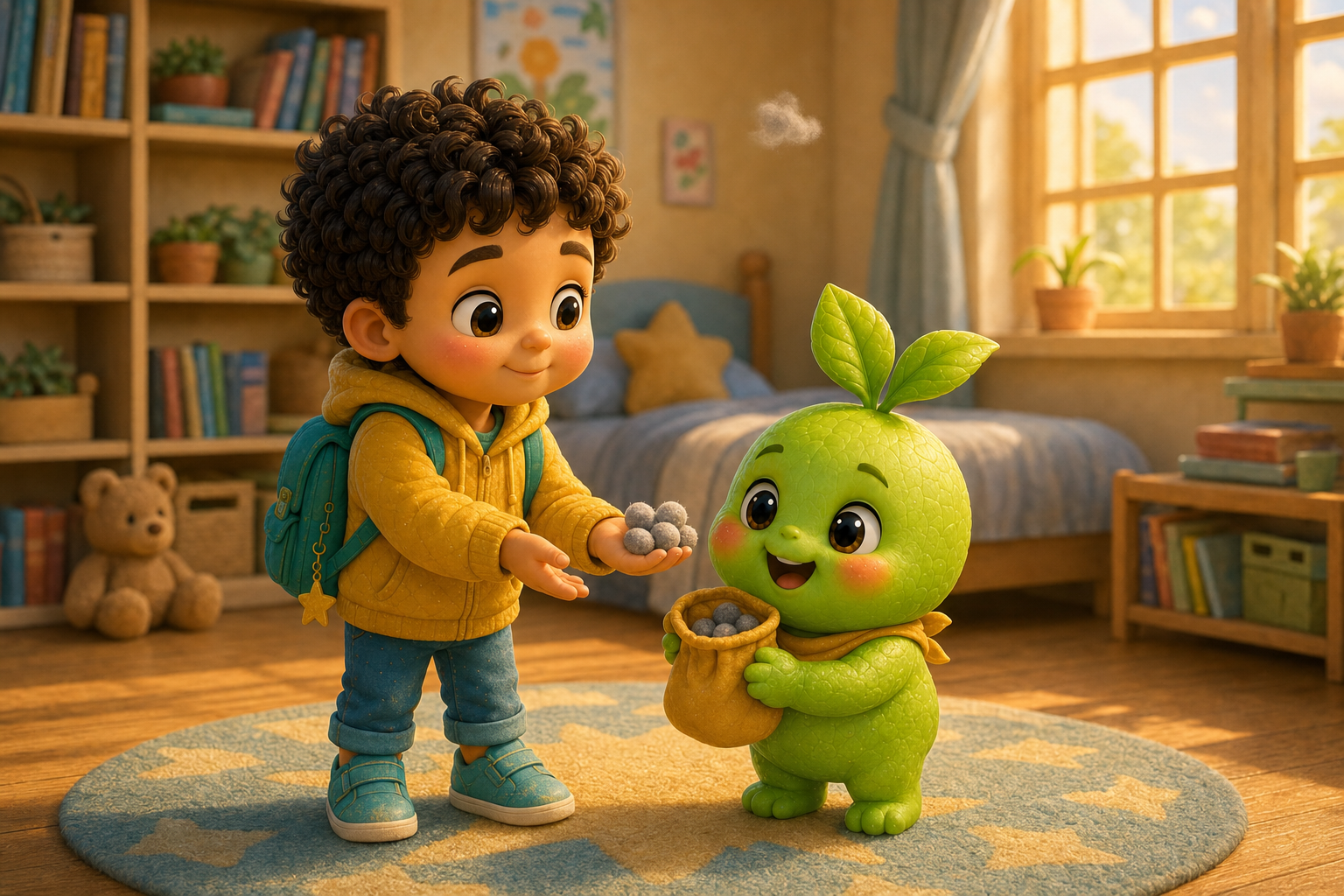
The cloud over your head has thinned to almost nothing, and your handful of worry-peas feels light, and a little bit silly. Grow scoops them up and puts them in its pocket for safekeeping. 'So, little one,' Grow asks, 'did we grow a little today?' You did. 'Here is your little grow for tomorrow,' says Grow. 'When a what-if gets big, say it out loud to somebody, and watch it shrink.' See you tomorrow, little one.