Type a name and it appears in the story. Stays on this device only.
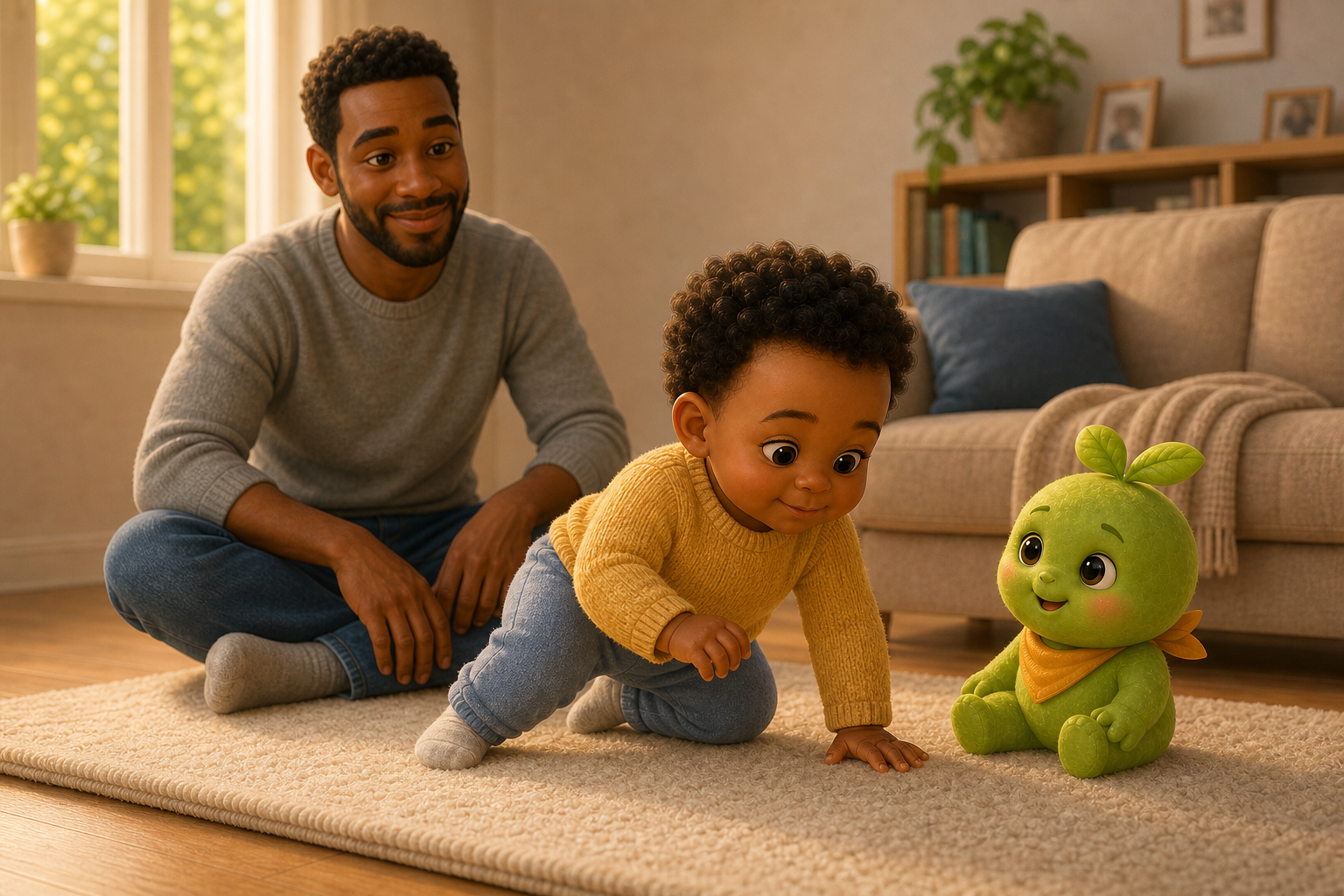
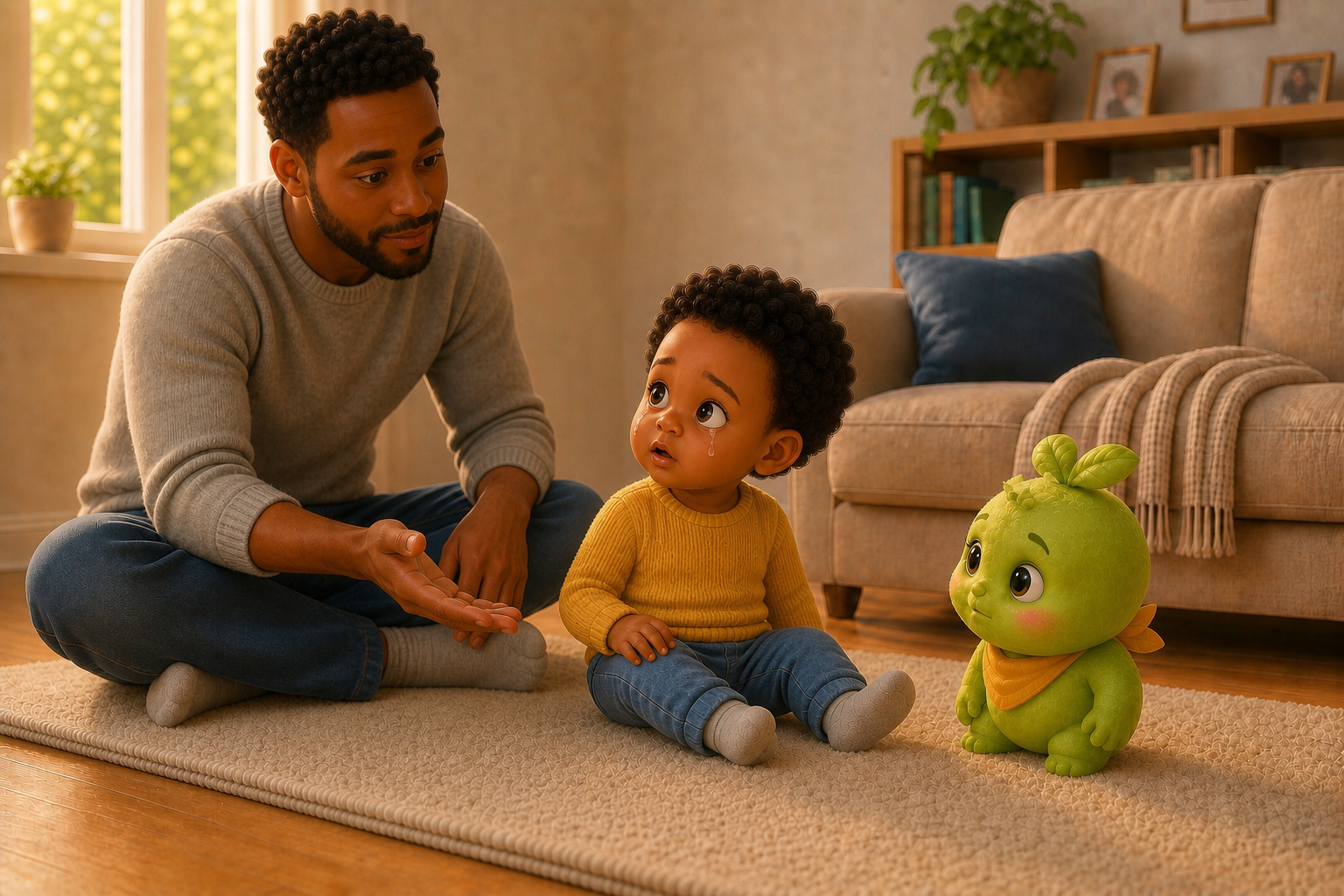
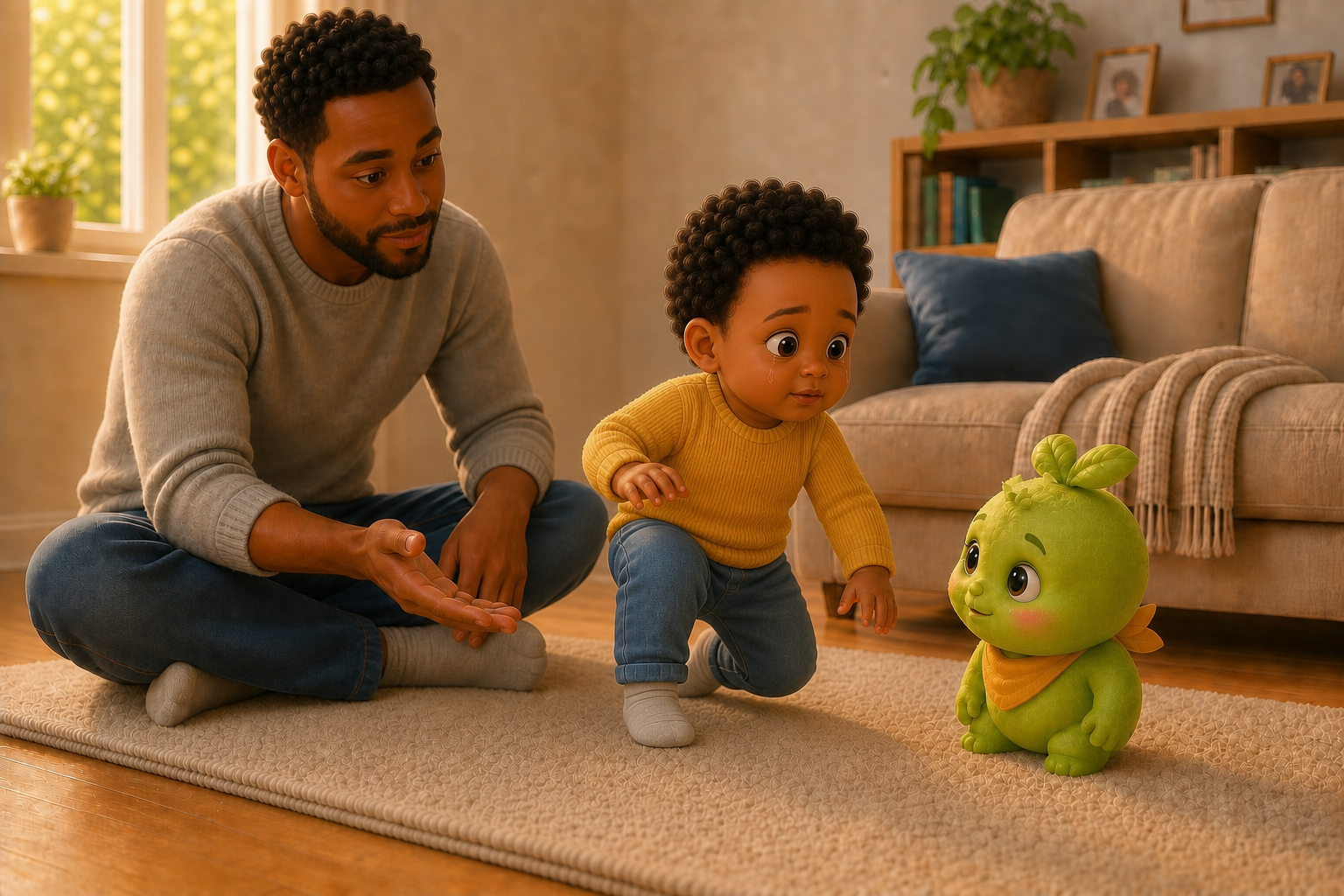
little one is sitting on the floor and wants up. Hand down, then a knee, then up.
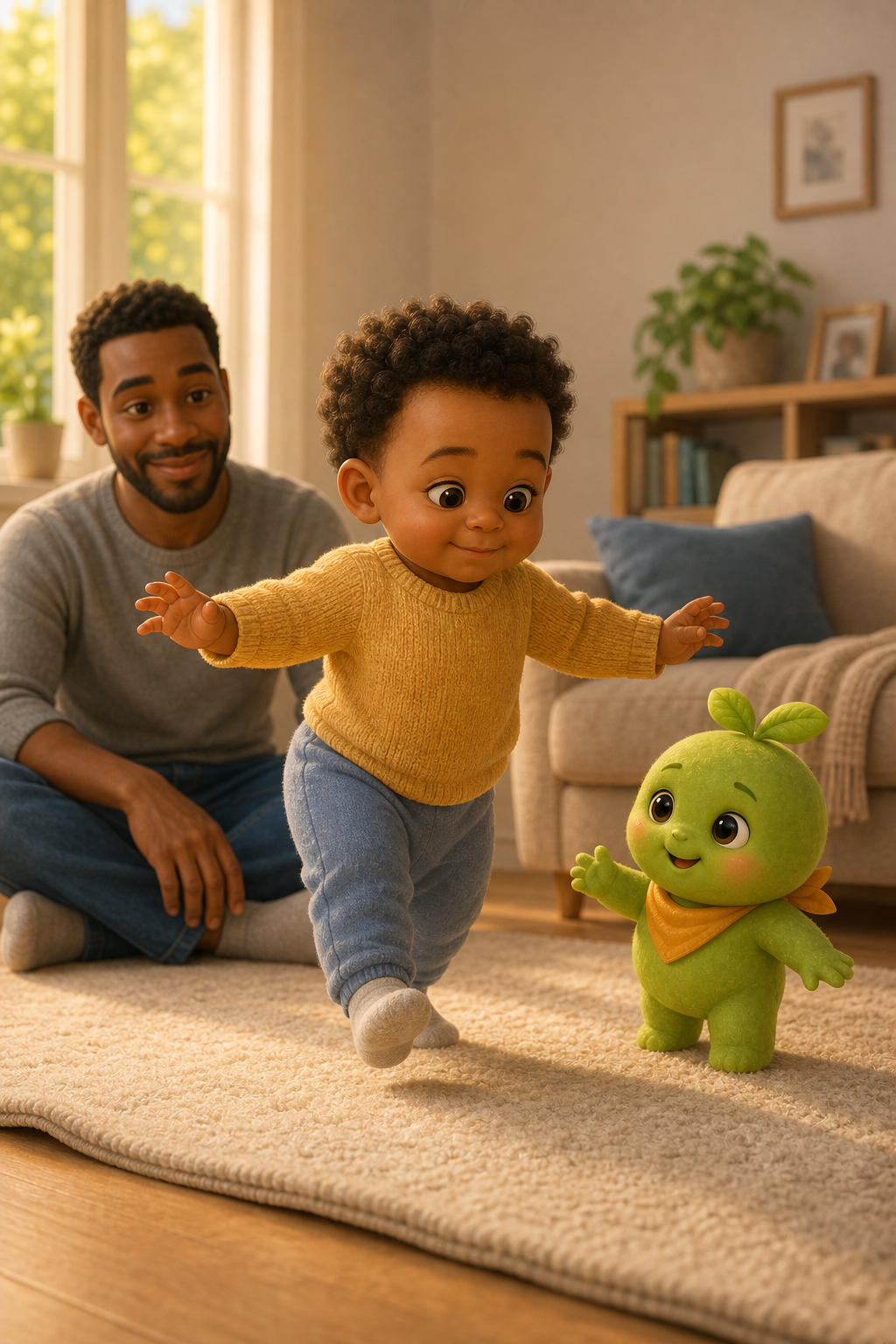
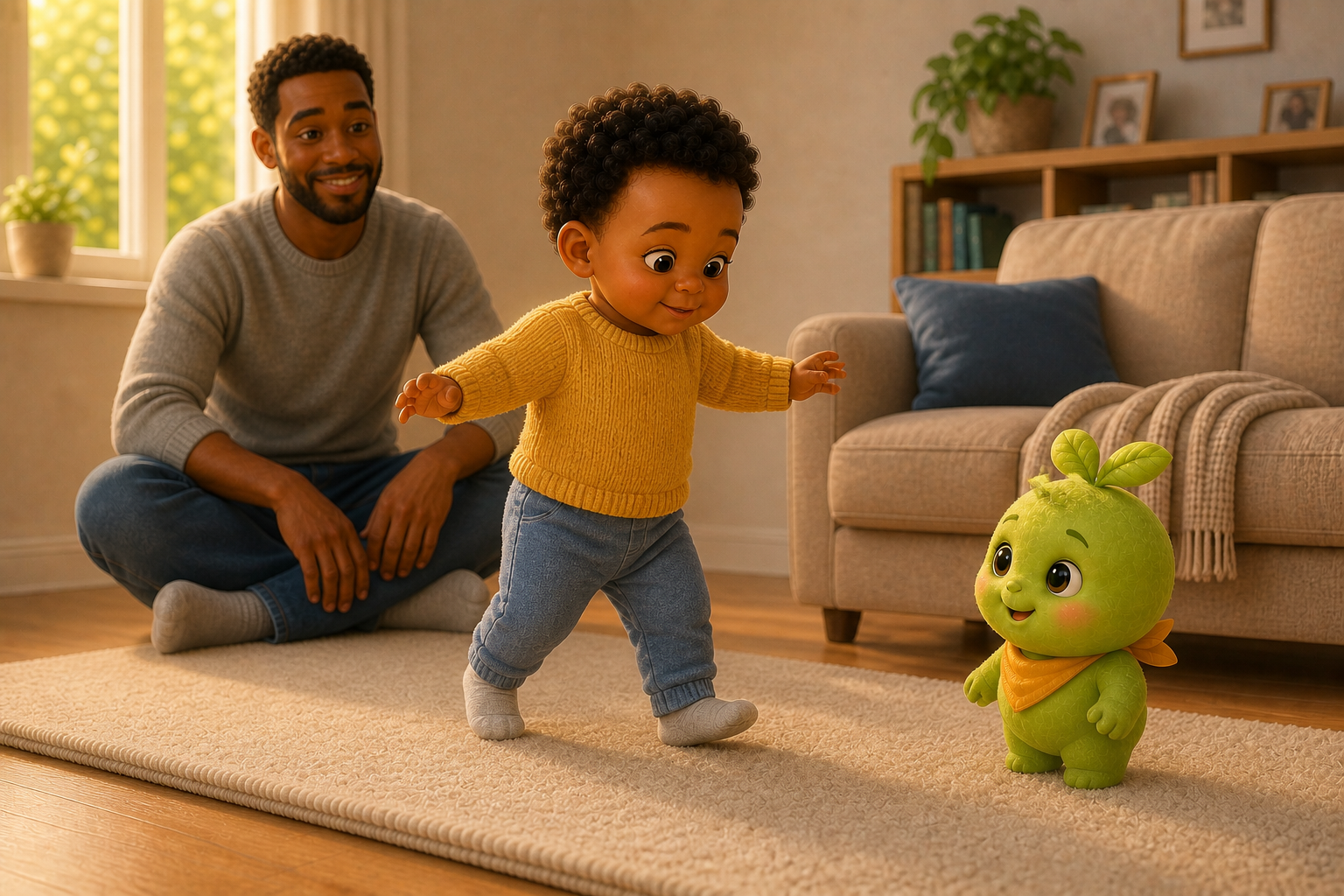
Now you walk across the room to Grow. The steps go tap, tap, tap.
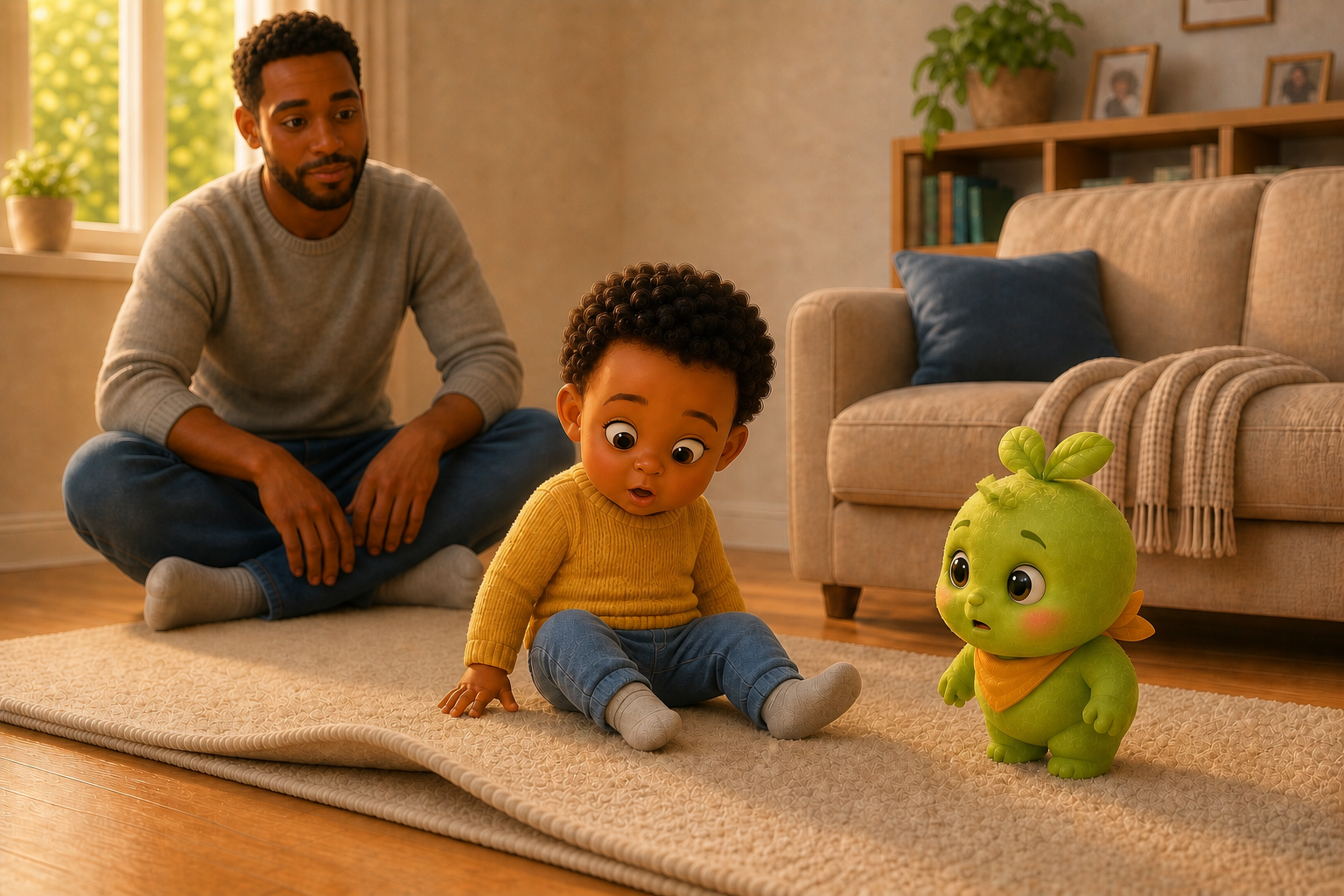
A foot catches the edge of the rug. Bump, and suddenly you are down.
It surprised you and the tears are here. You look at me. I say: I see you.
Slowly. Hand down, then a knee, then up again. Grow waits, and the steps go tap, tap, tap.
💡Read together
What does your face do first when your child goes down?
How does your child usually get up, without help or holding a hand?
Which falls worry you, and which do you let pass?
👪For you
When a small child goes down, the first thing they often look for is your face. Panic there can make the fall seem bigger; calm there often helps them gather themselves sooner. That does not mean pretending nothing happened, and it does not mean a calm face will stop the crying. Crying is fine and it has its place. Say what happened, offer a hand, and let your child decide whether to get up alone or with you. Why some days bring more falls than others is rarely something you can know for certain: tiredness, new shoes, a slippery floor, or legs that are still learning. Call your doctor if your child hits their head and then vomits, seems unusually sleepy, will not use an arm or a leg the way they normally do, or if anything at all worries you. Asking is never an overreaction.
🎨Try this
🧸 Sit down on the floor next to your child and get up the way they do: hand, knee, up.
 Kidy
Kidy