 Kidy
Kidy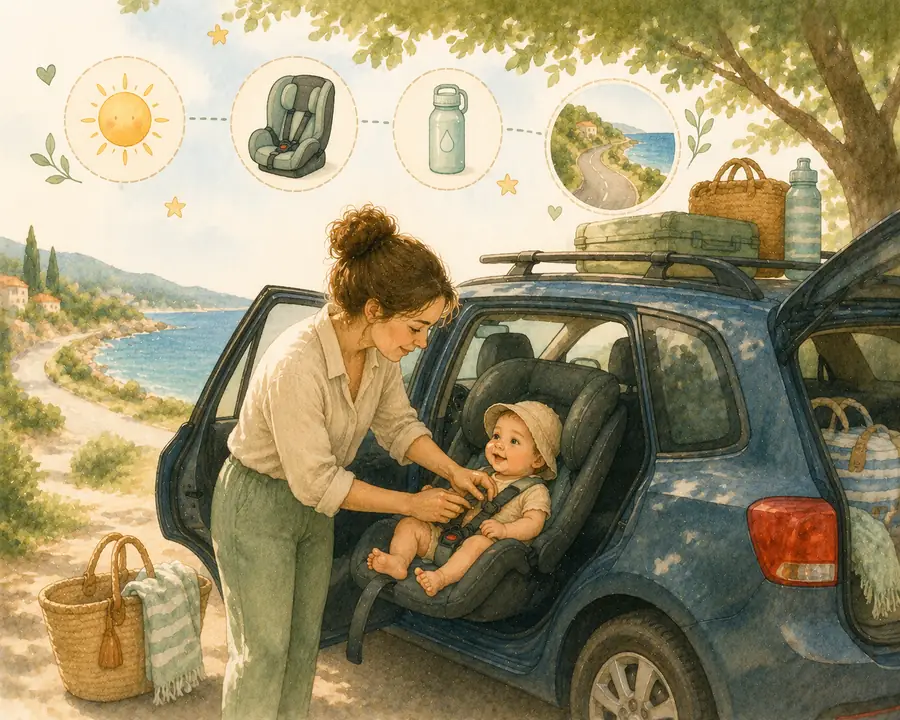
The drive to the coast is the part of summer parents underestimate, and one rule on it is non-negotiable. Here is what actually matters:
- Never leave a child alone in a parked car. Not for a minute, not with the windows cracked. A car interior can climb about 10°C in 10 minutes and reach lethal temperatures fast, even on a mild day.
- Children overheat 3 to 5 times faster than adults. "Look before you lock" - check the back seat every single time you leave the car.
- Car sickness is uncommon under about age 2 and more common in older toddlers and children. Fresh air, looking ahead, and regular breaks prevent most of it.
- Plan stops roughly every 2 hours to feed, change, and stretch. Push through and the whole afternoon costs you.
Most of this guide is calm. One part isn't, and it shouldn't be. Vehicular heatstroke is a real and entirely preventable cause of child death, and the rest of the trip is just logistics around that one rule. Let's take the dangerous part first.
Quick reference
| Concern | The risk | What to actually do |
|---|---|---|
| Hot parked car | Interior heats fast, child overheats | Never leave child alone, not even briefly. Look before you lock. |
| Keeping cool en route | Direct sun, overdressing | Sunshades, ventilate before loading, light clothing, park in shade |
| Car sickness | Nausea, vomiting in motion | Breaks, fresh air, look at the horizon, light snack first |
| The long drive | Overtired, frazzled child | Time part around a nap, stop every ~2 hours, don't rush |
Heat and hot cars: the one rule
A parked car is not a shaded room. It is a heat trap. Sunlight pours through the glass, the interior surfaces absorb it, and the temperature climbs faster than your intuition expects. On a 22°C day the inside of a car can pass 40°C within half an hour. Cracking the windows barely slows it. The American Academy of Pediatrics is blunt about this: never leave a child alone in a vehicle, not even for a minute.
Children are not small adults here. A young child's body heats 3 to 5 times faster than yours, and a baby's ability to cool itself by sweating is limited. By the time you would feel uncomfortable, a baby in a car seat is already in danger. The CDC lists infants and young children among those most vulnerable to heat-related illness, precisely because they cannot regulate their own temperature or tell you something is wrong.
The hardest truth: most hot-car tragedies are not careless parents. They are loving, exhausted, distracted ones. A change in routine. A quiet baby who fell asleep. A different parent doing the drop-off. The brain runs the familiar route on autopilot and forgets the unfamiliar passenger. That is why the rule is a habit, not a judgment call.
Build the habit. Put your phone or your bag in the back seat next to the car seat, so you physically open that door before you walk away. Look before you lock. Every time, even when you are sure the seat is empty.
Keeping the car cool on the way
Prevention is mostly small, boring things done in order:
- Ventilate before you load. Open the doors for a minute and let the trapped heat out before the baby goes in. A car that has baked in a parking lot is an oven for the first few minutes.
- Sunshades on the windows the child sits beside, especially the one taking direct sun. The flimsy suction ones work well enough.
- Don't overdress. A baby in a hot car needs less, not more. Light cotton, bare legs.
- Never put a bulky coat or thick snowsuit under the harness. It compresses in a crash and leaves the straps dangerously loose. If it is cold, harness first, blanket over the top.
- Keep water or milk within reach and offer it at every stop. Heat plus a long drive dehydrates a small body quietly. Our feeding guide covers hydration cues for different ages.
- Park in shade when you stop, and check the car seat buckle and metal bits for heat before you put the child back in. Sun-baked metal burns.
Car sickness: prevention beats the cure
Car sickness, or motion sickness, happens when the inner ear senses movement the eyes don't confirm. It is uncommon in babies under about 2 and gets more common through the toddler and early-school years, according to the NHS. If your one-year-old vomits in the car, heat, a full tummy, or a tummy bug is more likely than true motion sickness.
For older toddlers and children who do get queasy, prevention is the whole game:
- Encourage looking ahead, out of the windscreen at the horizon, not down at a book or tablet. Looking down is the fastest route to nausea for a prone child.
- Fresh air and good ventilation. Crack a window. A stuffy, hot car makes everything worse.
- A light snack before you set off, not a heavy meal and not a completely empty stomach. Something dry and plain.
- Distraction. Songs, "I spy," a story you tell out loud. A child watching the road and singing is a child not thinking about their stomach.
- Avoid strong smells, the obvious air freshener, but also a forgotten banana under the seat.
- Take breaks the moment a child goes pale or quiet. Fresh air and a short walk reset most early nausea.
Keep spare clothes, a roll of kitchen towel, wipes, and a sealable bag within arm's reach of the back seat. You will not have time to dig in the boot.
Planning the drive around naps and breaks
The calmest coastal drives are not the fastest. They are the ones planned around the child's day instead of against it.
Time part of the journey around a nap if you can. A baby who would normally sleep from 12:30 will often sleep in a moving car at 12:30, and you buy yourself a quiet stretch of motorway. But don't bank everything on it; some babies fight car sleep entirely, and that is its own kind of afternoon.
Stop roughly every two hours regardless. Feed, change a nappy, let a toddler run a lap around a rest-stop bench. A good routine on a normal day makes the disrupted travel day easier to ride out, and if you want help building one, our baby routine guide walks through it. Use a correctly fitted, age and size appropriate car seat, rear-facing for as long as the seat allows. Never place a rear-facing seat in front of an active airbag. That one is not negotiable either.
When to act: wait or worry
Use this as your decision line.
- Child gets car-sick once, then settles after a break and some air → keep going, slower, with more stops. Normal.
- Repeated vomiting on the drive, going pale and limp → stop, get them out, cool air, small sips of water once the nausea passes. Don't force the rest of the trip on a schedule.
- Child left in, or just out of, a hot car who is very hot, drowsy, floppy, or not responding normally → this is an emergency. Skip to the section below and act now.
- Persistent vomiting or signs of dehydration after car sickness (no wet nappy for hours, sunken eyes, no tears, lethargy) → see a doctor.
Common mistakes
The errors that catch good parents:
- "Just running in for a second." This is the one that kills children. The second becomes five minutes at the till. Take the child or don't stop.
- Cracking the windows and thinking it is enough. It is not. A gap does almost nothing against a closed car in sun.
- The puffy coat under the harness. It feels safe and warm. In a crash the harness is loose. Coat goes over the buckle, never under.
- Dressing the baby for the air conditioning, then the AC fails in traffic. Layer light, add a blanket you can remove, rather than starting with a thick outfit.
- Treating every car vomit as motion sickness. A vomiting, feverish, or off-colour child may be ill, not just queasy. If you are unsure whether a symptom needs a call, our guide on when to monitor and when to call the doctor walks through the same logic.
When to call the doctor or emergency services
A child who has been in a hot car and is very hot to the touch, drowsy, floppy, confused, or not responding normally is a medical emergency. Get them out immediately. Move to shade or air conditioning, remove excess clothing, and cool them with cool (not ice-cold) water on the skin. Call 194 (ambulance) or 112 straight away. Do not wait to see if they perk up.
For car sickness, see a doctor for vomiting that won't stop, or for signs of dehydration after the drive: no wet nappy for many hours, a dry mouth, sunken eyes, no tears when crying, or unusual lethargy. A child who recovers fully after one car-sick episode and is drinking normally does not need a doctor, just a slower trip home. If the trip is part of a bigger plan and your child has a check-up coming, our guide on preparing for a pediatric visit with your child's data helps you walk in ready.
Frequently asked questions
Is it ever safe to leave a baby in the car for just a minute?
No. Not for a minute, not with the engine running, not with the windows cracked. A car interior can rise about 10°C in 10 minutes and reach dangerous temperatures even on a mild day, and a young child overheats far faster than an adult. Take the child with you every time.
At what age do babies get car sick?
True motion sickness is uncommon under about age 2 and becomes more common in older toddlers and school-age children. If a baby under 2 vomits in the car, look first at heat, a full stomach, or illness rather than motion sickness.
How can I prevent my toddler being sick in the car?
Encourage them to look ahead at the horizon rather than down at books or screens, keep the car cool and well ventilated, give a light plain snack before setting off, take a break the moment they go quiet or pale, and distract them with songs or games. Keep spare clothes and wipes within reach.
How often should we stop on a long drive with a baby?
Roughly every two hours, to feed, change, and let everyone stretch and breathe. Time part of the drive around a nap if your baby sleeps in the car, but don't count on it, and never rush through warning signs to save half an hour.
What do I do if my child overheats in the car?
Get them out immediately, into shade or air conditioning, remove extra clothing, and cool the skin with cool water. If the child is very hot, drowsy, floppy, or not responding normally, call 194 or 112 at once. This is an emergency, not a wait-and-see.
How KidyGrow helps you
Let's be honest about the limits. KidyGrow does not drive, it does not cool the car, and it will never replace the look-before-you-lock habit. No app does the part that matters most here.
What it does is hold the thread of your child's day so you can plan the drive instead of fighting it. After a week or two, the app learns your child's actual rhythm rather than a generic one, and the morning Daily Brief might notice something you were too frazzled to connect: that the departures that skipped the usual nap window were the ones that cost you the whole afternoon, the meltdown two hours into the drive matching a nap that never happened. It remembers that pattern across the trip when you can only remember today. Some weeks it finds nothing useful, and that is honest. But when it does, you leave at the hour that protects the nap instead of the hour that wrecks it.
I learned this the hard way on one drive south: pushed straight through a missed nap to "make good time," and paid for it from kilometre forty to bedtime. The app didn't save that afternoon. It just made sure I didn't book the next one the same way.
Sources
- American Academy of Pediatrics (HealthyChildren.org). Prevent Child Deaths in Hot Cars. https://www.healthychildren.org/English/safety-prevention/on-the-go/Pages/Prevent-Child-Deaths-in-Hot-Cars.aspx
- NHS. Motion sickness. https://www.nhs.uk/conditions/motion-sickness/
- Centers for Disease Control and Prevention (CDC). About Heat and Your Health. https://www.cdc.gov/heat-health/about/index.html